

Have you ever looked back at a choice you made and wondered, “What was I thinking?!” 🤔 You’re definitely not alone! Research shows that the average person makes around 35,000 choices every single day. That’s a lot of mental heavy lifting! 💪
From picking your breakfast to accepting job offers, your brain constantly juggles countless selections. But here’s the frustrating part – sometimes our brilliant minds lead us down paths we later regret. Sound familiar? 😅
The good news? Understanding cognitive biases and poor judgment science can completely transform how you approach life’s challenges! This isn’t just theory – it’s practical knowledge rooted in decision-making psychology. You can apply it immediately.
Preparing for your teaching certification exam or want to become a smarter chooser in everyday situations? You’re in the right place! Let’s explore the hidden mental patterns that shape your choices. Discover how to outsmart them! 🎯✨
Key Takeaways
- Adults make approximately 35,000 choices daily, with many leading to regret and confusion about the selection process
- Cognitive biases are systematic mental shortcuts that influence judgment and often lead to flawed reasoning
- Understanding decision-making psychology helps identify patterns that sabotage your best intentions
- Behavioral science reveals why smart people sometimes make questionable choices despite their intelligence
- Recognizing psychological triggers empowers you to make selections that align with your goals and values
- Learning about mental patterns is valuable for teaching certification exams and real-world application
The Science Behind Human Decision-Making
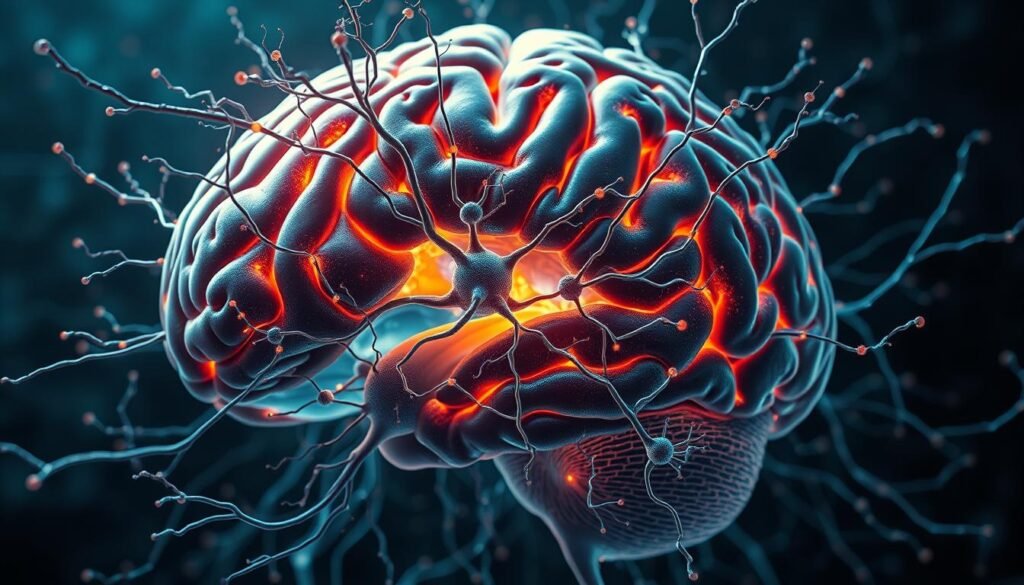
Ever wonder what’s happening inside your head when you’re making a choice? 🤔 Your brain is working overtime, processing information through complex neural networks. The neuroscience of decision-making shows that every choice involves different brain regions, chemical signals, and mental processes.
Understanding this science isn’t just fascinating—it’s essential for making better choices in your personal and professional life!
Your brain uses cognitive shortcuts known as psychological heuristics to make decisions quickly. These mental rules allow you to form judgments that are often accurate but can sometimes lead to errors. If you carefully analyzed every single decision throughout your day, you’d be mentally exhausted before lunchtime! 😅
How Your Brain Processes Choices
Your brain is the most sophisticated biological computer ever created! 🧠 Multiple brain regions activate simultaneously, creating a complex network of neural activity. This process happens so quickly that you’re often unaware of all the work happening behind the scenes.
The decision-making process involves gathering information from your environment and evaluating potential outcomes. Your brain accomplishes this through specialized neural pathways that have evolved over millions of years.
The Neural Pathways of Decision-Making
Neural pathways are like information highways in your brain! 🛣️ Electrical signals travel along these pathways, connecting different brain regions that each contribute unique functions. Some pathways are lightning-fast express routes that handle automatic responses, while others allow for deeper analysis.
These pathways involve several key brain structures working together. The amygdala processes emotional information and helps you assess threats. The hippocampus retrieves relevant memories from past experiences.
The basal ganglia help you evaluate rewards and form habits. The more you use certain pathways for specific types of decisions, the stronger those connections become! This is why practice truly does make perfect—you’re literally rewiring your brain! ⚡
The Role of the Prefrontal Cortex
Meet the CEO of your brain: the prefrontal cortex! 👔 This remarkable region sits right behind your forehead and acts as the executive control center. It’s responsible for planning, reasoning, problem-solving, and making complex decisions that require careful consideration.
Your prefrontal cortex helps you resist impulsive choices and think about long-term consequences. Studying for your certification exam instead of scrolling through social media? That’s your prefrontal cortex at work!
However, the prefrontal cortex has limitations! It requires significant energy to function and can become fatigued with overuse. This explains why making too many decisions in a short period can lead to poor choices later.
| Brain Region | Primary Function | Role in Decision-Making | Impact on Choices |
|---|---|---|---|
| Prefrontal Cortex | Executive function and planning | Evaluates options and consequences | Enables rational, goal-oriented decisions |
| Amygdala | Emotional processing | Assesses threats and emotional significance | Triggers quick responses to danger or reward |
| Hippocampus | Memory formation and retrieval | Provides context from past experiences | Influences decisions based on learned patterns |
| Basal Ganglia | Habit formation and reward processing | Evaluates potential rewards and risks | Drives habitual and reward-seeking behaviors |
System 1 vs. System 2 Thinking
Here’s where things get REALLY interesting! 🎯 Renowned psychologist Daniel Kahneman revolutionized our understanding of decision-making by identifying two distinct systems. These systems work together, sometimes harmoniously and sometimes in conflict, to help you navigate every choice you face!
Understanding these two systems is crucial for recognizing when you might be making suboptimal decisions. Once you know how these systems operate, you can consciously engage the right system for different situations.
Fast Thinking: Intuitive and Automatic
System 1 thinking is your brain’s autopilot mode! ✈️ It operates automatically and quickly, with little or no effort. This system allows you to catch a ball without calculating its trajectory or recognize emotions on people’s faces instantly.
System 1 relies heavily on mental shortcuts and pattern recognition. It’s the reason you can drive a familiar route while thinking about something completely different. This system developed through evolution to help our ancestors make split-second survival decisions!
The power of System 1 is its incredible speed and efficiency. However, this speed comes at a cost—System 1 is prone to biases and errors. It’s like having a super-fast computer that sometimes jumps to conclusions! 🚀
Slow Thinking: Deliberate and Analytical
System 2 thinking is your brain’s deliberate, analytical mode! 🔍 This system requires conscious effort and attention. It activates when you’re solving complex problems, comparing multiple options, or working through difficult exam questions.
System 2 is responsible for all mental activities that require concentration and focus. Calculating a complicated math problem, reading challenging material, or considering different career paths engages System 2 thinking. This system can override the quick judgments of System 1 when you consciously choose to think more deeply!
The limitation of System 2 is that it’s slow and mentally exhausting. Your brain naturally wants to conserve energy, so it defaults to System 1 whenever possible. This is why studying for your certification exam feels so much harder than browsing social media! 💪
| Characteristic | System 1 (Fast Thinking) | System 2 (Slow Thinking) |
|---|---|---|
| Processing Speed | Instant and automatic | Slow and deliberate |
| Mental Effort | Effortless and unconscious | Requires concentration and energy |
| Accuracy | Generally reliable but prone to biases | More accurate with careful analysis |
| Best Used For | Routine decisions and pattern recognition | Complex problems and novel situations |
| Examples | Driving familiar routes, reading emotions, simple math | Solving complex equations, strategic planning, critical analysis |
The key to excellent decision-making is knowing when to trust your intuitive System 1 and when to engage System 2! 🎓 For routine choices with familiar patterns, System 1 serves you well. But for important decisions with significant consequences—like preparing for your teaching certification exam—you need that slower, more deliberate System 2 thinking!
Both systems are essential tools in your decision-making toolkit. The goal isn’t to always use one over the other, but to recognize which system is driving your choices. This awareness is the first step toward becoming a more effective decision-maker in all areas of your life! 🌟
Cognitive Biases in Decision Making: The Hidden Culprits
Your brain has over 100 built-in shortcuts that secretly influence every choice you make. 🧠 These hidden patterns are called cognitive biases in decision making. They shape everything from your morning coffee order to major teaching career decisions!
Here’s the fascinating twist: these mental glitches aren’t actually mistakes in your brain’s programming. They’re features that once saved lives! But in today’s complex world, they can lead you down seriously wrong paths. 🎯
What Are Cognitive Biases?
Cognitive biases are systematic patterns where your brain deviates from rational judgment. Think of them as your mind’s personal shortcuts that help you make faster decisions. The problem? Speed doesn’t always equal accuracy!
These aren’t random mistakes or occasional slip-ups. They’re predictable, consistent errors in thinking that affect everyone. Yes, even YOU! 💡
Researchers have identified well over a hundred different cognitive biases. Each one represents a specific way your brain tries to simplify complex information.
- Memory biases: How you remember past events incorrectly
- Social biases: How you judge other people unfairly
- Probability biases: How you miscalculate risks and chances
- Belief biases: How you protect your existing worldview
Understanding cognitive distortions and choices is like getting X-ray vision for your own thinking process. Once you see these patterns, you can’t unsee them! This awareness becomes a superpower for making better decisions in exam prep and your future classroom. ✨

Why Our Brains Developed These Mental Shortcuts
Your brain is an incredible organ, but it faces some serious limitations. It processes about 11 million bits of information every second. Yet your conscious mind can only handle about 40 bits! 🤯
That massive gap is why mental shortcuts evolved in the first place. Your ancestors needed to make split-second decisions without having all the information. Should they fight or flee? Is that berry safe to eat?
These quick judgments were literally matters of life and death! The humans who hesitated too long analyzing every detail became someone’s lunch. The ones who jumped to conclusions quickly survived to pass on their genes.
This irrational behavior psychology made perfect sense in prehistoric times. Your brain learned to:
- Trust first impressions immediately
- Look for patterns even when none exist
- Overreact to potential threats
- Stick with familiar choices
- Follow the crowd for safety
These strategies worked brilliantly when survival was the only goal. But here’s where things get complicated… 🧩
The Evolutionary Advantage That Became a Modern Disadvantage
Fast forward to today, and you’re no longer running from predators or foraging for food. You’re deciding which study materials to buy and how to structure your lesson plans. You’re considering whether that teaching position is right for you. 📚
The same cognitive biases that saved your ancestors are now causing problems!
Speed vs. Accuracy Trade-off: Your brain still prioritizes fast decisions over correct ones. During certification exam prep, this means you might skip important material. Your brain wants to stick with familiar topics. That’s not a bug—it’s your survival instinct backfiring!
Information Overload: Ancient humans dealt with maybe 100 people in their entire lifetime. You interact with thousands through social media alone! Your brain’s shortcuts can’t keep up with this complexity. The result? Cognitive distortions multiply in modern environments.
High-Stakes Modern Decisions: Choosing a teaching career path requires careful analysis of salary and job satisfaction. It also requires considering location and growth potential. But your brain wants to decide based on one memorable story or a gut feeling.
The same mental mechanisms that helped humans survive for millennia are now undermining your best efforts. Your brain is running ancient software in a modern world. Understanding this fundamental mismatch is your first step toward better choices!
Don’t worry though—awareness is half the battle! Now you understand what cognitive biases in decision making are and where they come from. You’re already ahead of 90% of people. Your exam success depends on it! 🌟
Anchoring Bias: When First Impressions Trap Your Judgment
Picture walking into a store and having your judgment hijacked by a single piece of information. That’s exactly what happens with anchoring bias, one of the most powerful cognitive biases. Your brain latches onto the first number it sees and uses it for all future judgments. 🎣
The fascinating thing about anchoring? It works even when the initial information is completely random and irrelevant!
Researchers Amos Tversky and Daniel Kahneman conducted a groundbreaking experiment that revealed how powerful this bias really is. They had participants spin a wheel of fortune that landed on a random number. Then they asked: “What percentage of African nations are members of the United Nations?” 🌍
Here’s the mind-blowing part: people who spun high numbers gave significantly higher estimates than those who landed low. The wheel had absolutely nothing to do with geography or international organizations. Yet it created judgment errors that skewed their answers by as much as 20 percentage points!
How Anchoring Affects Your Everyday Choices
This cognitive bias doesn’t just happen in psychology labs. It’s influencing your decisions every single day, often without you having the slightest clue! 💡
Consider house hunting. That first listing you see becomes your mental anchor. If homes typically sell for $375,000 in your target neighborhood, this number shapes your entire negotiation strategy.
You’ll evaluate every other property against this reference point. This happens even if market conditions have changed or the houses aren’t truly comparable.
The anchoring effect creates decision-making errors in these common situations:
- Restaurant menus: That expensive item at the top makes everything else seem more reasonable
- Car shopping: The initial sticker price frames your perception of value, even during negotiations
- Service estimates: The first quote you receive influences how you judge all subsequent proposals
- Medical decisions: Initial diagnosis suggestions can anchor doctors’ thinking, potentially leading to confirmation of the first hypothesis
- Academic performance: Your first test score in a course often anchors your expectations for future performance
The scary truth? Your brain treats these anchors as legitimate reference points even when you know they’re arbitrary! 😮
Real-World Examples of Anchoring in Action
Let’s dive into specific scenarios where anchoring bias creates judgment errors that affect your wallet and career. These examples will help you recognize manipulation tactics. You’ll spot when marketers and negotiators are using this psychological principle against you.
Retail Pricing Strategies
Retailers are absolute masters at exploiting anchoring bias to influence your purchasing decisions! 💰
Picture this: You’re browsing online and see a leather jacket with a big red tag. It shows “Was $200, Now $100!” Your brain immediately anchors on that $200 price point.
Suddenly, $100 feels like an incredible bargain that you’d be foolish to pass up!
But here’s the catch: Was that jacket ever actually worth $200? Maybe the retailer manufactured the “original price” specifically to create an anchor.
Common retail anchoring tactics include:
- Manufacturer’s Suggested Retail Price (MSRP): Often inflated to make discounts appear more substantial
- “Compare at” pricing: Showing competitor prices (sometimes exaggerated) to anchor expectations high
- Tiered pricing: Offering three options where the middle option seems “just right” compared to an expensive anchor
- Limited-time original prices: Creating urgency around an anchored discount that may not be genuine
Smart shoppers combat this by researching actual market values across multiple retailers before making purchase decisions! 🔍
Salary Negotiations and Initial Offers
Perhaps nowhere is anchoring more critical than in salary negotiations. The first number mentioned can literally cost you thousands of dollars! 💼
Let’s say you’re interviewing for a teaching position and the hiring manager asks about salary expectations. If you respond with $50,000 but the school district was prepared to offer $65,000, trouble starts. You’ve just anchored the entire negotiation at a lower point.
The person who states the first number establishes the anchor. All subsequent negotiations revolve around that reference point. Even if you negotiate upward, you’ll likely end up below where you would have started.
“In negotiations, whoever makes the first offer establishes the range of reasonable possibilities in both parties’ minds.”
Here’s how to use anchoring to your advantage in salary discussions:
- Research thoroughly: Know the market rate for your position and experience level before any conversation
- Anchor high (but reasonably): If you must give a number first, start at the top of the reasonable range
- Use ranges strategically: Provide a range where your minimum is actually your target salary
- Redirect the question: Ask “What range has been budgeted for this position?” to make them anchor first
- Include total compensation: Anchor discussions on complete packages including benefits, not just base salary
The key to combating anchoring bias? Create a range of estimates instead of fixating on a single number!
Preparing for your certification exam? Don’t anchor your expectations on one practice test score. Look at your performance across multiple assessments to get a true picture of your readiness! 📊💪
Understanding anchoring bias helps you recognize when others are using it to influence you. It empowers you to make more independent, rational decisions based on actual value.
Confirmation Bias: Seeking What We Want to Believe
The most dangerous lie isn’t from someone else. It’s the one your brain tells itself through confirmation bias! This powerful mental trap shapes how you process information every day.
Your mind acts like a biased detective. It seeks clues that support your existing theories. It ignores evidence that contradicts them!
Confirmation bias is the tendency to search for information that validates your beliefs. It’s like having a filter that only lets through facts that make you feel right! This isn’t conscious dishonesty—it’s an automatic mental process affecting everyone.
You make decisions based on incomplete, skewed information. This happens instead of using objective reality!
Understanding this bias is absolutely critical for future educators! It influences how you evaluate student performance. It affects how you assess teaching methods and interpret classroom dynamics.
Let’s explore how confirmation bias operates in modern life. Learn what you can do to counteract its influence! 💡
The Echo Chamber Effect in the Digital Age
Social media has turbocharged confirmation bias into something far more powerful! 📱 Algorithms on platforms like Facebook, Twitter, and YouTube show you aligned content. Every like, share, and click trains these systems to feed you more.
This creates what psychologists call echo chambers—digital spaces where your views are constantly reinforced. You see posts from people who think like you. Articles support your opinions, and videos validate your perspective.
The opposing viewpoints? They’re filtered out, making them virtually invisible!
Here’s the scary part: this selective exposure makes your beliefs feel MORE valid. This happens not because they’re correct, but because everyone in your bubble agrees! Research shows people consuming similar news sources become more extreme over time.
They lose the ability to understand alternative perspectives. They can’t recognize legitimate counterarguments!
For educators, this phenomenon is particularly important to recognize. Your students are growing up in these echo chambers, and so are you! Following only similar educational accounts means missing valuable insights from different approaches.
Breaking out of your digital bubble requires intentional effort. Actively seek diverse viewpoints and follow people who challenge your assumptions! 🌟
How Confirmation Bias Distorts Your Judgment
Let’s get practical with a scenario you’ll definitely recognize! 📚 Imagine you believe flashcards are the absolute best way to prepare for exams. Once this belief takes root, confirmation bias kicks into high gear!
You’ll naturally pay MORE attention to success stories from people who used flashcards. Someone posts, “I passed using flashcards!” and you’ll remember it clearly. But dismissive thoughts arise when someone shares that flashcards didn’t work for them.
You might think, “Well, they probably didn’t use them correctly.” Or “That’s just one exception!”
This selective perception creates a distorted view of reality. You’re not seeing the full picture of what study methods work. You’re only registering data points that confirm your existing belief!
The same mechanism affects how you evaluate teaching strategies. It impacts classroom management techniques and assessment methods.
Research in educational psychology reveals teachers often fall victim to cognitive distortions. If you form an early impression that a student is “bright,” you’ll notice correct answers more. Conversely, labeling a student as “struggling” makes you overlook their improvements and focus on errors.
This isn’t intentional bias—it’s your brain’s automatic confirmation-seeking process at work!
Cherry-Picking Evidence to Support Preexisting Beliefs
Cherry-picking is confirmation bias’s favorite strategy! 🍒 It’s selecting only evidence that supports your position while ignoring everything else. This happens in academic research, classroom decisions, and evaluating your own teaching effectiveness!
Consider how this plays out in educational research. A researcher believing traditional lectures are superior might design a biased study. They might measure outcomes that lectures excel at while overlooking competencies that active learning develops better.
This isn’t fraud—it’s unconscious bias shaping methodological choices!
You see this pattern everywhere in decision-making fallacies. A school administrator believing technology improves learning will highlight successful tech integration stories. They downplay instances where technology failed or distracted students.
A parent convinced that homework is essential will remember times their child learned from assignments. They forget the nights of tears and frustration!
The antidote to cherry-picking requires intellectual humility and deliberate practice! Ask yourself: “What evidence would prove me wrong?” Actively seek out that contradictory information.
If you believe method X is best, deliberately look for research supporting methods Y and Z. Play devil’s advocate with your own conclusions! 🔍
| Situation | Confirmation Bias Response | Balanced Approach |
|---|---|---|
| Choosing study methods for exam prep | Only reading success stories about your preferred method; ignoring alternatives | Comparing multiple methods objectively; testing different approaches to find what works best for YOU |
| Evaluating a new teaching strategy | Noticing only the successful moments; dismissing struggles as implementation issues | Tracking both successes and failures systematically; adjusting based on comprehensive data |
| Assessing student performance | Seeing evidence that confirms your initial impression of the student’s abilities | Using blind assessment when possible; regularly questioning your assumptions about each student |
| Consuming educational content online | Following only accounts that share your educational philosophy | Intentionally following diverse educational perspectives; engaging with viewpoints that challenge yours |
Breaking free from confirmation bias doesn’t mean abandoning your beliefs. It means testing them rigorously! The strongest positions are those that have survived genuine challenges.
As you prepare for your teaching certification, develop the habit of seeking disconfirming evidence. This intellectual courage will make you a better test-taker. It will also make you a more effective, adaptable, and empathetic educator! 🌟
Remember: your brain’s tendency toward confirmation bias isn’t a character flaw. It’s a natural cognitive shortcut. But recognizing it gives you the power to override it when it matters most.
Challenge yourself to say, “What am I missing?” and “Who disagrees with me, and why?” These questions are your shield against cognitive distortions. They protect you from decision-making fallacies that could limit your growth as an educator!
Loss Aversion and Prospect Theory Explained
Your brain treats losses and gains completely differently. This impacts every choice you make. 💣
This psychological phenomenon shapes your decisions, especially during teaching certification prep. Understanding loss aversion helps you recognize when fear blocks smart, strategic choices!
Prospect theory was developed by Nobel Prize winners Daniel Kahneman and Amos Tversky. It changed how we understand decision-making under risk. The core insight? People don’t evaluate gains and losses equally.
Your brain feels losses much more intensely than equivalent gains!
Why Losses Hurt More Than Gains Feel Good
Here’s a truth bomb: losing $100 hurts about twice as much as gaining $100 feels good! This is a measurable psychological reality. It affects every financial, career, and personal decision you make. 📉
Imagine you’re holding a $20 bill and someone takes it from your hand. Now imagine someone hands you a $20 bill as a surprise gift. Both involve the same amount of money.
The emotional impact is drastically different! The loss creates a sharp, painful sensation that lingers. The gain brings pleasure that fades relatively quickly.
This loss aversion principle explains why you might avoid taking calculated risks. The potential reward often outweighs the potential loss. In your teaching career journey, this might mean sticking with a familiar but ineffective study strategy.
Switching feels like admitting you “wasted” time on the wrong approach!
The Asymmetry of Pain and Pleasure
The asymmetry between pain and pleasure isn’t just psychological—it’s neurological! Brain imaging studies show that losses activate different neural circuits than gains. The activation is significantly stronger for losses.
Your amygdala is the brain’s threat-detection center. It lights up intensely when facing potential losses. 🧠
Your emotional system treats losses as threats to survival. From an evolutionary perspective, this made perfect sense! Missing out on a meal was unfortunate.
Losing your shelter to a predator could be fatal. Your ancestors who were more sensitive to losses survived longer!
In modern life, this asymmetry can work against you. Prospect theory demonstrates that people often choose a guaranteed smaller gain over a risky larger gain. They’ll also choose a risky large loss over a guaranteed smaller loss.
You become risk-averse when considering gains. You become risk-seeking when trying to avoid losses!
The Endowment Effect: Overvaluing What You Own
Here’s where things get really interesting! 📚 The endowment effect is a direct consequence of loss aversion. It causes you to value things MORE simply because you own them.
This irrational attachment drives countless poor decisions!
Classic experiments demonstrate this beautifully. Researchers give people a coffee mug and then ask how much they’d sell it for. The owners typically demand two to three times more money than non-owners are willing to pay!
Why? Because selling it feels like a loss, while buying it feels like a gain.
In your exam preparation, the endowment effect might show up when you overvalue your current study materials. You might think, “I’ve already invested in these flashcards and practice tests, so I should keep using them.” This happens even when better resources become available. 😰
The psychological ownership creates an inflated sense of their value!
The effect also appears in career decisions. You might overvalue your current position or teaching approach simply because it’s familiar and yours. This can prevent you from exploring new opportunities.
It stops you from adopting innovative teaching strategies that could serve your students better!
Risk Assessment Failures Driven by Loss Aversion
Loss aversion sabotages your decision quality! Your fear of loss dominates your thinking. You make risk assessment failures that keep you stuck in suboptimal situations. 🚨
This is especially dangerous during high-stakes certification exam prep!
Consider this scenario: You’ve been studying using one particular method for three months. Your practice test scores aren’t improving. A mentor suggests a completely different approach that’s proven effective.
Switching would mean “wasting” those three months. The fear of loss prevents you from making the rational choice.
These risk assessment failures happen because your brain overweights the certain loss. You underweight the uncertain future gain. You’re essentially throwing good time after bad.
Admitting the loss feels too painful!
Another common example involves avoiding practice exams altogether. The potential loss feels more significant than the potential gain. This creates a dangerous blind spot. 💪
You remain unprepared on test day!
How Fear of Loss Paralyzes Decision-Making
Here’s the most destructive aspect of loss aversion: it can completely paralyze your decision-making! You’re so terrified of making the wrong choice that you make NO choice at all. You’ve fallen into the trap of loss-driven paralysis.
This paralysis often appears during important career decisions. Should you apply for that competitive teaching position? Should you invest in additional certification courses?
Should you try a new classroom management approach? The fear of potential loss freezes you in place!
Decision paralysis creates its own kind of loss—the opportunity cost of inaction. Valuable opportunities pass by while you’re stuck overthinking and avoiding commitment. Other candidates get the positions. 😤
Registration deadlines expire, and your skills don’t develop!
The solution? Flip the script on loss aversion! Instead of asking “What might I lose?” train yourself to ask different questions. “What will I lose by doing nothing?” and “What might I gain?”
This reframing transforms your perspective from loss-focused to opportunity-focused.
Acknowledge the potential losses honestly during decisions about your teaching career or exam preparation. Then spend equal mental energy considering the gains. Write down both columns! 🚀
You’ll often discover that your fear of loss was greatly exaggerated. The potential benefits were underappreciated.
Remember: prospect theory shows us that our intuitive risk assessment is fundamentally flawed. By understanding loss aversion, you gain the power to override it. Make decisions based on rational evaluation of costs and benefits.
Don’t rely on emotional reactions to potential losses. That’s how you’ll make bolder, smarter choices aligned with your long-term goals!
Heuristics and Mental Shortcuts: Speed vs. Accuracy
Ever wonder why you make snap judgments that feel right but turn out wrong? These mental shortcuts are your brain’s way of handling massive amounts of information daily. Instead of analyzing every detail, your mind uses quick rules to reach decisions faster.
Think of heuristics as your cognitive autopilot system. They’re incredibly useful for surviving in a complex world! 🌍 Without these shortcuts, you’d spend hours deciding what to eat for breakfast.
But here’s the trade-off: speed comes at the cost of accuracy. Understanding how heuristics and judgment work together is crucial for making better decisions. Let’s explore the most common mental shortcuts and discover when they help or hurt you!
The Availability Heuristic: When Recent Events Seem More Likely
The availability heuristic is one of the most powerful mental shortcuts your brain uses. It works like this: you judge how likely something is based on how easily examples come to mind. The easier it is to recall, the more common you think it is!
Here’s a classic example that shows this heuristic in action. After seeing news coverage of a shark attack, many people avoid swimming for weeks. The vivid images stick in their memory, making shark attacks seem incredibly common.
But the statistics tell a completely different story! 🦈 You’re more likely to be struck by lightning than attacked by a shark. Yet the availability heuristic makes the more memorable event seem more probable.
This mental shortcut explains why people often make poor risk assessments. Recent plane crashes make flying seem dangerous, even though air travel is statistically safest. The connection between heuristics and judgment becomes crystal clear here.
Your brain prioritizes memory accessibility over actual probability! This leads to judgment errors based on what’s memorable rather than what’s likely.
Consider how this affects your exam preparation decisions. If you recently struggled with a practice question, you might overestimate how often that topic appears. This can lead you to over-study certain areas while neglecting equally important ones!
To combat this bias, always check the facts! 📊 Look at actual data rather than relying on what’s most memorable. For exam prep, review the test blueprint to understand the real distribution of topics.
The Representativeness Heuristic: Judging by Stereotypes
Now let’s tackle another fascinating mental shortcut: the representativeness heuristic. This is when you judge something based on how well it matches your mental stereotype. Your brain asks, “Does this fit my typical example?”
Here’s a great illustration: Imagine someone who is quiet, organized, and loves reading. Quick – what’s their profession? Most people guess librarian! 📚
But wait! There are far more salespeople, teachers, and accountants than librarians in the workforce. The representativeness heuristic led you to ignore actual statistics in favor of stereotypes.
This shortcut creates judgment errors because it overlooks crucial statistical information. You’re matching patterns instead of calculating probabilities! The relationship between heuristics and errors becomes obvious when you realize how often this leads to wrong conclusions.
For your exam preparation, this heuristic can be sneaky! A test question might present a scenario that “looks like” it’s testing one concept. But it’s actually assessing something else entirely. Don’t let surface similarities fool you! 🎯
Another exam-related trap: seeing a question format that resembles practice questions you got wrong creates problems. That’s the representativeness heuristic at work, making you judge based on similarity rather than your actual improved knowledge!
When Mental Shortcuts Lead You Astray
Mental shortcuts are double-edged swords – they’re efficient but far from perfect! Understanding when heuristics lead to poor decisions is essential for improving your judgment skills. Let’s explore the danger zones! ⚠️
First, heuristics fail spectacularly when dealing with low-probability events. Because rare events aren’t easily available in memory, you tend to underestimate their likelihood. Then the availability heuristic kicks in, and you suddenly overestimate the risk!
Second, these shortcuts break down in situations requiring statistical thinking. When you need to consider base rates or probability distributions, intuitive heuristics will steer you wrong. Your gut feeling might be confident, but it’s mathematically incorrect!
Here are common scenarios where mental shortcuts betray you:
- Medical diagnosis: Doctors may focus on diseases that match symptom patterns (representativeness) while missing rare conditions
- Investment decisions: Recent market performance (availability) overshadows long-term trends and diversification needs
- Hiring choices: Candidates who match stereotypes of “successful employees” get preference over potentially better fits
- Exam strategies: Overemphasizing recently studied material while neglecting comprehensive review
The key to avoiding these traps? Recognize when you’re using a mental shortcut and deliberately slow down your thinking! 🧠 That’s where System 2 thinking becomes your best friend.
The Cost of Cognitive Efficiency
Let’s get real about the price tag attached to cognitive efficiency. Your brain’s preference for speed over accuracy isn’t a design flaw – it’s a feature! But in today’s complex world, these heuristics and errors can cost you dearly. 💰
Consider the financial implications. The availability heuristic makes people buy unnecessary insurance after seeing disaster coverage. Meanwhile, they underinsure against common risks. That’s real money wasted because of a mental shortcut!
In professional settings, the representativeness heuristic leads to hiring discrimination and missed opportunities. Companies overlook talented candidates who don’t fit conventional profiles. They lose out on innovation and diversity.
For students and exam-takers, the cost is measured in points and opportunities! You might misjudge which topics to prioritize or fall for question traps. You’re paying the price of cognitive efficiency with lower scores. 📉
But here’s the empowering part: awareness is the first step to improvement! Once you recognize these patterns in your thinking, you can implement strategies to counteract them. You can’t eliminate heuristics, but you can learn when to trust them!
Here’s your action plan for managing mental shortcuts effectively:
- Pause before important decisions: Give yourself time to move from intuitive to analytical thinking
- Seek out base rate information: Look for actual statistics rather than relying on memorable examples
- Challenge your first impression: Ask yourself if you’re judging based on stereotypes or actual evidence
- Keep decision journals: Track when your quick judgments were right versus wrong to calibrate your intuition
- Practice statistical thinking: Build comfort with probabilities and numbers to supplement your gut feelings
Remember, the goal isn’t to abandon mental shortcuts entirely – that’s impossible and impractical! Instead, develop metacognitive awareness about when you’re using them. Think of it as having a mental alert system. 🚨
For your exam success, this awareness is GOLD! You’ll recognize when test questions are designed to exploit common heuristics and errors. You’ll catch yourself making snap judgments and take that extra moment for deeper analysis.
Those few extra seconds of reflection can be the difference between passing and failing! The bottom line? Heuristics make you human, efficient, and generally effective.
But understanding their limitations makes you smarter, more accurate, and ultimately more successful! 🎯 Embrace the shortcuts, but know when to take the long way around!
Why We Make Bad Decisions: A Behavioural Psychology Perspective on Bounded Rationality
Your brain isn’t designed to make perfect choices. That’s actually great news! If you’ve ever felt overwhelmed trying to make the “right” decision, you’re about to discover something life-changing.
The pressure to optimize every single choice is exhausting. It’s also impossible based on how human thinking works!
What might seem like irrational choices are often your brain doing exactly what it should. You’re not broken when you don’t pick the absolute best option every time. You’re simply human, operating within natural limits that affect everyone!
Get ready to let go of perfectionism. Embrace a smarter approach to decision-making! 🌟
Understanding Herbert Simon’s Bounded Rationality Theory
Back in 1978, Herbert Simon won the Nobel Prize in Economics. 🏆 His theory of bounded rationality recognized something crucial. People don’t have unlimited thinking power, perfect information, or endless time to make decisions!
Traditional economic models assumed humans were perfectly rational. Simon said, “Hold on – that’s not how real people actually make choices!” He identified three critical boundaries that limit our thinking.
First, cognitive limitations mean your brain has finite processing capacity. You can’t evaluate infinite options or calculate every possible outcome. Your working memory can only hold about 7 pieces of information at once!
Second, information availability constrains your choices. You can’t know everything about every option before deciding. Some information is hidden, some is too expensive to obtain, and some doesn’t exist yet!
Third, time constraints force you to decide before exploring all possibilities. Deadlines are real. Waiting too long to decide IS a decision itself – often a costly one!
Understanding bounded rationality in human choices means accepting these limitations. Your brain evolved to make quick, good-enough decisions in uncertain environments. It wasn’t designed to achieve mathematical perfection! 💡
Satisficing vs. Optimizing
Simon introduced the concept of satisficing – combining “satisfy” and “suffice.” This distinction is huge for understanding why you make certain choices! 🎯
Optimizing means searching for the absolute best possible solution. It requires evaluating every available option and gathering complete information. Sounds great, right?
The problem? Optimizing is often impossible or impractical! The mental effort required makes optimization unrealistic for most real-world decisions.
Satisficing means setting reasonable criteria for an acceptable solution. Then you choose the first option that meets those standards. You’re looking for “good enough,” not perfection!
This isn’t settling or being lazy. It’s being smart about your mental resources! Satisficing acknowledges the reality of bounded rationality and makes efficient use of your thinking limits.
| Approach | Optimizing | Satisficing |
|---|---|---|
| Goal | Find the absolute best solution | Find a solution that meets acceptable criteria |
| Information Required | Complete data on all options | Enough information to evaluate basic criteria |
| Time Investment | Extensive research and comparison | Moderate evaluation until standards are met |
| Cognitive Load | High mental effort and decision fatigue | Manageable cognitive demands |
| Best Used When | High-stakes, infrequent major decisions | Daily choices and time-sensitive situations |
Think about choosing a college! You could research every single institution in the country. You could visit each campus and interview hundreds of students.
Or you could identify your top criteria. Location, program quality, cost, and campus culture matter most. Then choose the first school that meets those standards well!
That’s satisficing in action. It’s not a compromise. It’s recognizing that avoiding irrational choices doesn’t require achieving impossible perfection. 🌟
Information Overload and Cognitive Limitations
Information overload isn’t just a buzzword. 📊 It’s a daily reality that affects every decision you make. You have more information in your pocket than entire libraries contained decades ago.
Sounds amazing, right? More information should lead to better decisions! But here’s the problem. Your brain’s processing capacity remains fundamentally unchanged!
Several problematic things happen when you face too much information. First, you experience analysis paralysis. You can’t make a decision because you’re overwhelmed by options and data.
You’ve probably experienced this choosing a movie on streaming services. Thousands of options make deciding harder, not easier!
Second, more information doesn’t automatically mean better decisions. Research shows that beyond a certain threshold, additional information actually decreases decision quality! You can’t effectively process it all.
You either ignore important information or give weight to irrelevant details.
Third, excessive information creates cognitive fatigue. Your mental resources become depleted just organizing and evaluating data. This leaves less capacity for actual decision-making!
Bounded rationality in human choices becomes especially relevant here. Your thinking limitations aren’t a personal failing. They’re a universal constraint that everyone faces!
For your certification exam preparation, this principle is crucial! You don’t need to read every single resource available on educational psychology. Identify high-quality, comprehensive materials that cover core concepts efficiently.
That’s satisficing applied to studying! 📚
Embracing your thinking limits means being strategic about information consumption. Filter ruthlessly and focus on quality over quantity. Trying to absorb everything leads to retention failure and mental exhaustion!
Time Constraints and Decision Quality
Here’s a truth bomb: time is always limited. ⏰ That reality fundamentally shapes every decision you make. Even without explicit deadlines, delaying too long creates opportunity costs.
Time constraints interact with bounded rationality in powerful ways. When you have less time available, you naturally shift toward satisficing strategies. This isn’t making irrational choices.
It’s adapting your decision-making approach to match available resources!
Research reveals fascinating patterns about how time pressure affects choice quality. Moderate time constraints can actually improve decisions. They prevent overthinking and force you to focus on essential criteria.
You cut through peripheral details and zero in on what truly matters!
However, severe time pressure degrades decision quality. It forces you to rely on quick shortcuts without adequate evaluation. You might miss important information or fail to consider relevant alternatives.
The sweet spot lies in having enough time to satisfy your core criteria. But not so much time that you spiral into analysis paralysis!
Understanding this relationship helps you calibrate your decision-making process. For quick decisions, identify your top 2-3 criteria. Then choose the first acceptable option.
For important decisions with more time, establish reasonable search periods. Then commit to your choice!
Here’s the key insight: decision quality doesn’t continuously improve with additional time. There’s a point of diminishing returns. Extra time yields minimal improvement but continues consuming valuable mental resources.
Smart decision-makers recognize this threshold and act accordingly! 💡
For your exam preparation timeline, create structured study schedules with defined decision points. Don’t spend three weeks choosing which practice test to take first. Set criteria, evaluate a few options, and decide within 30 minutes!
Save your mental energy for actual studying, not endless planning!
The liberating message of bounded rationality is this: perfect decisions are impossible. And that’s perfectly okay! Your job isn’t to achieve impossible optimization.
Your job is to make good-enough choices efficiently. This preserves mental resources for what matters most. Embrace satisficing as a legitimate strategy rather than a failure.
You free yourself from paralyzing perfectionism! 🎉
Even Herbert Simon with all his brilliance didn’t optimize every decision. He satisficed like everyone else. That’s exactly what allowed him to accomplish groundbreaking work instead of drowning in decision-making paralysis!
The Influence of Emotions on Decision-Making
Understanding how feelings drive your choices can transform the way you approach important decisions! The influence of emotions on decisions is one of the most powerful forces in behavioral psychology. Many people underestimate just how much their feelings control their judgment.
Your emotions aren’t just background noise when you’re making choices. They’re actually steering the ship more often than you realize! 🚢
Your emotional state plays a critical role in the outcomes you experience. This happens whether you’re deciding what to eat for breakfast or making career-changing choices. Research shows that emotional decision-making can lead to both brilliant insights and costly mistakes.
The key to better decision-making isn’t eliminating emotions. Instead, it’s about recognizing when your feelings are helping you. You also need to know when they might be leading you astray! 🎯
Hot vs. Cold Decision-Making States
Psychologists have identified two distinct emotional states that dramatically affect how you make choices. These are hot states and cold states. They represent fundamentally different ways your brain processes information and arrives at decisions! 🔥❄️
Hot states occur when you’re experiencing intense emotions like anger, fear, excitement, or anxiety. In these moments, your emotional brain takes the wheel. It can override your rational thinking processes.
Your amygdala becomes hyperactive during hot states. This is the emotion center of your brain. Meanwhile, your prefrontal cortex takes a back seat!
Think about the last time you sent an angry email or text message. You probably regretted it later. That’s hot-state emotional decision-making in action!
Your emotional arousal hijacked your better judgment. You made a choice based on feelings rather than careful consideration.
Cold states represent those calm, collected moments when you can think clearly and rationally. Your prefrontal cortex is fully engaged. This allows you to weigh options carefully, consider consequences, and make deliberate choices.
This is when you’re most capable of resisting immediate temptations. You can focus on long-term goals!
Your ability to make sound judgments takes a significant hit when emotional arousal reaches high levels! Studies in behavioral psychology consistently show important findings. People in heightened emotional states commit more judgment errors. They fall prey to irrational decision patterns they would normally avoid. 🚨
Your heart rate increases and stress hormones flood your system. Suddenly you’re making snap decisions without fully thinking them through. This phenomenon explains why people make impulsive purchases when excited.
It also explains why people say hurtful things when angry. They make overly cautious choices when fearful!
The fascinating part? You often can’t believe you made those choices later. This is called the hot-cold empathy gap. It’s your inability to accurately predict or understand your own behavior in different emotional states.
The Affect Heuristic: Letting Feelings Guide Choices
The affect heuristic is a mental shortcut. Your feelings about something directly influence your judgment of its risks and benefits. If something feels good, you automatically judge it as low-risk and high-benefit! 💭
This type of emotional decision-making happens constantly in everyday life. You might invest in a company because you love their products. You do this without actually analyzing the financial data.
You might avoid a perfectly safe activity because it “feels” dangerous. This happens even though statistics say otherwise!
Marketers and advertisers understand the affect heuristic incredibly well. They work hard to create positive feelings around their products. They know those good feelings will translate into judgments about quality, value, and desirability.
You’re more likely to overlook a brand’s flaws when you feel positive emotions toward it. You emphasize its benefits instead!
The affect heuristic isn’t always bad. Sometimes your gut feelings contain valuable information. The problem arises when you let feelings guide choices without any rational verification.
This creates a perfect storm for irrational decision patterns. These patterns can lead to poor outcomes! ⚠️
Emotional Hijacking and Impulsive Choices
Emotional hijacking occurs when intense feelings literally take over your decision-making process. This leads to impulsive choices you might regret later. Psychologist Daniel Goleman popularized this concept! 🧠
He described how the emotional brain can completely override rational thought. This happens in moments of high stress or excitement!
Your amygdala triggers a fight-or-flight response during emotional hijacking. This happens before your thinking brain even has a chance to process what’s happening. You might quit your job in anger or make a major purchase on impulse.
You could say something you can’t take back. All of this happens because your emotions seized control!
These moments of emotional decision-making can have lasting consequences. The decision that took only seconds to make might create problems. You’ll deal with these problems for months or years.
That’s why developing emotional awareness and regulation skills is absolutely essential. These skills lead to better decision-making!
For your exam preparation, this knowledge is incredibly valuable! Test anxiety can trigger hot-state decision-making. This causes you to second-guess correct answers, rush through questions, or freeze up completely.
Recognizing when your emotions are taking over gives you the power to intervene! 📚✨
Your winning strategy? Develop emotional regulation techniques like deep breathing, positive self-talk, and mindfulness practices! Pause for just a moment when you feel emotions rising during your exam.
Take a deep breath. Give your rational brain a chance to catch up with your emotional brain. This simple practice can dramatically improve your test performance!
The same skills that help you manage emotional decision-making during exams will serve you throughout your career. Working with students, parents, and administrators requires emotional intelligence. You need the ability to make sound judgments even when feelings run high! 🎓
Unconscious Bias in Judgment and Its Impact
Automatic mental patterns guide your decisions beneath your awareness. These hidden forces shape how you perceive people, situations, and opportunities every day. Everyone carries unconscious bias, and it influences your judgment without you knowing it! 🎯
Understanding these invisible patterns is the first step toward making fairer choices. Your awareness creates the possibility for change. That’s exactly what we’re exploring today!
Implicit Bias vs. Explicit Bias
Two types of bias operate in your mind. Explicit biases are attitudes and beliefs you’re consciously aware of holding. You know these exist in your thinking.
Implicit biases are the sneaky ones! These operate beneath your conscious awareness. They form through years of cultural conditioning, media exposure, and personal experiences.
You didn’t consciously choose them, yet they influence your behavior anyway. The challenge with unconscious bias in judgment is that it can contradict your conscious values. You might genuinely believe in equality while still harboring implicit associations that affect your decisions.
This isn’t hypocrisy—it’s simply how the human brain works! 🧠 Research shows these hidden patterns affect everything from hiring decisions to medical diagnoses. For future educators especially, understanding implicit bias becomes absolutely critical because it impacts student outcomes.
How Unconscious Patterns Shape Your Choices
Your brain processes information through automatic shortcuts that bypass conscious deliberation. These mental patterns developed as survival mechanisms. They helped your ancestors make quick judgments about threats and opportunities.
In modern contexts, however, unconscious bias can lead to systematic errors in judgment. You might assume someone’s competence based on their appearance. You might dismiss valuable input because of who suggested it.
The fundamental attribution error perfectly demonstrates how unconscious bias in judgment operates. Someone else makes a mistake, and you attribute it to their character traits. “They’re disorganized” or “They’re careless,” you might think.
But when you make the same mistake? You attribute it to situational factors! “I was overwhelmed” or “I didn’t have enough time.” See the double standard?
This asymmetry happens automatically, without conscious intention.
The Invisible Influence on Daily Decisions
The unconscious bias influence extends into countless everyday situations. Consider these common scenarios where hidden patterns shape choices:
- Classroom dynamics: Teachers may unconsciously call on certain students more frequently, provide different quality feedback based on implicit expectations, or interpret identical behaviors differently depending on student characteristics
- Professional settings: Hiring managers might favor candidates who share their background, attribute confidence differently across demographic groups, or evaluate identical resumes differently based on perceived identity cues
- Social interactions: You might trust information more readily from certain sources, interpret ambiguous behaviors through biased lenses, or extend patience unequally across different individuals
- Consumer choices: Automatic associations influence which products seem trustworthy, which neighborhoods feel safe, and which services appear professional
These patterns happen rapidly and effortlessly, often contradicting your conscious intentions. The unconscious bias operates like background software running without your permission! 😰
Research consistently shows that awareness alone doesn’t eliminate these biases. Simply knowing they exist won’t automatically override years of ingrained patterns. However, awareness combined with intentional strategies can significantly reduce their impact on your decisions.
Recognizing Your Own Blind Spots
Here’s where things get exciting! 💪 Recognizing your blind spots isn’t about guilt or shame. It’s about building self-awareness and making better choices.
Every person has areas where unconscious bias affects their judgment. Identifying these areas gives you power over them.
Start by taking Implicit Association Tests (IATs). These measure automatic associations your conscious mind might not recognize. These assessments can reveal surprising patterns in your thinking about race, gender, age, and disability.
Practice intellectual humility by questioning your snap judgments. You find yourself making quick assessments about people or situations? Pause and ask yourself:
- What situational factors might be influencing this person’s behavior?
- Would I judge this action differently if performed by someone else?
- What evidence contradicts my initial impression?
- Am I applying the fundamental attribution error here?
Seek feedback from diverse perspectives! People with different backgrounds often notice blind spots you can’t see yourself. Create safe spaces for honest conversations about bias.
Listen non-defensively when others point out patterns in your behavior.
Implement systematic decision-making processes that reduce reliance on gut feelings. Use structured rubrics for evaluations and standardize interview questions. These practices create accountability and make unconscious patterns more visible.
Remember: recognizing unconscious bias doesn’t mean you’re a bad person! It means you’re human, and you’re committed to growth. The educators, leaders, and professionals who make the biggest positive impact examine their own thinking patterns. 🌈✨
This practice of self-examination will make you a more equitable and effective professional. Your willingness to confront uncomfortable truths about your own cognition demonstrates intellectual courage. That kind of courage transforms good practitioners into exceptional ones!
Decision Fatigue: When Your Mental Resources Run Dry
Have you ever wondered why you crush your morning study session but struggle to pick dinner by 7 PM? 🤔 This isn’t laziness or lack of willpower!
You’re experiencing decision fatigue, a powerful psychological trap affecting your daily performance. Every choice you make throughout the day drains your mental battery. Understanding this phenomenon can completely transform your exam preparation strategy! 💡
Decision fatigue occurs when your ability to make quality judgments deteriorates after making numerous successive decisions. Your brain doesn’t have unlimited processing power. Each choice costs you valuable cognitive resources! 🔋
The Depletion of Mental Resources Throughout the Day
Think of your mental energy as a smartphone battery that starts at 100% when you wake up. Each decision you make drains a percentage of that charge! 📱
What to wear? That’s 2% gone. Which route to take to work? Another 3% depleted. Which practice questions to tackle first? There goes 5% more!
By the time you reach the afternoon, you’re running on reserve power. Even simple choices feel overwhelming!
Research in decision-making psychology reveals that our concentration and attention fluctuate based on multiple factors. Physiological elements like sleep quality and blood sugar levels play crucial roles! 😴🍎
Psychological factors including mood, stress levels, and motivation also significantly impact your cognitive performance throughout the day. This explains why the same person can make brilliant decisions at 9 AM but terrible ones at 9 PM!
The science behind this is fascinating! Your prefrontal cortex, the brain region responsible for complex decision-making, requires substantial glucose to function optimally.
Your mental resources deplete, and this area struggles to maintain the same level of performance. You start taking shortcuts, avoiding difficult choices, or defaulting to the easiest option available! ⚡
Time of Day Effects on Decision Quality
Your decision quality isn’t constant throughout the day—it follows predictable patterns that you can leverage for better outcomes! 📊 Understanding these patterns is essential for optimizing your cognitive performance!
The primacy effect demonstrates that the first few seconds of any encounter or decision-making session create the greatest impression. Your brain is fresh, alert, and operating at peak capacity!
This is why you absorb information more effectively during your first study session of the day. Your mental resources are fully replenished, allowing for deeper processing and better retention! 🌅
Conversely, the recency effect shows that the last few seconds before a break make the second greatest impression. Why? Because your brain knows rest is coming, giving you a small surge of renewed focus!
| Time Period | Decision Quality Level | Mental Resource Status | Recommended Activities |
|---|---|---|---|
| Early Morning (6-10 AM) | Highest Quality | Fully Replenished (90-100%) | Complex problem-solving, critical analysis, major decisions |
| Late Morning (10 AM-12 PM) | High Quality | Strong Resources (70-90%) | Practice questions, content review, strategic planning |
| Post-Lunch (12-2 PM) | Moderate Quality | Recovering Resources (50-70%) | Lighter review, memorization, routine tasks |
| Afternoon (2-6 PM) | Declining Quality | Depleted Resources (30-50%) | Familiar material, administrative tasks, breaks |
| Evening (6 PM+) | Lowest Quality | Severely Depleted (10-30%) | Light reading, relaxation, minimal decision-making |
Why Judges Grant More Parole After Lunch
Here’s where decision-making psychology gets absolutely mind-blowing! 👨⚖️ Researchers conducted a groundbreaking study examining over 1,000 parole decisions made by experienced judges.
The findings revealed something shocking: judges were significantly more likely to grant parole to prisoners at the beginning of the day. They also granted more parole immediately after lunch breaks. As each decision-making session progressed, approval rates plummeted dramatically!
At the start of morning sessions, judges approved approximately 65% of parole requests. By late morning, that number dropped to nearly 10%! 📉
After lunch, judges had replenished their mental resources with food and rest. Approval rates jumped back up to around 60%. Then the cycle repeated—declining steadily until the next break!
This wasn’t about the cases themselves or the merits of individual prisoners. It was entirely about the judges’ depleted mental resources!
Their blood sugar dropped and decision fatigue intensified. They defaulted to the safer, easier decision: denial. Saying “no” requires less mental effort than evaluating complex factors and taking calculated risks! ⚖️
This research has profound implications for understanding psychological traps in all professional contexts. This includes your certification exam performance!
Strategies to Combat Decision Fatigue
Now that you understand how decision fatigue works, let’s arm you with powerful strategies. These techniques protect your mental resources and maintain peak cognitive performance! 💪 They can make the difference between passing and excelling on your certification exam!
1. Schedule High-Stakes Activities During Peak Mental Hours
Plan your most challenging study sessions when your mental energy is highest—typically in the morning! 🌄 Save routine tasks like organizing study materials or administrative work for later in the day. Your cognitive performance naturally declines as the day progresses.
2. Minimize Trivial Decisions
Successful people like Steve Jobs and Mark Zuckerberg famously wore similar outfits daily. Why? To eliminate unnecessary decisions and preserve mental resources for what truly matters! 👕
Apply this principle to your exam preparation routine:
- Prepare your study outfit the night before
- Eat similar healthy breakfasts during your preparation period
- Create a standard study schedule to eliminate daily planning decisions
- Automate routine choices whenever possible
3. Take Strategic Breaks to Replenish Mental Resources
Your brain isn’t designed for continuous decision-making! Schedule regular breaks every 90-120 minutes to allow your cognitive systems to recover. ⏰
During breaks, step away from all decision-making activities. Take a walk, practice mindfulness, or simply rest your mind!
4. Fuel Your Brain Properly
Remember that your prefrontal cortex runs on glucose! Keep healthy snacks available during study sessions to maintain stable blood sugar levels. 🍎🥜
Avoid sugar crashes by choosing complex carbohydrates, proteins, and healthy fats. Your decision quality depends on consistent energy supply!
5. Prioritize Quality Sleep
Sleep is when your brain consolidates learning and fully replenishes mental resources! Aim for 7-9 hours of quality sleep, especially as your exam approaches. 😴
Poor sleep amplifies decision fatigue exponentially. Even simple choices feel exhausting. Protect your sleep schedule like your exam success depends on it—because it absolutely does!
6. Practice Decision Batching
Group similar decisions together and handle them in dedicated time blocks. This reduces the cognitive switching costs that drain your mental energy! 📋
For example, plan your entire week’s study schedule on Sunday evening. Don’t decide daily what to study.
Your certification exam is essentially a marathon of decisions—hundreds of questions requiring careful judgment under time pressure! ⏱️ By understanding decision fatigue and implementing these strategies, you’re not just preparing for the content. You’re optimizing your cognitive performance for sustained excellence!
Remember: protecting your mental resources isn’t being lazy. It’s being strategically brilliant about managing one of your most valuable assets! 🧠✨
Behavioral Economics and Irrational Decision Patterns
Understanding behavioral economics decision theory can transform how you see every choice you make. This includes decisions from grocery shopping to career planning. 🎭
This revolutionary field combines psychology with traditional economics to reveal something incredible. Humans don’t make rational choices the way classical economic theory predicted. Instead, we’re beautifully and predictably irrational!
Here’s what makes this knowledge so powerful for you as a future educator. Once you understand these patterns, you’ll spot them everywhere. You’ll see them in your test-taking strategies, consumer marketing, and your students’ learning behaviors.
Let’s explore the fascinating world where economics meets human psychology! 💪
Traditional economics built models assuming people act like computers. These models expected people to always calculate the best logical outcome. Behavioral economics proved that wrong.
We make systematic mistakes, but these errors follow predictable patterns. You can learn to recognize and avoid these patterns!
The Predictably Irrational Nature of Human Behavior
The beauty of behavioural economics lies in its central discovery. Our irrationality isn’t random chaos. We make the same types of errors consistently.
This means you can anticipate and prepare for these mental traps! This predictability gives you an incredible advantage for your certification exam. 🌟
Think about it this way. If your mistakes were random, you couldn’t improve your decision-making. But because these patterns repeat, you can identify your personal weak spots.
Research in behavioral economics shows that environmental factors influence your choices. Emotional states and presentation methods also affect decisions in ways you don’t consciously recognize. The same option can seem attractive or unappealing depending on how it’s presented.
Professor Dan Ariely’s groundbreaking research revolutionized how we understand human choices! His experiments demonstrated that people make systematic and predictable errors across different situations. These aren’t occasional slip-ups—they’re built into how our brains process information!
One of Ariely’s most famous findings involves pricing psychology. He showed that people don’t actually know what things are worth. Instead, we rely heavily on context clues, comparisons, and arbitrary anchors to determine value.
This has huge implications for everything from salary negotiations to understanding test question distractors! 📊
His research also revealed that we’re terrible at predicting our own future behavior. You might genuinely believe you’ll start studying earlier next time. But behavioral economics shows that present-focused thinking consistently wins over future planning.
Knowing this helps you build better study systems. These systems account for your predictable procrastination!
Framing Effects: How Context Manipulates Your Choices
Framing effects demonstrate one of the most powerful principles in behavioral economics. The way information is presented dramatically changes your response, even when facts remain identical! This isn’t about being gullible—it happens to everyone, including experts. 🎯
Imagine you’re choosing between two medical treatments. Option A has a “90% survival rate” while Option B has a “10% mortality rate.” Which sounds better?
Most people strongly prefer Option A, even though both statements describe the same outcome!
This framing effect occurs because our brains process “survival” and “mortality” through different emotional pathways. The positive frame activates hope and optimism. The negative frame triggers fear and loss aversion.
Same facts, completely different emotional responses!
For your certification exam preparation, understanding framing effects is incredibly practical. Test questions often use negative framing to increase difficulty. Try reframing confusing questions positively in your own words.
Sometimes this simple shift makes the correct answer obvious! 💡
Positive vs. Negative Framing
Positive framing emphasizes gains, benefits, and successful outcomes. Negative framing highlights losses, risks, and potential failures. Research in behavioral economics shows that negative framing creates stronger emotional reactions.
Consider these equivalent statements about exam performance:
- Positive frame: “You answered 75% of practice questions correctly!”
- Negative frame: “You missed 25% of practice questions.”
The first statement feels encouraging and motivating. The second creates anxiety and self-doubt. As a future educator, you’ll use positive framing to encourage students.
The data stays honest—the emotional impact changes everything! 🌈
Marketing professionals master framing effects to influence consumer behavior. Products marketed as “95% fat-free” sell better than those labeled “5% fat.” Recognition of these tactics protects you from manipulation and enhances your critical thinking skills!
The Decoy Effect in Consumer Decisions
The decoy effect reveals just how irrational our choices can be! This principle from behavioural economics shows that adding an obviously inferior option works. It makes one of the other choices suddenly look much more attractive.
Companies use this manipulation constantly, and you’ve probably fallen for it without realizing! 😮
Here’s a classic example. A coffee shop offers two sizes: Small ($3) and Large ($5). Many customers choose small because large seems expensive.
Now the shop introduces Medium ($4.50). Suddenly, Large looks like an amazing deal compared to Medium. Large sales skyrocket, even though nothing about it changed except the comparison context.
Software companies love the decoy effect. They create pricing tiers specifically designed to make one option irresistible:
| Plan Type | Features | Price | Decoy Purpose |
|---|---|---|---|
| Basic | Core features only | $10/month | Entry option for price-sensitive buyers |
| Premium | All features included | $30/month | Decoy to make Professional attractive |
| Professional | All features + support | $29/month | Target choice (best value perception) |
Notice how Professional at $29 looks incredible compared to Premium at $30? That’s intentional design using behavioral economics principles! Premium exists mainly to make Professional seem like the obvious smart choice.
Most buyers never even consider that they might not need all those extra features. 🎪
Understanding the decoy effect helps you make better purchasing decisions as a consumer. More importantly for your exam preparation, it reveals how test-makers sometimes use similar tactics. Sometimes an obviously wrong answer exists to make a partially correct answer look better!
Spot decoy options on your certification test and pause. Ask yourself: “Am I choosing this answer because it’s actually correct?” Or are you choosing it because it looks good compared to an obviously wrong alternative?
This critical thinking skill can significantly improve your test performance! 🚀
The principles covered in this section aren’t just academic theory. They’re practical tools you’ll use throughout your teaching career. You’ll recognize when curriculum materials use framing effects.
You’ll spot decoy options in professional development choices. You’ll understand the predictable irrationalities in educational policy decisions. Knowledge truly is power, and you’re building an impressive toolkit! 📚✨
Risk Perception Psychology: Why We Misjudge Danger
Your brain consistently misjudges which situations are actually dangerous! 🎲 This isn’t just a minor quirk. It’s one of the most powerful psychological decision traps affecting your choices about safety, career, and life planning.
Understanding risk perception gives you a massive advantage. Once you recognize these systematic errors in risk assessment psychology, you can actively correct them. You’ll make smarter decisions!
The pattern is clear and predictable. Your brain systematically overestimates dramatic, rare events while underestimating common, boring risks.
Why does this happen? Your emotional response to vivid imagery overwhelms your logical assessment of actual probability!
Overestimating Rare but Vivid Events
Your brain judges danger based on how easily examples come to mind, not on actual statistics! 📰 This is the availability heuristic in action. It creates massive distortions in your risk perception.
Plane crashes receive extensive media coverage with dramatic footage, emotional interviews, and days of analysis. These vivid images sear into your memory. Air travel feels dangerous even though it’s one of the safest forms of transportation ever created!
Meanwhile, car accidents happen so frequently that they barely register as newsworthy. Unless a crash involves multiple vehicles or celebrities, it gets maybe thirty seconds on local news.
| Risk Factor | Plane Travel | Car Travel | Reality Check |
|---|---|---|---|
| Annual Fatalities (US) | ~50-100 | ~38,000-42,000 | Driving is 400x more deadly |
| Media Coverage | Days of headlines | Brief local mention | Inverse to actual risk |
| Public Fear Level | High anxiety common | Minimal concern | Emotional response disconnected from data |
| Odds of Fatality | 1 in 11 million | 1 in 5,000 | You’re 2,200x safer in a plane |
The statistics are shocking! Yet people routinely feel anxious about flying while thinking nothing of their daily commute. The activity that’s actually putting them at risk gets ignored. 😅
This same principle affects your exam preparation strategy! You might worry excessively about obscure topics that appeared in one memorable practice test. Meanwhile, you neglect fundamental concepts that appear consistently across multiple assessments. 📚
Underestimating Common but Mundane Risks
Dramatic events capture attention. Everyday dangers slip under your mental radar. This creates blind spots in your risk assessment psychology that can have serious consequences.
Consider these commonly underestimated risks:
- Sedentary lifestyle: Sitting for extended periods increases heart disease risk by 147%, yet feels completely safe in the moment
- Poor sleep habits: Chronic sleep deprivation increases accident risk by 30% and impairs judgment as much as alcohol intoxication
- Financial unpreparedness: Not having an emergency fund creates vulnerability, but the danger feels abstract and distant
- Neglected professional development: Failing to update skills gradually erodes career security, but the risk accumulates invisibly
These risks lack the dramatic imagery that triggers your alarm system. There’s no shocking headline about someone who sat too much today. There’s no story about skipping skill development for another month.
The danger accumulates slowly and predictably. Because it’s boring and familiar, your brain dismisses it! Your psychological decision traps make gradual threats nearly invisible compared to sudden, dramatic ones.
The Optimism Bias: It Won’t Happen to Me
Here’s where risk perception gets really interesting – and dangerous! 😎 Even when you know about risks, you tend to believe they apply to other people. This is the optimism bias, one of the most powerful cognitive errors affecting human judgment.
Smokers continue despite knowing the health consequences. They’re not denying the science. They genuinely believe those statistics describe what happens to other smokers – not themselves personally!
Research reveals a fascinating asymmetry in how people update their risk beliefs:
When told a risk is LOWER than expected: People readily adjust their perception downward and feel relieved. Their brain accepts this good news without resistance! ✅
When told a risk is HIGHER than expected: People tend to ignore that information and stick with their original estimate. Their brain rejects bad news that contradicts their preferred reality! 🙈
This creates a systematic bias. Your risk perception drifts toward unrealistic optimism over time. You selectively incorporate information that makes you feel safer while dismissing evidence that suggests greater danger.
For your teaching career, this matters enormously! You might underestimate the preparation needed for certification exams. You believe your natural abilities will compensate.
You might postpone creating backup career plans. Unemployment happens to other teachers, not you.
Understanding these psychological decision traps helps you make better choices. You’ll improve classroom safety, professional development investments, and student guidance. Recognize the optimism bias in yourself, then deliberately seek out contradictory information and adjust your planning accordingly!
Your power move for better risk assessment psychology? 💪 Always seek actual statistics rather than relying on gut feelings or memorable examples. Base your decisions on data, not drama! 📊
Ask yourself these critical questions when evaluating any risk:
- What’s the actual statistical probability? Find hard numbers, not anecdotes or feelings
- Am I remembering dramatic examples or boring frequency? Check if your perception matches reality
- Would I give this same advice to a friend? This helps overcome optimism bias by creating psychological distance
- What would change my mind about this risk? If nothing could change your assessment, you’re not thinking rationally!
Master risk perception and transform your decision-making across every area of life. You stop worrying about unlikely dangers while taking sensible precautions against common threats. You balance appropriate caution with necessary action!
That balanced perspective separates successful educators from those who either take reckless chances or become paralyzed by exaggerated fears. You’ve got this! 🎯
Common Psychological Decision Traps to Avoid
Understanding common judgment errors can transform your decision-making in high-stakes situations! 🎯 These psychological traps snag even the brightest minds. Once you recognize them, you gain the power to sidestep them completely!
The fascinating truth about irrational behavior psychology is that these patterns are predictable and avoidable! You don’t need superhuman willpower to overcome them. You just need awareness and practical strategies!
Let’s explore the most common decision traps that could sabotage your study efforts and test performance! 💪
The Sunk Cost Fallacy: Throwing Good Money After Bad
The sunk cost fallacy represents one of the most expensive psychological traps in decision-making! This mental error occurs when you continue investing time, money, or effort into something simply because you’ve already invested so much. This happens even when it’s clearly not working! 😰
Here’s a powerful example from exam preparation: You’ve spent six weeks studying with flashcards. Your practice test scores aren’t improving. Instead of switching to a more effective method, you keep using flashcards because you’ve “already put in so much time!”
The hard truth? Past investments are gone forever. Your decision should be based solely on future costs and benefits, not what you’ve already spent.
Consider these common scenarios:
- Staying in a boring movie because you paid for the ticket
- Continuing with an ineffective study group because you’ve attended for months
- Persisting with a study schedule that exhausts you because you “can’t waste” the planning effort
- Reading a terrible prep book cover-to-cover just because you bought it
Your action step: Ask yourself: “If I were starting fresh today with no prior investment, would I choose this option?” If the answer is no, it’s time to change course! 🚀
The Gambler’s Fallacy: Believing in Patterns That Don’t Exist
The gambler’s fallacy creates judgment errors by making you believe that past random events influence future random events! 🎲 It’s the mistaken belief that if something happens more frequently than normal, it will happen less frequently in the future.
Classic example: “The coin landed on heads five times in a row, so it’s due to land on tails!” Wrong! Each coin flip has exactly a 50/50 chance, regardless of previous results.
This trap affects your test-taking in sneaky ways. You might think: “I’ve chosen C for the last four answers, so this one probably isn’t C!” But here’s the reality: if the correct answer is C, it’s C!
Answer choices on well-designed exams are randomized. Past answers don’t predict future ones!
The gambler’s fallacy also appears when reviewing practice tests. You might think, “I’ve gotten the last three math problems right, so I’ll probably miss this next one.” That kind of faulty thinking undermines your confidence for no logical reason!
Each question tests specific knowledge, not cosmic balance! ⚖️
Groupthink and Social Proof
Groupthink and social proof represent powerful psychological traps that make you follow the crowd without engaging your critical thinking! 👥 While learning from others can be incredibly helpful, blind conformity leads to poor choices.
Social proof works through a simple mechanism: when you’re uncertain, you look to others for guidance. Your brain assumes, “If everyone else is doing it, it must be right!” This shortcut works great for ordering at a popular restaurant.
But it can derail your exam preparation!
Picture this scenario: You’re in a study group discussing a practice question. Everyone confidently agrees on answer B. You calculated answer D, but you doubt yourself and change your response to match the group.
Later, you discover answer D was correct! That’s groupthink overriding your knowledge! 😤
Following the Crowd Without Critical Thinking
Following the crowd without critical thinking happens automatically in your brain! It’s a survival mechanism from our ancestral past. But in modern educational settings, this instinct can hurt your performance!
Here are warning signs you’re falling into this trap:
- You change correct answers to match popular opinions in your study group
- You adopt study methods just because they’re trending, not because they fit your learning style
- You dismiss your own insights when they contradict the majority view
- You feel pressure to agree with confident group members even when you have doubts
Protection strategy: Before group study sessions, work through practice questions independently first. Write down your answers and reasoning. This creates a record you can reference before social pressure influences your thinking! 📝
The Dunning-Kruger Effect: Overconfidence in Limited Knowledge
The Dunning-Kruger effect creates a fascinating pattern in irrational behavior psychology! 📊 People with limited knowledge in an area tend to dramatically overestimate their competence. Meanwhile, genuine experts often underestimate their abilities!
Why does this happen? Because beginners don’t know what they don’t know!
This psychological trap follows a predictable journey during exam preparation. After your first week of studying, you might feel incredibly confident! You’ve covered several chapters and aced a few practice questions.
You’re thinking, “This exam will be easy!” Welcome to Mount Stupid! 🏔️
Then reality hits. As you progress, you discover how much material you haven’t mastered. Suddenly you feel overwhelmed and underprepared.
This is the Valley of Despair, and ironically, this is when you’re actually learning the most! You’re developing awareness of the subject’s true complexity!
Eventually, with continued effort, you climb the Slope of Enlightenment and reach genuine competence. But here’s the twist: true experts tend to underestimate their knowledge because they understand how much there is to know!
Recognizing these psychological traps gives you a massive advantage! You can pause, acknowledge it, and make a better choice!
Here’s a quick reference to keep you on track:
| Psychological Trap | Warning Sign | Quick Fix |
|---|---|---|
| Sunk Cost Fallacy | Justifying choices based on past investment | Focus only on future costs and benefits |
| Gambler’s Fallacy | Expecting patterns in random events | Remember each event is independent |
| Groupthink | Changing answers to match the group | Form opinions independently first |
| Dunning-Kruger Effect | Extreme confidence or despair | Track actual performance metrics |
Armed with this knowledge, you’re now equipped to spot these judgment errors before they derail your preparation! Remember, even recognizing these patterns puts you ahead of most test-takers. Keep this awareness active during study sessions and especially on exam day! ✨
Your brain is powerful, but it has predictable weaknesses. Now you know exactly where those weaknesses hide. That knowledge is your secret weapon for making better decisions throughout your certification journey! 🎓
Conclusion
You’ve explored why we make bad decisions from a behavioral psychology perspective. These insights reveal hidden patterns that shape your daily choices. The amazing news? Awareness is your greatest tool for transformation! ✨
Understanding cognitive biases in decision making doesn’t eliminate them completely. They’re part of your brain’s wiring! However, recognizing these patterns gives you power to navigate around them skillfully.
Think of yourself as a pilot who understands turbulence. You can’t stop it, but you can fly through it with confidence! 🚀
Put your decision-making psychology knowledge into practice with these strategies. Schedule important decisions when your mental energy peaks during the day! 🌅 Remove distractions that drain your cognitive resources.
Explore multiple perspectives before committing to choices. Take strategic breaks to refresh your decision-making capacity. Seek input from others to counteract your blind spots.
Base your risk assessments on solid data rather than dramatic stories. This approach leads to better outcomes.
Becoming a better decision-maker is an ongoing journey, not a single destination! 💪 Every time you catch yourself falling into a cognitive trap, you strengthen your abilities. Correcting your course builds your capacity to make sound choices.
This knowledge will serve you throughout your teaching career. You’ll guide students in developing their own critical thinking skills. You’re building the foundation for outstanding educational leadership! 🎓✨
FAQ
What are cognitive biases and how do they affect my decision-making?
Cognitive biases are patterns where your brain strays from logical thinking! 🧠 They work like mental shortcuts for quick decisions. Sometimes these shortcuts lead you the wrong way!
FAQ
What are cognitive biases and how do they affect my decision-making?
Cognitive biases are patterns where your brain strays from logical thinking! 🧠 They work like mental shortcuts for quick decisions. Sometimes these shortcuts lead you the wrong way!
FAQ
What are cognitive biases and how do they affect my decision-making?
Cognitive biases are patterns where your brain strays from logical thinking! 🧠 They work like mental shortcuts for quick decisions. Sometimes these shortcuts lead you the wrong way!
How does confirmation bias influence my exam preparation?
FAQ
What are cognitive biases and how do they affect my decision-making?
Cognitive biases are patterns where your brain strays from logical thinking! 🧠 They work like mental shortcuts for quick decisions. Sometimes these shortcuts lead you the wrong way!
FAQ
What are cognitive biases and how do they affect my decision-making?
Cognitive biases are patterns where your brain strays from logical thinking! 🧠 They work like mental shortcuts for quick decisions. Sometimes these shortcuts lead you the wrong way!
FAQ
What are cognitive biases and how do they affect my decision-making?
Cognitive biases are patterns where your brain strays from logical thinking! 🧠 They work like mental shortcuts for quick decisions. Sometimes these shortcuts lead you the wrong way!
What is the difference between System 1 and System 2 thinking?
FAQ
What are cognitive biases and how do they affect my decision-making?
Cognitive biases are patterns where your brain strays from logical thinking! 🧠 They work like mental shortcuts for quick decisions. Sometimes these shortcuts lead you the wrong way!
FAQ
What are cognitive biases and how do they affect my decision-making?
Cognitive biases are patterns where your brain strays from logical thinking! 🧠 They work like mental shortcuts for quick decisions. Sometimes these shortcuts lead you the wrong way!
FAQ
What are cognitive biases and how do they affect my decision-making?
Cognitive biases are patterns where your brain strays from logical thinking! 🧠 They work like mental shortcuts for quick decisions. Sometimes these shortcuts lead you the wrong way!
What is anchoring bias and how can I avoid it?
FAQ
What are cognitive biases and how do they affect my decision-making?
Cognitive biases are patterns where your brain strays from logical thinking! 🧠 They work like mental shortcuts for quick decisions. Sometimes these shortcuts lead you the wrong way!
FAQ
What are cognitive biases and how do they affect my decision-making?
Cognitive biases are patterns where your brain strays from logical thinking! 🧠 They work like mental shortcuts for quick decisions. Sometimes these shortcuts lead you the wrong way!
FAQ
What are cognitive biases and how do they affect my decision-making?
Cognitive biases are patterns where your brain strays from logical thinking! 🧠 They work like mental shortcuts for quick decisions. Sometimes these shortcuts lead you the wrong way!
Why do losses feel worse than equivalent gains feel good?
FAQ
What are cognitive biases and how do they affect my decision-making?
Cognitive biases are patterns where your brain strays from logical thinking! 🧠 They work like mental shortcuts for quick decisions. Sometimes these shortcuts lead you the wrong way!
FAQ
What are cognitive biases and how do they affect my decision-making?
Cognitive biases are patterns where your brain strays from logical thinking! 🧠 They work like mental shortcuts for quick decisions. Sometimes these shortcuts lead you the wrong way!
FAQ
What are cognitive biases and how do they affect my decision-making?
Cognitive biases are patterns where your brain strays from logical thinking! 🧠 They work like mental shortcuts for quick decisions. Sometimes these shortcuts lead you the wrong way!
What is decision fatigue and how does it impact my exam performance?
FAQ
What are cognitive biases and how do they affect my decision-making?
Cognitive biases are patterns where your brain strays from logical thinking! 🧠 They work like mental shortcuts for quick decisions. Sometimes these shortcuts lead you the wrong way!
FAQ
What are cognitive biases and how do they affect my decision-making?
Cognitive biases are patterns where your brain strays from logical thinking! 🧠 They work like mental shortcuts for quick decisions. Sometimes these shortcuts lead you the wrong way!
FAQ
What are cognitive biases and how do they affect my decision-making?
Cognitive biases are patterns where your brain strays from logical thinking! 🧠 They work like mental shortcuts for quick decisions. Sometimes these shortcuts lead you the wrong way!
How do heuristics lead to judgment errors?
FAQ
What are cognitive biases and how do they affect my decision-making?
Cognitive biases are patterns where your brain strays from logical thinking! 🧠 They work like mental shortcuts for quick decisions. Sometimes these shortcuts lead you the wrong way!
FAQ
What are cognitive biases and how do they affect my decision-making?
Cognitive biases are patterns where your brain strays from logical thinking! 🧠 They work like mental shortcuts for quick decisions. Sometimes these shortcuts lead you the wrong way!
FAQ
What are cognitive biases and how do they affect my decision-making?
Cognitive biases are patterns where your brain strays from logical thinking! 🧠 They work like mental shortcuts for quick decisions. Sometimes these shortcuts lead you the wrong way!
What is bounded rationality and why does it matter?
FAQ
What are cognitive biases and how do they affect my decision-making?
Cognitive biases are patterns where your brain strays from logical thinking! 🧠 They work like mental shortcuts for quick decisions. Sometimes these shortcuts lead you the wrong way!
FAQ
What are cognitive biases and how do they affect my decision-making?
Cognitive biases are patterns where your brain strays from logical thinking! 🧠 They work like mental shortcuts for quick decisions. Sometimes these shortcuts lead you the wrong way!
FAQ
What are cognitive biases and how do they affect my decision-making?
Cognitive biases are patterns where your brain strays from logical thinking! 🧠 They work like mental shortcuts for quick decisions. Sometimes these shortcuts lead you the wrong way!
How do emotions influence my decision-making process?
FAQ
What are cognitive biases and how do they affect my decision-making?
Cognitive biases are patterns where your brain strays from logical thinking! 🧠 They work like mental shortcuts for quick decisions. Sometimes these shortcuts lead you the wrong way!
FAQ
What are cognitive biases and how do they affect my decision-making?
Cognitive biases are patterns where your brain strays from logical thinking! 🧠 They work like mental shortcuts for quick decisions. Sometimes these shortcuts lead you the wrong way!
FAQ
What are cognitive biases and how do they affect my decision-making?
Cognitive biases are patterns where your brain strays from logical thinking! 🧠 They work like mental shortcuts for quick decisions. Sometimes these shortcuts lead you the wrong way!
What is unconscious bias and how can I recognize my blind spots?
FAQ
What are cognitive biases and how do they affect my decision-making?
Cognitive biases are patterns where your brain strays from logical thinking! 🧠 They work like mental shortcuts for quick decisions. Sometimes these shortcuts lead you the wrong way!
FAQ
What are cognitive biases and how do they affect my decision-making?
Cognitive biases are patterns where your brain strays from logical thinking! 🧠 They work like mental shortcuts for quick decisions. Sometimes these shortcuts lead you the wrong way!
FAQ
What are cognitive biases and how do they affect my decision-making?
Cognitive biases are patterns where your brain strays from logical thinking! 🧠 They work like mental shortcuts for quick decisions. Sometimes these shortcuts lead you the wrong way!
What is the sunk cost fallacy and how does it trap decision-makers?
FAQ
What are cognitive biases and how do they affect my decision-making?
Cognitive biases are patterns where your brain strays from logical thinking! 🧠 They work like mental shortcuts for quick decisions. Sometimes these shortcuts lead you the wrong way!
FAQ
What are cognitive biases and how do they affect my decision-making?
Cognitive biases are patterns where your brain strays from logical thinking! 🧠 They work like mental shortcuts for quick decisions. Sometimes these shortcuts lead you the wrong way!
FAQ
What are cognitive biases and how do they affect my decision-making?
Cognitive biases are patterns where your brain strays from logical thinking! 🧠 They work like mental shortcuts for quick decisions. Sometimes these shortcuts lead you the wrong way!
How does framing affect my choices on multiple-choice exams?
FAQ
What are cognitive biases and how do they affect my decision-making?
Cognitive biases are patterns where your brain strays from logical thinking! 🧠 They work like mental shortcuts for quick decisions. Sometimes these shortcuts lead you the wrong way!
FAQ
What are cognitive biases and how do they affect my decision-making?
Cognitive biases are patterns where your brain strays from logical thinking! 🧠 They work like mental shortcuts for quick decisions. Sometimes these shortcuts lead you the wrong way!
FAQ
What are cognitive biases and how do they affect my decision-making?
Cognitive biases are patterns where your brain strays from logical thinking! 🧠 They work like mental shortcuts for quick decisions. Sometimes these shortcuts lead you the wrong way!
Why do I misjudge risks, and how can I improve my risk assessment?
FAQ
What are cognitive biases and how do they affect my decision-making?
Cognitive biases are patterns where your brain strays from logical thinking! 🧠 They work like mental shortcuts for quick decisions. Sometimes these shortcuts lead you the wrong way!
FAQ
What are cognitive biases and how do they affect my decision-making?
Cognitive biases are patterns where your brain strays from logical thinking! 🧠 They work like mental shortcuts for quick decisions. Sometimes these shortcuts lead you the wrong way!
FAQ
What are cognitive biases and how do they affect my decision-making?
Cognitive biases are patterns where your brain strays from logical thinking! 🧠 They work like mental shortcuts for quick decisions. Sometimes these shortcuts lead you the wrong way!
What is the Dunning-Kruger effect and how does it relate to exam preparation?
FAQ
What are cognitive biases and how do they affect my decision-making?
Cognitive biases are patterns where your brain strays from logical thinking! 🧠 They work like mental shortcuts for quick decisions. Sometimes these shortcuts lead you the wrong way!
FAQ
What are cognitive biases and how do they affect my decision-making?
Cognitive biases are patterns where your brain strays from logical thinking! 🧠 They work like mental shortcuts for quick decisions. Sometimes these shortcuts lead you the wrong way!
FAQ
What are cognitive biases and how do they affect my decision-making?
Cognitive biases are patterns where your brain strays from logical thinking! 🧠 They work like mental shortcuts for quick decisions. Sometimes these shortcuts lead you the wrong way!
How can behavioral economics principles help me make better decisions?
FAQ
What are cognitive biases and how do they affect my decision-making?
Cognitive biases are patterns where your brain strays from logical thinking! 🧠 They work like mental shortcuts for quick decisions. Sometimes these shortcuts lead you the wrong way!
FAQ
What are cognitive biases and how do they affect my decision-making?
Cognitive biases are patterns where your brain strays from logical thinking! 🧠 They work like mental shortcuts for quick decisions. Sometimes these shortcuts lead you the wrong way!
FAQ
What are cognitive biases and how do they affect my decision-making?
Cognitive biases are patterns where your brain strays from logical thinking! 🧠 They work like mental shortcuts for quick decisions. Sometimes these shortcuts lead you the wrong way!
What strategies can I use to overcome cognitive biases in real-time?
FAQ
What are cognitive biases and how do they affect my decision-making?
Cognitive biases are patterns where your brain strays from logical thinking! 🧠 They work like mental shortcuts for quick decisions. Sometimes these shortcuts lead you the wrong way!
FAQ
What are cognitive biases and how do they affect my decision-making?
Cognitive biases are patterns where your brain strays from logical thinking! 🧠 They work like mental shortcuts for quick decisions. Sometimes these shortcuts lead you the wrong way!
FAQ
What are cognitive biases and how do they affect my decision-making?
Cognitive biases are patterns where your brain strays from logical thinking! 🧠 They work like mental shortcuts for quick decisions. Sometimes these shortcuts lead you the wrong way!
How does groupthink affect study groups and collaborative decision-making?
FAQ
What are cognitive biases and how do they affect my decision-making?
Cognitive biases are patterns where your brain strays from logical thinking! 🧠 They work like mental shortcuts for quick decisions. Sometimes these shortcuts lead you the wrong way!
FAQ
What are cognitive biases and how do they affect my decision-making?
Cognitive biases are patterns where your brain strays from logical thinking! 🧠 They work like mental shortcuts for quick decisions. Sometimes these shortcuts lead you the wrong way!
FAQ
What are cognitive biases and how do they affect my decision-making?
Cognitive biases are patterns where your brain strays from logical thinking! 🧠 They work like mental shortcuts for quick decisions. Sometimes these shortcuts lead you the wrong way!
What role does the gambler’s fallacy play in test-taking strategies?
FAQ
What are cognitive biases and how do they affect my decision-making?
Cognitive biases are patterns where your brain strays from logical thinking! 🧠 They work like mental shortcuts for quick decisions. Sometimes these shortcuts lead you the wrong way!
FAQ
What are cognitive biases and how do they affect my decision-making?
Cognitive biases are patterns where your brain strays from logical thinking! 🧠 They work like mental shortcuts for quick decisions. Sometimes these shortcuts lead you the wrong way!
FAQ
What are cognitive biases and how do they affect my decision-making?
Cognitive biases are patterns where your brain strays from logical thinking! 🧠 They work like mental shortcuts for quick decisions. Sometimes these shortcuts lead you the wrong way!
How can I use knowledge of irrational behavior to become a better educator?
FAQ
What are cognitive biases and how do they affect my decision-making?
Cognitive biases are patterns where your brain strays from logical thinking! 🧠 They work like mental shortcuts for quick decisions. Sometimes these shortcuts lead you the wrong way!
FAQ
What are cognitive biases and how do they affect my decision-making?
Cognitive biases are patterns where your brain strays from logical thinking! 🧠 They work like mental shortcuts for quick decisions. Sometimes these shortcuts lead you the wrong way!
FAQ
What are cognitive biases and how do they affect my decision-making?
Cognitive biases are patterns where your brain strays from logical thinking! 🧠 They work like mental shortcuts for quick decisions. Sometimes these shortcuts lead you the wrong way!


