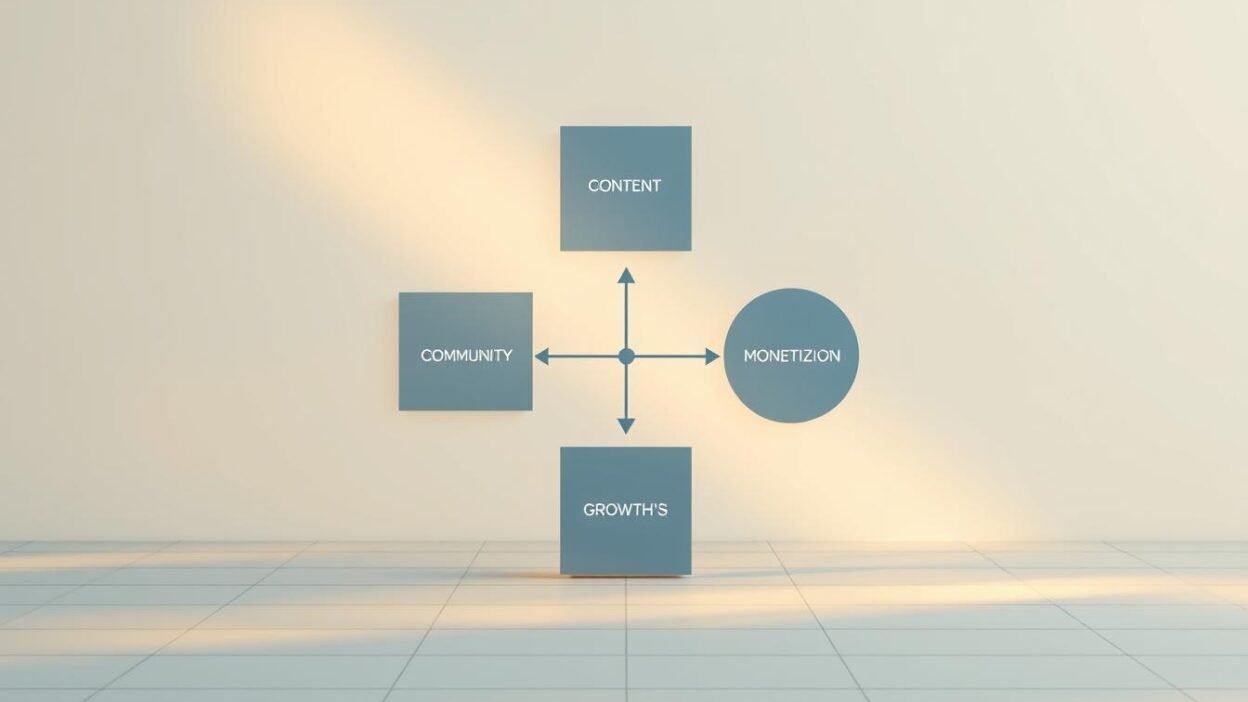
Over 50 million people worldwide now identify as content creators. The creator economy is valued at more than $100 billion. This explosive growth represents a fundamental shift in how individuals generate income and construct career pathways.
The landscape of digital entrepreneurship has transformed traditional employment models. Professionals no longer need corporate backing to build sustainable revenue streams. Instead, they leverage platforms and personal brands to connect directly with audiences.
Understanding the creator economy requires recognizing it as a legitimate business framework. Individuals who successfully turned content creation into multiple six-figure enterprises share common strategic approaches. These professionals combine creative expression with business acumen to drive measurable growth.
The most effective content creators solve specific problems for their target audiences. They generate content creator income through diverse monetization channels. This dual focus on value delivery and revenue generation distinguishes profitable ventures from hobby projects.
Evidence-based methodologies help establish a thriving enterprise in today’s digital marketplace. The following framework guides aspiring entrepreneurs through strategic planning and audience development. It also covers operational scalability necessary for long-term success.
Key Takeaways
- The creator economy represents a $100 billion market with over 50 million active participants worldwide, offering substantial opportunities for digital entrepreneurs
- Building a sustainable creator business requires combining creative content production with strategic business planning and audience understanding
- Successful creators focus on solving specific audience problems rather than merely accumulating social media followers
- Multiple six-figure creator businesses emerge from developing diverse revenue streams and systematic monetization frameworks
- Strategic planning, operational scalability, and market dynamics knowledge differentiate profitable ventures from unsustainable hobby projects
- Evidence-based methodologies provide aspiring entrepreneurs with practical pathways from initial concept through sustainable growth phases
Understanding the Creator Economy and Your Opportunity
The work landscape has changed completely. Creators now bypass traditional gatekeepers to build direct audience relationships. This shift goes beyond technology—it represents a complete restructuring of professional opportunity.
The creator economy means more than just making content. It represents a philosophical change in how value is generated and exchanged. Individuals now have tools to monetize their knowledge without institutional approval.
This democratization has created pathways to financial independence. Previous generations could never access these opportunities.
What the Creator Economy Means for Digital Entrepreneurs
Digital entrepreneur strategies have evolved dramatically as the creator economy matures. The traditional employment model has given way to portfolio careers. Individuals now control their income sources and professional direction.
This shift empowers creators to design businesses aligned with their values. They can match their interests and lifestyle preferences.
The creator economy enables entrepreneurs to build direct relationships with audiences globally. Geographical constraints no longer limit business growth. Platforms facilitate immediate connection between creators and consumers.
Creator economy strategies now prioritize authenticity and specialization over broad appeal. The market rewards creators who develop deep expertise in specific niches. This departs from industrial-age business models that emphasized standardization.
“We’re on a completely new path that no one has ever walked before. That’s so exciting.”
Opportunities within creator economy income generation extend across multiple revenue models. Successful digital entrepreneurs combine advertising revenue, sponsorships, and digital products. This diversification provides financial stability while allowing experimentation.
Current Market Size and Growth Projections
The creator economy has experienced exponential growth over the past five years. Over 50 million individuals worldwide identify as content creators. Approximately two million earn full-time incomes from their creative work.
Market valuation estimates place the creator economy at approximately $104 billion currently. Projections suggest growth to exceed $480 billion within five years. These figures reflect both increasing participants and expanding revenue opportunities.

Understanding these growth trajectories informs effective creator economy growth strategies. Market expansion creates opportunities for specialized niches and innovative business models. Early adopters position themselves advantageously as platforms develop new features.
| Revenue Stream | Average Income Potential | Time to Monetization | Sustainability Rating |
|---|---|---|---|
| Platform Ad Revenue | $500 – $5,000/month | 6-12 months | Medium (platform-dependent) |
| Brand Sponsorships | $1,000 – $10,000/deal | 3-6 months | High (relationship-based) |
| Digital Products | $2,000 – $20,000/month | 3-9 months | Very High (owned asset) |
| Membership Programs | $1,500 – $15,000/month | 6-18 months | Very High (recurring revenue) |
| Consulting Services | $3,000 – $30,000/month | 1-3 months | High (expertise-based) |
Investment in creator economy infrastructure continues to accelerate. Venture capital funding supports platform development and creator tools. This capital infusion signals confidence in long-term market viability.
Geographic expansion represents another significant growth factor. Internet penetration increases globally as platforms extend localization efforts. Creator economy strategies that account for international audiences capture emerging market opportunities.
Why Traditional Employment Rules No Longer Apply
The conventional career framework fails to accommodate creator business realities. Digital entrepreneur strategies require flexibility and rapid adaptation. This misalignment has driven millions to explore creator economy opportunities.
Traditional employment emphasizes predictability and conformity, whereas creator success depends on differentiation. Skills valued in corporate environments often conflict with creative experimentation. This incompatibility explains why many successful creators struggled in traditional workplace settings.
“It depends on what kind of content you want to create as a creator. Also, there are so many new and ultra-specific roles in content like a dedicated meme creator. It’s not unrealistic to create your own job title if you find a gap you can uniquely fill.”
Creator economy income generation operates on performance-based compensation rather than time-based wages. This shift rewards results, audience engagement, and value delivery. The meritocratic nature means anyone can achieve financial success.
The portfolio approach contradicts traditional career advice emphasizing specialization within single organizations. Successful creators develop multiple income streams and maintain diverse skill sets. This agility represents survival strategy rather than career indecision.
Geographic independence further distinguishes creator businesses from traditional employment. Conventional jobs often require physical presence in specific locations. Creator economy strategies enable work from anywhere with internet connectivity.
The measurement of success has shifted from external validation to personal metrics. These include audience growth, revenue generation, and creative satisfaction. This empowers creators to define success on their own terms.
Step 1: Adopt the Digital Entrepreneur Mindset
Adopting the digital entrepreneur mindset separates hobbyists from professionals in the creator economy. This shift goes beyond just making content. It requires rethinking your relationship with digital platforms, risk, and professional identity.
Moving from passive consumer to strategic producer demands psychological resilience and operational discipline. You must embrace uncertainty as a permanent business condition.
The creator economy works differently than traditional employment structures. Instead of trading time for wages, you build assets that generate value independently. This requires comfort with income variability, delayed gratification, and unpredictability.

Transitioning from Consumer to Creator
The shift from consumer to creator forms the foundation of successful creator businesses. Most people spend years consuming content without recognizing the strategic decisions behind it. Becoming a creator means analyzing content through a production lens instead of an entertainment perspective.
This shift involves asking different questions about digital media. Aspiring creators examine content structure, audience engagement techniques, platform algorithms, and monetization strategies. You must consciously deconstruct successful content and identify patterns you can replicate.
“I know it’s really scary going full-time and becoming a creator. I quit my job and went for it full-time, but I think the best thing you can do is before you go full-time, test and learn. Start doing it in your free time. That’s how I got started.”
Starting your creator journey while keeping your current job reduces risk during the learning phase. This approach allows skill development, audience building, and revenue testing without financial pressure. The testing period typically spans six to twelve months.
During this time, you develop production systems and identify audience preferences. You also validate your niche selection.
Embracing Failure as Part of the Learning Process
Successful digital entrepreneurship depends on reframing failure as informational feedback rather than personal deficiency. Content that underperforms provides valuable data about audience preferences and platform dynamics. Failed campaigns reveal insights about market positioning.
The cycle of experimentation, analysis, adjustment, and re-implementation forms the core of sustainable creator businesses. Research shows that people who view setbacks as learning opportunities persist more often. This growth-oriented perspective helps creators extract insights from unsuccessful initiatives.
Each failed experiment narrows the possibilities and brings you closer to profitable strategies.
“Nobody really has it figured out in the beginning and everything is just a learning process. So give yourself time to try and make sure you are not overwhelmed with everything you’re doing. Just take one step at a time.”
The learning process requires patience with incremental progress rather than expectations of immediate success. Most creators experience months of minimal growth before achieving meaningful traction. Psychological endurance becomes a competitive advantage in the creator economy.
Those who persist through the initial difficulty develop necessary skills and audience relationships. They also gain the strategic understanding needed for long-term success.
Setting Revenue Goals and Timelines
Establishing concrete revenue goals transforms abstract creative aspirations into measurable business objectives. These financial targets provide structure to your monetization efforts. They enable strategic resource allocation and progress assessment.
However, goal-setting must balance ambitious vision with pragmatic acknowledgment of typical development patterns.
Most creator businesses require twelve to twenty-four months of consistent effort before generating sustainable income. This timeline reflects the compounding nature of audience growth and algorithmic favor. It also accounts for skill development.
Early-stage creators should establish tiered revenue goals that acknowledge this reality:
- Months 1-6: Focus on skill development and content production systems rather than revenue generation. Target: $0-500/month from initial monetization experiments.
- Months 7-12: Implement diversified revenue streams and audience growth strategies. Target: $500-2,000/month from multiple income sources.
- Months 13-24: Scale successful revenue channels and optimize conversion systems. Target: $2,000-5,000+/month with clear path to sustainability.
These milestones provide realistic expectations while maintaining motivation through measurable progress. Specific targets should adjust based on niche selection, platform choice, and individual circumstances. The general progression from skill-building to monetization to scaling remains consistent.
“If you have zero experience and don’t know exactly what you want to focus on content-wise, say yes to as many opportunities as possible. At this point in your career, it’s less about making a lot of money now and more about landing the educational and insightful experiences you need to build your happiness, self-awareness, & be financially well-off in the long term.”
Committing to Consistency Over Perfection
The commitment to consistency over perfection addresses the perfectionist paralysis that prevents aspiring creators from publishing. Regular content publication builds algorithmic favor and strengthens audience relationships. It also accelerates personal skill development.
Platforms reward consistent creators with increased visibility. Audiences develop viewing habits around reliable publishing schedules.
Establishing sustainable production systems that prioritize reliable output forms the foundation of successful creator businesses. Audience growth and business development emerge from persistent visibility rather than intermittent perfection. A creator who publishes weekly “good enough” content typically outperforms one who publishes “perfect” content sporadically.
Content production schedules should align with realistic capacity assessments rather than unsustainable ambitions. A sustainable schedule maintained for twelve months generates superior results. This beats an aggressive schedule abandoned after six weeks due to burnout.
The entrepreneur mindset integrates all these elements into a cohesive operational philosophy. This includes the consumer-to-creator transition, failure embrace, goal-setting discipline, and consistency commitment. This mental framework enables creators to navigate the inevitable challenges of building a digital business.
The psychological foundation established in this initial step determines your success. It separates those who build sustainable businesses from those who abandon their efforts prematurely.
Step 2: Identify Your Profitable Niche
Every successful creator business starts with one key decision. You must find where your expertise, passion, and profit meet. This choice separates lasting ventures from quick failures.
The process needs honest self-reflection and careful market research.
Without a clear niche, creators can’t build recognition or attract loyal followers. The market rewards specialists who understand their audience’s specific problems. A smart niche choice helps you create a business model for content creators that earns steady income.
Finding the Intersection of Passion and Profit
The best creator businesses align three key elements. First, what you truly enjoy doing. Second, what you’re actually good at.
Third, what people actively need help with.
Start with your real interests. Creating content requires consistent work over months and years. Passion becomes practical, not just romantic, for long-term success.
Skills matter as the second piece. Your niche should use knowledge that makes you credible. You don’t need expert-level skills yet, but you must offer real value.
Market demand completes the picture. Passion and skill only work commercially when audiences will pay for solutions. Research what problems people search for and where current solutions fall short.
Conducting Competitor Research in Your Space
Competitor analysis gives you vital information about your market. You’ll learn about saturation, audience expectations, and how to stand out. This research turns ideas into action plans for online audience building.
Find 10-15 creators in your proposed niche. Study their content formats, posting schedule, engagement rates, and income methods. This reveals what works with audiences and where gaps exist.
Smart content creator marketing means understanding audience reactions, not just competitor actions. Read comments, social discussions, and reviews to find unmet needs.
- Content analysis: Track topics, formats, and styles that get the most engagement
- Monetization mapping: See how successful creators earn money in your space
- Gap identification: Find unexplored topics or angles that create opportunities
- Audience sentiment: Learn what followers love and what frustrates them
- Platform preferences: Discover which platforms dominate your niche and why
This research should guide you, not discourage you. Competition proves people care about your topic. Your goal is standing out, not creating something completely new.
Defining Your Target Audience Demographics
Knowing your audience goes beyond age, gender, or location. Successful online audience building requires understanding values, behaviors, and decision-making patterns.
Basic demographic data helps but misses important details. Focus on what your ideal audience members value, want, struggle with, and prefer.
“Listen to your industry’s audience. It’s not about what you want. What does your audience want? Who are they really? And I don’t mean listing off generic demographical data.”
Creating Detailed Audience Personas
Audience personas are research-based profiles of your ideal followers. These detailed descriptions help you make smart choices about content, communication, platforms, and products.
Build 2-3 main personas for different audience segments in your niche. Include their work background, daily challenges, trusted information sources, and preferred content formats.
Strong personas mix hard data with real insights. Combine platform analytics with surveys and social media conversations.
Understanding Pain Points and Desires
Emotional needs drive engagement and purchases more than surface information needs. Understanding these deeper feelings separates average content from material that builds loyal audiences.
Pain points are specific problems your audience faces regularly. These might be work challenges, personal growth struggles, or knowledge gaps. Find these issues through surveys, interviews, and community watching.
Desires go beyond problem-solving to include goals, identity, and transformation. What does your audience want to become? How do they want others to see them?
| Research Method | Primary Insights Gained | Implementation Approach |
|---|---|---|
| Direct surveys | Specific challenges and preferences expressed in audience’s own language | Deploy short questionnaires through email or social media with 5-7 targeted questions |
| Social listening | Organic conversations revealing authentic frustrations and desires | Monitor relevant hashtags, forums, and community groups systematically |
| One-on-one interviews | Deep qualitative understanding of decision-making and emotional factors | Conduct 10-15 conversations with target audience members using open-ended questions |
| Comment analysis | Patterns in questions, objections, and engagement triggers | Review comments on your content and competitors’ material for recurring themes |
Testing Your Niche Before Full Commitment
Test your niche with small experiments before investing heavily. Testing gives you real proof about audience interest and personal fit.
Create 10-15 content pieces in your proposed niche. Publish consistently over 4-6 weeks while tracking engagement, growth, and feedback.
Study both numbers and comments during testing. View counts and engagement rates provide performance data. Comments and messages show if you’re meeting real needs.
Testing also checks if you can generate enough content ideas. Struggling after a dozen pieces means your niche might be too narrow. If ideas keep flowing, you’ve found good territory.
This experimental approach to content creator marketing reduces risk while teaching valuable lessons. Successful tests confirm your choice and build initial momentum.
Your niche should be focused enough to build authority but flexible for growth. It will naturally evolve as your interests deepen and skills expand.
Step 3: Build Your Personal Brand Foundation
Building a recognizable personal brand is the third step in creator business development. It helps your content stand out in crowded digital spaces. This foundation creates the unique identity that makes your content recognizable and trustworthy.
Your personal brand goes beyond just looks and aesthetics. It includes the complete emotional and intellectual experience audiences have with your content. Creators with clear brand identities keep audiences 3.5 times longer than those without consistent branding.
The creator economy rewards authenticity combined with smart positioning. Building your personal brand gives you freedom to experiment and learn. This approach speeds up business learning and creates new opportunities.
Crafting Your Unique Creator Story
Your creator story turns basic facts into a compelling narrative. It establishes credibility and emotional connection with your audience. This narrative should include your expertise origin, your transformation, and your mission.
The best creator stories identify specific turning points that shaped your perspective. These vulnerable moments help audiences see their own challenges reflected. Your story should directly address what your audience wants to achieve.
Structure your narrative around challenges you faced and insights you gained. This positions you as a guide rather than an unreachable expert. Your story should answer: “Why should I listen to you?”
Developing Your Brand Voice and Personality
Your brand voice is the consistent style audiences recognize across all platforms. This voice comes from conscious decisions about tone, vocabulary, and communication style. The process requires analyzing how you naturally communicate and refining those patterns.
Consider whether your voice should be formal and authoritative or conversational and accessible. Each approach attracts different audience segments and supports different content goals. Your voice should authentically reflect your personality, not imitate other creators.
Find your voice and sprinkle in your own experiences. What do you do that nobody else says or does like you? Sure, it has all been said before. But it has never been said the way John might say it. And things have certainly never been said the way YOU would say them.
Document specific vocabulary choices, sentence structures, and perspectives that define your communication. This documentation ensures consistency when scaling content production or working with team members. Your voice becomes the recognizable thread connecting all content experiences.
Designing Visual Brand Elements
Visual consistency creates immediate recognition and projects professional credibility across digital platforms. The strategic personal brand building process requires developing cohesive aesthetic systems. These visual elements serve as shorthand for your brand identity.
Effective visual branding balances distinctiveness with platform-appropriate conventions. Creators in influencer marketing spaces benefit from visuals that communicate professionalism while maintaining approachability. Your visual system should adapt to various contexts without losing core recognizability.
Logo and Color Palette Selection
Logo development for creators often emphasizes personal elements like stylized initials or signature graphics. Your logo should work well at all sizes, from profile images to presentation slides. Simplicity generally works better in digital contexts where logos appear small.
Color palette selection combines psychological color theory with practical visibility considerations. Choose two to four primary colors that work harmoniously and stand out. Test your palette against common backgrounds to ensure consistent visual impact.
Creating Consistent Templates and Graphics
Template systems streamline content production while reinforcing brand recognition. Develop standardized designs for recurring content needs: video thumbnails, social posts, and promotional graphics. These templates should incorporate your color palette, typography, and compositional preferences.
Consistency in visual presentation signals professionalism and builds trust with audiences. Consistent visual branding increases recognition probability by up to 80%. Investment in template development saves time and enhances brand memorability.
| Brand Element | Primary Function | Development Priority | Consistency Impact |
|---|---|---|---|
| Logo Design | Visual identity anchor | High | Immediate recognition |
| Color Palette | Emotional association | High | Subconscious branding |
| Typography System | Readability and tone | Medium | Professional perception |
| Content Templates | Production efficiency | Medium | Cross-platform unity |
| Graphic Elements | Visual interest | Low | Style reinforcement |
Establishing Your Brand Values and Mission Statement
Brand values articulate the philosophical foundation guiding content decisions and partnership evaluations. These values should identify meaningful impact you seek for your audience. Values-driven personal brand development attracts audience members who share your worldview.
Identify three to five core values that genuinely influence your decision-making process. These might include authenticity, innovation, accessibility, community, or excellence. Each value should connect to specific behaviors audiences observe in your content.
Your mission statement synthesizes your creator story, audience focus, and intended impact. Effective mission statements answer: who you serve, what transformation you facilitate, and why this work matters. This statement becomes the touchstone for evaluating opportunities and maintaining focus.
The mission provides purpose-driven framework that sustains long-term commitment. Creators with clearly articulated missions report 40% higher satisfaction rates. Your mission distinguishes building a sustainable creator business from merely pursuing temporary trends.
Review and refine these foundational brand elements quarterly as your expertise deepens. Personal brand building represents an evolutionary process rather than a fixed achievement. The foundation you establish now creates the platform for scaling your creator business.
Step 4: Choose Your Content Platforms Strategically
Digital creators face a critical choice when picking platforms for their time and creative energy. Spreading yourself too thin across every channel often leads to poor results. Smart platform selection requires analyzing content formats, audience behaviors, and your available resources.
Social media platforms vary dramatically in how they work and who uses them. Successful creators focus on platforms where their content and audience naturally fit. This focused approach helps you master each platform and use your resources wisely.
The platforms you choose today build your creator business foundation. Understanding each platform’s features and growth potential helps you make smart decisions. Let’s examine major content platforms and their opportunities for creator business growth.
YouTube Channel Growth: Building Long-Form Video Presence
YouTube channel growth represents one of the most valuable investments for building sustainable digital businesses. The platform’s search functionality and monetization programs help content get discovered years after publication. Long-form video content lets you cover topics thoroughly and build viewer trust.
The youtube business model offers multiple revenue streams including advertising revenue and channel memberships. These monetization options unlock once you meet specific subscriber and watch-hour thresholds. YouTube also generates leads for higher-value offerings like consulting services and courses.
Content that performs well on YouTube provides real value through education or entertainment. Successful creators identify topics with sustained search interest rather than fleeting trends. The platform rewards consistency with regular upload schedules.
Optimizing for the YouTube Algorithm
Understanding algorithmic priorities fundamentally determines YouTube success. The platform evaluates content through three primary metrics: click-through rate, audience retention, and total watch time. Videos that excel in these areas receive more promotion through search and recommendations.
Optimizing for these metrics requires intentional content structure. Videos should capture attention within the first 15 seconds. Maintaining viewer interest requires pacing variations and progressive value delivery. Ending videos with calls to action extends watch sessions and signals quality.
Creating Compelling Thumbnails and Titles
Click-through rate directly impacts video distribution, making thumbnail and title optimization essential skills. Effective thumbnails use high contrast, minimal text, and expressive facial expressions. The thumbnail should create curiosity while accurately representing content.
Title construction balances keyword inclusion with benefit communication that motivates clicks. Strong titles identify the target audience and promise specific outcomes. Testing title variations and analyzing performance enables continuous improvement.
Growing Instagram Audience Through Visual Storytelling
Growing instagram audience requires embracing the platform’s emphasis on aesthetic presentation. Instagram rewards creators whose expertise translates to visual mediums like photography, design, and fitness. The platform’s multiple formats offer diverse opportunities for audience connection.
Visual storytelling on Instagram communicates values and personality through cohesive aesthetic choices. Successful creators develop recognizable visual styles through consistent color palettes and editing approaches. This visual consistency strengthens brand recognition.
The platform’s discovery mechanisms include hashtag searches and Reels distribution. Understanding how Instagram categorizes content enables strategic optimization. Engagement behaviors like saves and shares signal content quality and expand reach.
Leveraging Reels for Maximum Reach
Instagram’s emphasis on short-form video creates distribution opportunities for Reels. The platform actively promotes this format, resulting in higher reach than traditional posts. Creators who master Reels format can accelerate audience growth substantially.
Effective Reels capture attention within the first second and deliver value quickly. The format rewards entertainment value and quick pacing. Creators should adapt successful content while respecting Instagram’s distinct aesthetic.
Building Community Through Stories
Instagram Stories provide daily touchpoints that strengthen relationships through informal content. The 24-hour lifespan reduces perfectionism and enables authentic behind-the-scenes sharing. Stories humanize creators and build intimacy with followers.
Interactive Story features including polls and questions encourage direct audience participation. These engagement opportunities provide valuable feedback and content ideas. Consistent Story posting maintains awareness and signals active account status.
Using TikTok for Viral Growth Potential
TikTok’s algorithm represents unprecedented opportunity for rapid audience development regardless of follower counts. The platform distributes content based on interest signals rather than follower relationships. This democratized distribution creates faster growth than any previous social platform.
Success on TikTok requires adaptation to the platform’s distinct aesthetic and pacing. Content that performs well features quick cuts, trending audio, and hooks within one second. The platform rewards authenticity over high production value.
Understanding TikTok’s content categorization helps creators position videos for discovery. The algorithm evaluates watch completion, replays, and shares when determining distribution. Creators should balance trend participation with original content showcasing unique expertise.
Don’t be afraid, just start. It can be bad. It can be cringey. Your camera work can be a little terrible. As long as the content is helpful, and it’s related to your niche and target audience… POST! I think this is the best way to get going and see what types of content people enjoy.
This philosophy particularly applies to TikTok, where imperfect action outperforms perfectionist paralysis. The platform’s content velocity rewards consistent posting over production quality. Creators who embrace experimentation discover what resonates faster.
LinkedIn for B2B Creator Opportunities
LinkedIn serves creators targeting business audiences, executives, or professional service clients. The platform’s professional context creates opportunities for thought leadership positioning. Creators who consistently share valuable insights build substantial influence within professional communities.
Content that performs well on LinkedIn addresses professional challenges, industry trends, or business strategy. The platform rewards text-based posts and professional storytelling more than other networks. Long-form articles establish expertise while shorter posts generate higher engagement.
LinkedIn’s algorithm prioritizes content that sparks meaningful conversation. Posts that generate comments receive expanded distribution. Engaging authentically with commenters builds network effects that compound visibility.
Building Your Email List as Your Owned Platform
Email lists represent the singular audience asset creators control independently of platform algorithms. Social media platforms provide valuable distribution channels but function as rented land. Email addresses constitute owned assets that enable direct communication.
Building an email list should begin simultaneously with content creation. Every piece of content should include clear calls to action directing audiences to subscribe. Lead magnets provide compelling incentives for subscription.
Email marketing enables deeper relationship development through longer-form communication and personalized messaging. Subscribers demonstrate higher engagement and conversion rates than social media followers. This permission-based relationship creates foundation for product launches and course enrollments.
Strategic email list development includes segmentation based on interests and engagement levels. This targeting enables relevant messaging that respects subscriber attention. Automation sequences nurture new subscribers and guide them toward deeper engagement.
Step 5: Create Content That Attracts and Engages
Good content attracts new audiences while keeping current community members engaged. The difference between casual creators and professionals shows in their production systems. Successful creators use frameworks that turn creative ideas into scheduled commitments with measurable outcomes.
This approach solves a key challenge: creating consistent content that provides value and generates revenue. Content marketing for creators requires understanding audience psychology, platform mechanics, and strategic business planning. The following frameworks provide structure for sustainable content operations that produce predictable results.
Developing a Strategic Content Calendar
Strategic content calendars turn random posting into disciplined production schedules. These planning tools look 4-12 weeks ahead, showing upcoming content needs and preventing last-minute panic. The calendar works as both an operational blueprint and accountability tool.
Good content calendars include several essential elements. First, they categorize content by strategic purpose: pillar content addressing core audience needs, timely content responding to trends, and seasonal content. Second, they account for production requirements including research time, creation duration, editing processes, and approval workflows.
Successful calendars build in flexibility buffers for unexpected opportunities or necessary adjustments. These buffers typically represent 20-30% of total calendar slots. The calendar becomes a living document that guides rather than constrains content operations.
Calendar development starts with identifying content themes aligned with audience interests and business objectives. These themes create narrative threads connecting individual pieces into comprehensive educational journeys. Thematic organization helps audiences see value accumulation over time.
Write daily even if it’s just a better-written text message. Be conscious of every moment in your day where writing is your chosen form of communication. Everything is content.
This perspective on continuous content creation acknowledges that professional creators develop skills through consistent practice. The discipline of daily writing strengthens clarity, conciseness, and communication effectiveness. This translates directly into higher-quality published content.
Balancing Educational, Entertaining, and Promotional Content
Content balance represents one of the most critical strategic decisions facing creators. Audiences arrive seeking value—education that solves problems, entertainment that provides enjoyment, or inspiration that motivates action. However, creators must also promote their offerings to generate revenue.
Research across multiple platforms suggests optimal content ratios approximate 80% value-providing content and 20% promotional content. This 80/20 principle maintains audience goodwill while creating sufficient promotional touchpoints. However, specific ratios should adjust based on audience expectations and platform norms.
Educational content establishes creator authority by demonstrating expertise and solving specific audience problems. This content type builds trust and positions creators as valuable resources. Educational content forms the foundation for content monetization tips that creators can implement.
Entertaining content creates emotional connections through humor, storytelling, or behind-the-scenes glimpses. Entertainment value reduces consumption friction and increases sharing probability. This content type proves particularly effective for audience growth and viral potential.
Promotional content directly requests audience action: purchasing products, enrolling in programs, or joining membership communities. Effective promotional content integrates value elements—explaining benefits, demonstrating applications, or addressing objections. The connection between promotional content and digital product creation becomes explicit.
| Content Type | Primary Purpose | Optimal Frequency | Key Characteristics |
|---|---|---|---|
| Educational | Build authority and trust | 50-60% of content | Problem-solving focus, actionable steps, expertise demonstration |
| Entertaining | Create emotional connection | 20-30% of content | Personality-driven, storytelling elements, shareability factors |
| Promotional | Drive business outcomes | 15-20% of content | Clear calls-to-action, benefit articulation, objection handling |
| Inspirational | Motivate continued engagement | 10-15% of content | Vision-casting, success stories, aspirational messaging |
This distribution creates rhythm that maintains audience engagement while advancing business objectives. The specific percentages should adapt to audience feedback and engagement metrics.
Mastering Platform-Specific Content Formats
Content success depends on sophisticated adaptation to each platform’s distinct technical specifications and cultural conventions. Identical content messages require substantial reformatting when distributed across different platforms. Understanding these platform nuances separates effective content marketing for creators from ineffective content distribution.
YouTube’s long-form video format favors comprehensive educational content and detailed demonstrations. Optimal video length ranges from 8-15 minutes for most niches. YouTube’s algorithm prioritizes watch time and click-through rate.
Instagram’s visual-first interface emphasizes aesthetic cohesion and quick-consumption content. Feed posts benefit from carousel formats that encourage swiping. Reels compete in the short-form video space with trending audio and rapid pacing.
LinkedIn’s professional context demands business-focused content and thought leadership positioning. Text-based posts often outperform external links. Document posts and carousel PDFs generate high engagement by providing comprehensive value.
TikTok’s rapid-paced entertainment orientation requires immediate visual hooks and trend participation. Successful content typically runs 15-60 seconds. The platform’s algorithm aggressively tests new content with small audience samples.
Each platform develops distinct cultural norms around content style and interaction expectations. Mastering these platform-specific elements requires dedicated study of successful creators. Continuous experimentation with format variations is essential.
Implementing Content Repurposing Systems
Content repurposing maximizes return on content investment by extracting multiple pieces from single production efforts. This strategic approach creates sustainable content operations for resource-constrained creators. Repurposing systems transform one comprehensive piece into 10-20 derivative pieces across multiple platforms.
The foundation of effective repurposing lies in creating substantial “pillar content.” These might include long-form YouTube videos, detailed blog posts, or podcast episodes. Pillar content provides rich source material for extraction and reformatting.
Systematic repurposing follows documented workflows that specify exactly how each content type transforms. These workflows might route a single YouTube video through transcription, excerpt identification, and graphic design. Documentation ensures consistency and enables delegation as creator businesses grow.
The strategic advantage of repurposing extends beyond efficiency to reinforce key messages through repetition. Audiences rarely consume every content piece creators publish. Repurposing ensures important concepts reach audience members regardless of their preferred platform.
Turning Long-Form into Short-Form Content
Long-form content provides rich source material for numerous short-form derivatives. The transformation process begins with identifying compelling excerpts or key insights. These selections should contain complete thoughts that deliver value without requiring full context.
Video content offers particularly versatile repurposing opportunities. A single 20-minute YouTube video might yield 8-12 short-form clips. Effective clips feature strong opening hooks and deliver complete micro-lessons.
Written long-form content transforms into social media quote graphics and tweet threads. Each derivative piece should stand alone while encouraging deeper engagement. This approach applies content monetization tips by creating multiple touchpoints.
Cross-Posting Strategies That Work
Effective cross-posting requires more than identical content duplication across platforms. Successful strategies adapt core messages to each platform’s optimal formats. This nuanced approach respects platform cultures while maximizing content reach.
The cross-posting workflow begins with identifying the native platform. Content then adapts to secondary platforms through format modifications and caption adjustments. A YouTube video becomes the native piece, with Instagram receiving a vertical teaser clip.
Timing considerations significantly impact cross-posting effectiveness. Staggered posting schedules across platforms prevent audience fatigue. Strategic delays between platforms create multiple discovery opportunities for the same core content.
Cross-posting systems document specific adaptation requirements for each platform. These systems prove essential for digital product creation promotion. They ensure product launches reach audiences across their preferred platforms.
Strategic content creation balances artistic expression with business intentionality. The frameworks presented here provide structure without constraining creativity. They enable creators to build sustainable businesses through systematic content operations.
Step 6: Master Social Media Marketing for Creators
Growing audience engagement means understanding that modern platforms work as complex ecosystems. They’re not just simple broadcasting channels. Success depends less on content volume and more on strategic social media marketing for creators.
This approach prioritizes relationship depth over superficial metrics. Sustainable creator businesses emerge from cultivating authentic communities. This beats accumulating passive followers who scroll without meaningful interaction.
Contemporary social media growth tactics demand sophisticated approaches. These integrate community psychology, algorithmic understanding, and strategic collaboration. Creators who master these disciplines develop self-sustaining growth mechanisms.
Engaged community members become active participants in content amplification and brand advocacy. The shift from transactional relationships to genuine community cultivation matters. This represents the difference between temporary viral success and lasting creator business viability.
Growing Audience Engagement Through Community Building
Audience engagement optimization begins with recognizing cognitive limitations that govern human relationship capacity. Research from the Royal Society Publishing established “Dunbar’s number” as approximately 150 individuals. This is the cognitive limit for meaningful relationships.
This principle carries profound implications for social media marketing for creatives. Creators must balance follower growth against relationship quality. Strategic creators apply selective following practices that preserve mental bandwidth for genuine community engagement.
Following fewer accounts creates capacity for meaningful interaction with community members. This beats superficial presence across hundreds of relationships. This intentional approach recognizes that each follow button grants someone “real estate” in your cognitive space.
Community building transcends responding to comments. It extends into creating spaces for member-to-member interaction. Successful creators facilitate conversations among community members.
They establish environments where audience members connect with each other. These peer relationships strengthen community cohesion. They reduce the burden of constant creator presence to maintain engagement momentum.
Engagement metrics should prioritize conversation quality over volume measurements. Response rates, conversation depth, and community-initiated content provide more meaningful indicators. These beat total comment counts or superficial reactions.
Creators who track these qualitative metrics develop clearer understanding. They see which content formats generate substantive interaction versus passive consumption. Community cultivation requires consistent presence within established boundaries that prevent creator burnout.
Designated engagement windows create predictable availability that community members anticipate. This protects creator time for content production and business development. This structured approach maintains engagement consistency without demanding constant platform presence.
Optimizing Content for Search and Discovery
Social platforms increasingly function as primary search engines. Users actively seek solutions, recommendations, and educational content. This behavioral shift necessitates content optimization strategies that prioritize discoverability through search.
Understanding user search behavior within each platform becomes foundational. This matters for social media marketing for creators seeking to expand beyond current audience boundaries. Content titles, descriptions, and captions require strategic construction.
They must anticipate actual search queries while maintaining natural language flow. The balance between search optimization and authentic communication distinguishes effective SEO practices. This beats keyword stuffing that degrades user experience.
Using Keywords and Hashtags Effectively
Keyword research for social platforms mirrors traditional SEO methodology. It accounts for platform-specific search behaviors. Creators must identify search terms with sufficient volume to drive meaningful discovery.
They must avoid oversaturated keywords where new content immediately disappears beneath established competitors. This strategic positioning targets emerging search trends and underserved keyword opportunities. These provide realistic ranking possibilities.
Hashtag strategy varies dramatically across platforms based on discovery mechanisms and user behavior patterns. Instagram supports extensive hashtag usage with optimal performance typically occurring between 8-15 relevant tags. Twitter favors 1-2 highly targeted hashtags.
LinkedIn engagement often decreases with hashtag overuse beyond 3-5 terms. Platform-specific testing reveals optimal hashtag quantities and selection strategies. This works for each creator’s unique niche and content format.
Hashtag research tools identify trending tags within specific communities. They reveal competition levels for different terms. Combining high-volume competitive hashtags with niche-specific lower-competition tags creates balanced discovery potential.
This mixed approach captures searches across different specificity levels. It avoids exclusive reliance on oversaturated terms where content visibility remains minimal. Keyword placement extends beyond hashtags into natural integration throughout video descriptions, captions, and spoken content.
YouTube’s speech recognition technology indexes spoken words within videos. This makes verbal keyword mentions relevant for search ranking. This multidimensional optimization approach ensures content remains discoverable through multiple search pathways.
Understanding Platform SEO
Each social platform employs distinct ranking algorithms that prioritize different engagement signals and content characteristics. YouTube’s recommendation system heavily weights watch time, session duration, and click-through rates. Content that retains viewers and encourages continued platform usage receives preferential algorithmic distribution.
Instagram’s algorithm emphasizes recent engagement velocity and relationship strength between creators and viewers. Content that generates rapid engagement immediately following publication receives extended reach to broader audiences. Strong prior interaction history between accounts increases content visibility.
This relationship-based distribution rewards consistent engagement practices and community cultivation. It beats sporadic viral attempts. The following table compares primary ranking factors across major social platforms:
| Platform | Primary Ranking Factors | Content Optimization Priority | Discovery Mechanism |
|---|---|---|---|
| YouTube | Watch time, session duration, CTR | Viewer retention, compelling thumbnails | Search and suggested videos |
| Engagement velocity, relationship strength | Immediate engagement, consistent interaction | Explore page and hashtag feeds | |
| TikTok | Completion rate, sharing behavior | Hook strength, shareability factors | For You page algorithmic distribution |
| Professional relevance, conversation quality | Industry value, thoughtful engagement | Network feed and hashtag following |
TikTok’s algorithm prioritizes video completion rates and sharing behaviors that indicate exceptional content value. Videos that users watch repeatedly, share with friends, or save for later viewing receive dramatically expanded distribution. This completion-focused ranking rewards concise, high-impact content that delivers value quickly.
LinkedIn emphasizes professional relevance and conversation quality over entertainment value or viral potential. Content that generates thoughtful commentary receives preferential distribution. It also rewards shares within professional networks and demonstrations of industry expertise.
This professional context demands different social media growth tactics. These focus on thought leadership rather than trending entertainment formats.
Collaborating with Other Creators for Cross-Promotion
Strategic creator collaborations generate mutual audience growth through exposure to pre-qualified viewers. These viewers have demonstrated interest in adjacent content. These partnerships introduce creators to audiences already conditioned to consume similar content formats and topics.
This dramatically improves conversion rates compared to general advertising or cold audience building. The efficiency of cross-promotion makes collaboration among the highest-return social media marketing for creatives strategies available. Successful collaborations require genuine relationship development that precedes formal partnership proposals.
Creators should engage authentically with potential collaborators’ content. They should contribute meaningful commentary and establish rapport before suggesting joint projects. This relationship foundation ensures collaborations feel natural to both audiences.
Complementary positioning rather than direct competition creates optimal collaboration dynamics. Partners should serve similar audiences with different expertise areas, content formats, or perspective angles. This provides fresh value rather than redundant information.
A fitness creator might collaborate effectively with a nutrition expert or mental wellness coach. This offers comprehensive value while avoiding direct competition for the same audience attention. Comparable audience sizes ensure equitable value exchange in collaborative partnerships.
Significant audience disparities create imbalanced relationships where larger creators provide disproportionate exposure value. This makes sustained partnerships unlikely. Creators should pursue collaborations with partners at similar growth stages who benefit mutually from the audience exchange.
Collaboration formats vary from guest appearances and joint content creation to structured series and cross-platform promotion campaigns. Testing different collaboration structures reveals which formats resonate most strongly. This works with each creator’s unique audience while providing valuable content variation.
Running Growth Campaigns and Challenges
Concentrated growth campaigns create engagement spikes that leverage social proof and competitive motivation. These accelerate audience expansion. These structured initiatives include hashtag challenges, giveaways, collaborative projects, or educational series.
They incentivize sharing, tagging, and participation behaviors that extend organic reach beyond existing audiences. The concentrated energy of campaigns generates momentum that passive content publication rarely achieves. Hashtag challenges encourage user-generated content that amplifies campaign reach through participant networks.
Successful challenges feature clear participation instructions, achievable creative requirements, and compelling incentives that motivate action. The viral potential of well-designed challenges can expose creator brands to exponentially larger audiences. This happens when participants share challenge content with their own followers.
Strategic giveaways require careful structure to attract genuine potential community members. This beats prize-seekers who disappear after campaign conclusion. Entry requirements should include actions that indicate authentic interest.
These include following the account, engaging with specific content, and sharing thoughtful commentary. Prize selection should appeal specifically to the target audience niche. This beats broad-appeal items that attract irrelevant entries.
Educational challenge series guide participants through multi-day learning experiences. These build sustained engagement while demonstrating creator expertise. These progressive challenges create ongoing touchpoints that strengthen creator-audience relationships.
Examples include 30-day fitness transformations, week-long creative projects, and skill-building sequences. The educational value positions creators as authorities while providing tangible participant benefits beyond entertainment. Campaign timing considerations account for audience availability patterns, competing platform activity, and seasonal relevance.
This maximizes participation rates. Launch timing, duration length, and promotional intensity require strategic planning. This considers when target audiences have capacity and motivation to engage fully.
Post-campaign analysis reveals participation patterns and engagement metrics. These inform future campaign optimization and social media growth tactics refinement.
How to Build a Successful Creator Business with Multiple Revenue Streams
Financial sustainability in the creator economy depends on developing diverse income streams. These streams work together to generate consistent revenue. The distinction between hobbyist content creation and professional business operations lies in strategic revenue diversification.
Successful creators implement content monetization strategies that reduce dependence on any single income source. This approach maximizes total earnings potential.
Understanding the full landscape of monetization opportunities enables creators to construct robust business foundations. Each revenue stream contributes differently to overall financial health. Some provide immediate income while others build long-term passive revenue.
The most resilient creator businesses typically combine four to six distinct influencer income streams. These streams complement each other.
Platform algorithms change frequently, and audience preferences shift over time. Revenue diversification protects against these inevitable fluctuations. This approach transforms content creation from precarious freelance work into sustainable business operations.
“Freelance opportunities come and go. You can have three freelance opportunities this month and then none for the next three months. So you have to be really really organized when it comes to saving money for rent and food and all that fun stuff.”
Content Monetization Platforms: Ad Revenue and Partner Programs
Platform-based monetization through ad revenue and partner programs provides foundational income. This income correlates directly with audience size and engagement levels. These content monetization platforms require no active sales effort beyond consistent content production.
The automated nature of platform monetization makes it an essential starting point. It creates passive revenue streams for creator business development.
Ad revenue operates on impression-based models. Creators earn money each time advertisements display alongside their content. Payment rates vary significantly based on audience demographics, content category, and geographic location.
Premium content niches like finance, technology, and business typically command higher advertising rates. Entertainment-focused content generally earns less.
Platform partner programs establish baseline revenue that grows proportionally with audience expansion. This predictable scaling allows creators to forecast income growth. However, exclusive reliance on platform monetization exposes creators to algorithm changes and policy modifications.
YouTube Partner Program Requirements
The YouTube Partner Program represents the most established platform monetization opportunity for video creators. Eligibility requirements mandate 1,000 subscribers and 4,000 watch hours within the previous 12 months. These thresholds ensure that monetized channels have demonstrated audience interest and content consistency.
Revenue generation on YouTube typically ranges from $3 to $5 per 1,000 views. This varies substantially based on content category and viewer demographics. Channels focused on high-value topics like investing, real estate, or technology often earn $10 to $20.
Geographic factors also influence earnings. Viewers from countries like the United States, Canada, and Australia generate higher ad revenue.
Beyond basic ad revenue, YouTube offers additional monetization features. These include channel memberships, Super Chat during live streams, and merchandise shelf integration. Creators who build substantial YouTube audiences often find this platform becomes their primary revenue source.
TikTok Creator Fund and Instagram Bonuses
TikTok Creator Fund and Instagram bonus programs provide platform-specific monetization for short-form video content. These programs compensate creators based on video views and engagement metrics. However, payment rates have faced significant creator criticism for substantially lower per-view compensation.
TikTok Creator Fund typically pays between $0.02 and $0.04 per 1,000 views. This makes it challenging to generate substantial income without massive view counts. Instagram bonus programs vary by creator and are often invitation-only based on platform algorithms.
Despite lower direct payments, these platforms offer significant value for audience building. Many creators use TikTok and Instagram primarily for visibility and community development. The cross-platform approach leverages each platform’s strengths within a comprehensive business model for influencers.
Securing Brand Partnerships and Sponsorships
Brand partnerships and sponsored content represent the most lucrative revenue stream for most creators. Compensation ranges from hundreds to hundreds of thousands of dollars per sponsored content piece. Brands increasingly recognize the superior return on investment from creator partnerships.
The authentic endorsement that creators provide generates higher conversion rates than conventional advertisements. Audiences trust creator recommendations because they perceive them as peer advice. This trust translates directly into purchasing behavior.
Successful brand partnerships align with creator values and audience interests. This maintains authenticity while generating revenue. Creators who accept partnerships misaligned with their content risk damaging audience trust.
“I think one of the moments I considered the fact that I can monetize my passion was when a corporation reached out to me and they wanted to pay me to teach their employees how to make my favorite dish. And I was like, ‘are you kidding?’. Like what a dream job. I get to teach you how to make one of my favorite foods and get paid for it.”
Creating a Media Kit
A professional media kit professionalizes sponsorship discussions by providing comprehensive data about your creator business. This document communicates audience demographics, engagement metrics, previous brand collaborations, and partnership investment levels. The visual polish and data organization demonstrate business sophistication that brands expect.
Effective media kits include the following essential components:
- Audience demographics: Age ranges, geographic distribution, gender breakdown, and interest categories
- Engagement statistics: Average views, likes, comments, shares, and engagement rates across platforms
- Content examples: Portfolio of best-performing content demonstrating production quality and style
- Previous partnerships: Case studies showing successful brand collaborations with results achieved
- Partnership packages: Tiered pricing options for different levels of brand integration
Media kits should be updated quarterly to reflect current statistics and recent content achievements. The document format should be PDF for easy sharing and consistent display. Many creators maintain both a comprehensive media kit and a one-page summary.
Pitching to Brands Effectively
Effective brand pitching requires research-based personalization. This demonstrates understanding of brand values, target audiences, and marketing objectives. Generic partnership requests rarely generate responses.
Customized proposals that address specific brand needs convert at significantly higher rates. The pitch should propose concrete creative concepts rather than simply offering promotion opportunities.
Successful pitches follow this strategic framework:
- Research the brand’s recent campaigns, target demographic, and marketing challenges
- Identify alignment points between your audience and the brand’s target customers
- Develop specific content concepts that integrate the brand authentically into your style
- Propose measurable outcomes and success metrics for the partnership
- Include pricing that reflects your audience value while remaining competitive
Follow-up communication maintains professionalism while demonstrating genuine interest in partnership development. Many successful brand relationships begin with smaller test collaborations. Building a portfolio of successful partnerships creates momentum for securing increasingly lucrative sponsorship deals.
Affiliate Marketing Income for Content Creators
Affiliate marketing generates commission-based revenue through product recommendations. Creators earn percentages of sales generated through unique tracking links. This content monetization strategy aligns creator incentives with audience value delivery.
Commission rates typically range from 5% to 30% depending on product category. Affiliate program terms also affect rates.
Successful affiliate marketing requires authentic product endorsement rather than aggressive promotion. Creators should only recommend products they have personally used. The recommendation should integrate naturally into content that educates or entertains.
Strategic affiliate marketing focuses on products that solve specific problems your audience faces. Tutorial content, product comparison videos, and resource guides provide natural contexts. The content should deliver value independent of the affiliate promotion.
| Revenue Stream | Income Potential | Time to Revenue | Scalability |
|---|---|---|---|
| Platform Ad Revenue | $3-20 per 1,000 views | 3-6 months | High with audience growth |
| Brand Sponsorships | $500-100,000+ per post | 1-3 months | Medium based on niche |
| Affiliate Marketing | 5-30% commission | 1-2 months | High with content library |
| Digital Products | $10-500 per sale | 2-4 months | Very high passive income |
Selling Your Own Digital Products
Creating and selling digital products provides the highest profit margins. It also gives greatest control over pricing, positioning, and customer relationships. Digital products include ebooks, templates, presets, guides, software tools, and downloadable resources.
Unlike physical products, digital offerings have no inventory costs. They have unlimited scaling potential.
Product development begins with identifying recurring questions, challenges, or needs expressed by your audience. The most successful digital products address specific pain points with actionable solutions. Creators should validate product ideas through audience surveys or pre-sales.
Digital product pricing should reflect the transformation value rather than production costs. Products priced between $27 and $97 typically convert well. Premium offerings can command prices from $200 to $500 for comprehensive solutions.
Consulting and Coaching Services
Consulting and coaching services monetize expertise directly through one-on-one or group sessions. This approach to monetizing creator content commands premium pricing justified by transformation potential. Hourly rates for creator consultants typically range from $100 to $500.
Service-based income provides immediate revenue without requiring product development or large audience sizes. Creators can begin offering consulting services once they’ve demonstrated expertise. The personalized nature of services creates high client satisfaction.
However, service-based income trades time for money. This creates scalability limitations that eventually cap earning potential. Most successful creators use consulting strategically during business growth phases.
Group coaching programs and recorded training materials help scale expertise delivery. These tools extend reach beyond individual time constraints.
The combination of these diverse revenue streams creates financial resilience. Strategic implementation of multiple influencer income streams transforms content creation into predictable business operations.
Step 8: Develop Passive Income Streams for Long-Term Success
Long-term financial success in the creator economy requires strategic income channels. These channels work independently of your daily content output. Most creators face a simple problem: when content stops, income stops.
Developing passive income streams changes this equation completely. These revenue sources keep generating income long after you create them. This shift transforms how you earn money as a creator.
Active income requires ongoing time investment for each dollar earned. Passive income uses upfront work to create assets that generate recurring revenue. This represents the difference between building a job and building a business.
Real success comes from consistent implementation rather than perfect tools. The more resourceful you become, the more you realize tools don’t work unless you do. You still need to put in the work that makes all the difference.
Creating and Selling Digital Products
Digital products represent the quintessential passive income for creators. They leverage your existing expertise to develop reproducible assets. These products sell repeatedly without additional production costs or fulfillment complexity.
Digital products offer infinite scalability. Creating one unit requires the same effort as selling thousands. This makes them incredibly powerful for building sustainable income.
Start by identifying specific problems your audience faces regularly. Successful digital products solve concrete challenges rather than providing general information. This problem-solution alignment determines product viability more than production quality.
Templates, presets, and tools solve specific technical challenges for your audience. These products typically command $10-100 price points. They require minimal ongoing maintenance after initial development.
The key advantage lies in their immediate practical application. Customers can implement them instantly to achieve specific outcomes. This creates immediate value for buyers.
Common examples include Lightroom presets for photographers that replicate signature editing styles. Canva templates help social media managers handle client content efficiently. Spreadsheet templates assist with financial planning and budget tracking.
Development requires understanding the technical specifications of target platforms. Test across different use cases before launching. The most successful tools include comprehensive instructions that reduce customer confusion.
Ebooks and Guides
Ebooks and guides package expertise into comprehensive written resources. These products provide detailed instruction, framework explanation, or reference material. They benefit tremendously from existing audience trust.
Successful ebooks typically range from 30-200 pages. They command $15-50 price points depending on depth and specialization. The content should expand significantly beyond free material.
Readers purchase ebooks for organized, comprehensive treatment of topics. They want more than scattered blog posts or videos. This makes ebooks valuable for both creators and audiences.
The production process involves outlining comprehensive coverage of your chosen topic. Develop each section with actionable frameworks. Incorporate visual elements for clarity and professional formatting for readability.
Building Online Courses and Educational Programs
Online courses represent higher-investment, higher-return online content monetization opportunities. They deliver structured transformation through comprehensive educational experiences. Course development requires substantial upfront investment.
Comprehensive courses typically command $200-2,000+ price points. They deliver measurable transformation rather than simple information transfer. The pricing reflects the value of outcomes rather than hours of content.
Students pay for results, not video length. This outcome-focused positioning justifies premium pricing. It works when courses deliver genuine skill development or business results.
Course structure should follow proven instructional design principles. Start with clear learning objectives. Break complex skills into progressive modules.
Incorporate practice exercises and assignments. Provide feedback mechanisms. Build community support among students for better results.
Platform selection significantly impacts course delivery and student experience. Self-hosted solutions like Teachable or Thinkific offer complete control. Marketplace platforms like Udemy provide built-in audiences with reduced pricing power.
Licensing Your Content to Media Outlets
Content licensing creates additional revenue from existing work. This happens through redistribution rights without requiring new production effort. Licensing agreements grant specific usage rights while maintaining your ownership.
Photographers license images through stock platforms like Shutterstock or Adobe Stock. They earn royalties each time someone downloads their work. Videographers license footage to production companies, news outlets, or educational platforms.
Writers license articles to publications seeking quality content. Each transaction generates passive income streams for creators. The original asset’s value remains unchanged.
The licensing process begins with identifying platforms that serve your content niche. Research their submission requirements, rights structures, and payment terms. Quality control standards vary significantly across platforms.
Successful licensing requires understanding rights management and exclusivity terms. Non-exclusive licenses allow selling the same content to multiple buyers simultaneously. Exclusive licenses command higher rates but restrict your ability to monetize elsewhere.
Creating Evergreen Content That Earns While You Sleep
Evergreen content focuses on topics with persistent rather than temporal relevance. This content continues to attract audiences years after publication. The strategic focus creates truly passive income streams that compound over time.
Address fundamental principles and foundational knowledge rather than trending topics. A photography tutorial on understanding aperture remains relevant indefinitely. Coverage of a specific camera model becomes outdated within years.
Search engine optimization plays a critical role in evergreen content performance. Content targeting informational search queries attracts organic traffic indefinitely. This passive discovery mechanism converts content creation into an asset that works continuously.
Monetization strategies include display advertising that generates revenue from ongoing traffic. Affiliate links to recommended products earn commissions from purchases. Strategic product promotions convert readers into customers.
A single comprehensive guide optimized for search can generate thousands of dollars annually. These combined revenue sources work together effectively. This makes evergreen content incredibly valuable.
The compounding effect of evergreen content creation cannot be overstated. Each new piece adds to your library of working assets. Creators who published 50 evergreen articles five years ago continue earning from that work today.
Step 9: Launch Subscription Business Models
Launching a subscription-based creator business establishes financial sustainability through recurring payments. It also deepens audience relationships beyond casual viewership. Subscription business models transform the traditional creator-audience dynamic from sporadic transactions into ongoing partnerships.
Members provide consistent monthly revenue in exchange for exclusive value, community access, and premium content experiences. This approach creates predictable income streams. Creators can plan long-term business investments with greater confidence.
The subscription economy has fundamentally altered how creators monetize their expertise. Unlike advertising revenue or one-time product sales, membership programs generate reliable monthly income. Revenue compounds as the subscriber base grows.
Successful subscription strategies require careful platform selection and strategic pricing architecture. Compelling value propositions and dedicated community cultivation efforts maintain member engagement over extended periods.
Setting Up Patreon or Membership Platforms
Establishing the technical infrastructure for subscription management begins with selecting the right platform. Platforms should align with content format, audience preferences, and business requirements. Patreon remains the dominant choice for creators seeking comprehensive membership management.
Patreon offers built-in payment processing, content delivery systems, and communication tools. These features are designed specifically for recurring revenue models.
Alternative platforms offer distinct advantages depending on creator needs. YouTube Memberships integrate directly with existing video channels, eliminating platform fragmentation for video creators. Substack excels for newsletter-focused creators prioritizing written content distribution.
Independent solutions like MemberSpace or Memberful provide greater customization and brand control. These options work for creators willing to manage additional technical complexity.
Platform selection considerations extend beyond features to financial implications. Transaction fees typically range from 5% to 12% of gross revenue. These fees significantly impact profitability at scale.
Creators generating substantial membership income should calculate break-even points. Independent platforms with flat monthly fees may become more economical than percentage-based pricing structures. Integration capabilities with existing content distribution systems matter too.
Email marketing tools and analytics platforms influence operational efficiency. These factors should inform platform decisions within any comprehensive social media business plan.
Designing Tiered Membership Levels
Strategic tier architecture applies pricing psychology principles to accommodate diverse audience segments. Different audiences have varying financial capacity and benefit expectations. Research shows that 3-5 membership tiers optimize conversion rates.
This range provides clear differentiation without overwhelming potential subscribers with excessive choices.
Effective tier structures follow ascending value propositions that correspond proportionally to price increases. Entry-level tiers typically position at $3-10 monthly. This removes financial barriers while establishing the membership habit among supporters.
Mid-tier memberships at $15-30 monthly attract the largest subscriber segment. These offer substantial exclusive content and community access that justifies regular investment. Premium tiers ranging from $50-500 monthly target dedicated superfans.
Premium members seek personalized interactions, consultation access, or comprehensive content libraries. These deliver professional development value beyond entertainment.
What to Offer at Each Price Point
Benefit allocation across tiers requires strategic balance between production feasibility, perceived value, and competitive positioning. Entry-level tiers should provide tangible benefits with minimal additional production burden. Early content access, behind-the-scenes updates, and exclusive community forum participation create value.
Member-only posts also add value without substantially increasing workload.
Mid-tier benefits expand to include exclusive content formats unavailable through free channels. Monthly live Q&A sessions, extended tutorial videos, and downloadable resources provide compelling value. Discount codes for products or services and voting rights on content direction justify recurring investment.
Premium tier offerings deliver highly personalized interactions that smaller member counts make sustainable. One-on-one consultation sessions, detailed feedback on member work, and private messaging access transform the membership. Physical merchandise and comprehensive course access shift memberships from content subscription into mentorship relationships.
| Tier Level | Monthly Price Range | Core Benefits | Production Effort |
|---|---|---|---|
| Entry Support | $3-10 | Early access, community forum, exclusive updates | Minimal additional work |
| Standard Membership | $15-30 | Exclusive content, monthly Q&A, downloadable resources | Moderate ongoing effort |
| Premium Partnership | $50-500 | Personal consultations, detailed feedback, private access | Significant personalized attention |
Creating Exclusive Member Benefits
Designing membership benefits that justify recurring investment requires identifying premium formats and experiences. These should be unavailable through public channels. Exclusive content should complement rather than replace free offerings.
Position membership as enhancement rather than access requirement for core value.
Private podcasts featuring extended discussions, source files for creative projects, and comprehensive tutorials create distinction. Personal portfolio reviews and intimate community forums motivate subscription investment. The exclusivity itself becomes part of the value proposition.
Members gain access to creator expertise and community connections impossible to replicate through public content consumption.
Personalized interactions represent particularly compelling benefits for premium tiers. Direct feedback on member projects, answered questions during office hours, and personalized recommendations create value. Acknowledgment in content creates emotional connections that transcend transactional relationships.
Building Community for Subscriber Retention
Successful membership programs function fundamentally as communities rather than merely content subscriptions. Research demonstrates that member retention correlates more strongly with community engagement than content volume. Social connections and shared identity create switching costs beyond content value alone.
Fostering meaningful member interaction requires dedicated spaces and facilitated conversations. Private forums, Discord servers, or dedicated social media groups provide venues. Members connect with each other beyond creator interactions.
Community guidelines establishing respectful engagement standards protect the environment. They also encourage authentic participation.
Creators who actively participate in community discussions significantly improve retention rates. Celebrating member achievements and facilitating peer connections transforms individual subscriptions into collective experiences. Creating member spotlights, organizing collaborative projects, and hosting virtual meetups adds value.
Membership value extends beyond creator-produced content to peer relationships and community belonging.
Strategies for Growing Your Membership Base
Expanding subscription revenue requires systematic promotional integration within existing content distribution. Strategic conversion optimization is also essential. Successful creators incorporate membership mentions naturally throughout free content.
They articulate value propositions that emphasize transformation and exclusive access rather than generic support requests.
Conversion-optimized promotional strategies include dedicated explainer content showcasing membership benefits. Member testimonials demonstrating tangible value received help too. Strategic calls-to-action positioned during high-engagement content moments drive conversions.
Social proof through subscriber counts, member success stories, and community highlights reduces perceived risk. Potential members considering subscription investment need reassurance.
Launch campaigns create urgency through limited-time founding member benefits. Bonus content bundles or discounted annual subscriptions incentivize immediate conversion. These campaigns work particularly effectively when integrated into broader content calendars.
A comprehensive social media business plan aligns promotional timing with content milestones or seasonal audience engagement patterns.
Retention-focused growth recognizes that existing member satisfaction drives sustainable expansion. Reduced churn and organic referrals follow. Creators who consistently deliver promised value build membership programs that grow through reputation.
Soliciting member feedback and evolving offerings based on subscriber preferences matters. Word-of-mouth recommendation drives growth more than aggressive promotional tactics alone.
Step 10: Scale Your Creator Brand Beyond Content
Creator business success eventually hits a ceiling. Personal capacity limits growth without structural transformation. The shift from individual creator to business operator requires strategic changes.
Scaling creator brand initiatives address a fundamental constraint. Personal time and energy are finite resources. Business opportunities and audience demands continue expanding exponentially.
This scaling challenge affects creators across all niches and platforms. A sustainable creator business requires infrastructure that functions independently. You can’t be personally involved in every operational detail.
The most successful digital entrepreneurs recognize an important truth. Personal content creation represents only one component of comprehensive business operations. Strategic expansion beyond content production unlocks growth trajectories impossible through individual effort alone.
Identifying Opportunities for Business Expansion
Business expansion opportunities emerge from systematic analysis. Examine current operations, audience feedback patterns, and market adjacencies aligned with core competencies. Look at operational bottlenecks that constrain output quality or quantity.
Identify areas where capacity limitations prevent capitalizing on existing opportunities. These constraints often reveal the highest-value expansion priorities.
Audience requests and engagement patterns provide direct market validation. Repeated requests for specific products, services, or content formats signal unmet demand. These signals indicate opportunities that expansion could address.
Revenue diversification through expansion reduces platform dependency risks. It creates multiple digital creator income channels. Potential expansion areas include physical product development, software creation, and event production.
Consider consulting services, licensing arrangements, and educational program development. Market research into adjacent opportunities helps identify expansion paths with existing audience overlap. Creators with established authority can leverage brand equity into complementary offerings.
Building a Team: Virtual Assistants and Contractors
The transition from solo creator to team leader represents a fundamental mindset shift. You move from task execution to strategic oversight. Content creator Megan Jayne Crabbe observes:
The people who are super successful and look like they have everything sorted out, they probably have teams. They probably have a whole bunch of people who work with them. Very few people are doing this job completely solo by themselves.
Initial hiring typically addresses time-intensive tasks with standardized processes. These tasks don’t require creator-specific expertise. Virtual assistants can manage email correspondence, schedule coordination, and basic administrative functions.
This delegation liberates creator attention for strategic activities only they can perform.
Contractor relationships provide specialized expertise without full-time employment commitments. Graphic designers, web developers, advertising specialists, and business consultants offer professional capabilities. Scaling digital influence through professional execution elevates production quality and operational efficiency.
Team building requires clear communication frameworks and quality standards. Documentation of processes, expectations, and brand guidelines ensures consistency. Project management platforms facilitate coordination and accountability.
It takes a village. So build your village, build your team because you do not have to do it alone. You should not have to do it alone. And that allows you more time and energy and love to give into your creative magic that you want to bring into the world.
Delegating Editing and Production
Video editing, audio production, and graphic design represent specialized technical skills. These skills consume disproportionate time relative to creator comparative advantage. Professional editors often deliver superior results in a fraction of the time.
This delegation creates dual benefits of quality improvement and time liberation.
Content production workflows should clearly delineate creator responsibilities from team member contributions. Creators focus on on-camera presence, script development, and strategic direction. Editors handle technical execution, color grading, sound mixing, and visual effects.
Establishing production templates and style guides ensures consistency. Detailed feedback during initial collaborations calibrates editor understanding. This helps align work with creator preferences and brand standards.
Hiring Community Managers
Community management demands scale unsustainably as audiences grow. This creates impossible expectations for personal creator response to every interaction. Dedicated community managers maintain audience relationships through comment responses and message replies.
Effective community managers internalize brand voice and values. They represent creator perspectives authentically in audience interactions. Training processes should emphasize communication style, common question responses, and escalation protocols.
Community management platforms centralize interactions across multiple channels. This enables efficient response workflows. Analytics tracking measures engagement patterns and identifies emerging topics or concerns requiring strategic attention.
Automating Repetitive Tasks with Tools and Software
Automation applies technology solutions to standardize recurring operational requirements. It eliminates manual execution of repetitive processes. Strategic automation investments generate compounding time savings that accumulate across countless task iterations.
The resulting operational efficiency directly impacts digital creator income potential. It maximizes productive capacity allocation.
Content scheduling platforms automate distribution across multiple channels simultaneously. Tools like Buffer, Hootsuite, or Later enable batch content preparation. Automated publication follows optimal timing strategies.
Email marketing automation delivers personalized communication sequences triggered by subscriber actions. Welcome series, nurture campaigns, and promotional sequences operate continuously. They work without manual intervention for each subscriber interaction.
Key automation categories include:
- Analytics dashboards: Automated data collection and performance reporting consolidates metrics across platforms
- Customer relationship management: CRM systems track audience interactions and automate follow-up sequences
- Project management platforms: Task tracking, deadline reminders, and workflow coordination operate systematically
- Invoice and payment processing: Automated billing, payment collection, and financial record-keeping reduces administrative burden
- Social media monitoring: Automated alerts for brand mentions, relevant conversations, and engagement opportunities
Automation investment decisions should prioritize highest-frequency tasks consuming significant cumulative time. The return on automation tools compounds through repeated execution cycles. These cycles would otherwise require manual attention.
Expanding into New Platforms and Content Formats
Platform expansion creates audience diversification while accessing format-specific monetization opportunities. Strategic expansion prioritizes platforms with substantial untapped audience potential. However, excessive platform proliferation risks quality dilution and operational overwhelm.
New platform adoption should leverage existing content assets through repurposing strategies. This approach doesn’t require entirely original creation for each channel. Long-form video content segments into short-form clips.
Podcast audio extracts into audiogram social posts. Written content adapts across blog posts, newsletters, and social captions.
Format experimentation identifies audience preferences and creator competitive advantages. Live streaming, interactive content, community features, and emerging formats present differentiation opportunities. This happens as platforms introduce new capabilities.
Cross-platform promotion drives audience migration between channels. Each platform serves strategic purposes within comprehensive distribution architecture. Email lists provide owned audience access independent of platform algorithm changes.
YouTube establishes long-form authority while TikTok or Instagram Reels generate discovery through viral potential.
Expansion timing considerations balance opportunity costs against capacity constraints. Premature expansion before establishing platform mastery fragments attention. Strategic sequencing builds one platform to sustainable momentum before expanding attention to additional channels.
Platform-specific optimization recognizes that content strategies vary dramatically across different channels. Formats and engagement patterns differ too. Successful multi-platform presence requires tailored approaches rather than identical content distribution across all channels.
Step 11: Manage Your Creator Business Finances
Your financial foundation determines your capacity for long-term survival and strategic growth. Traditional employment automatically withholds taxes and structures benefits for you. Creators must establish comprehensive financial systems addressing business formation, income management, and tax compliance.
Professional financial management transforms content creation from unpredictable hustle into sustainable enterprise.
Many creators focus exclusively on content production and audience growth while neglecting financial infrastructure. This approach creates vulnerability to cash flow problems, tax penalties, and legal complications. Successful content creator revenue strategies require equal attention to creative output and financial discipline.
So reading contracts, sending invoices and learning how to file taxes because if you’re going full-time, you really need to learn to be self-employed. Just because you’re not wearing a suit and tie, doesn’t mean you’re not a business person.
Managing multiple revenue streams requires understanding self-employment obligations and maintaining compliance with evolving regulations. Creators who implement professional financial management from the beginning position themselves for scalable growth. Operational stability follows systematic financial practices.
Setting Up Your Business Structure
Establishing a formal business structure provides legal protection, tax optimization opportunities, and professional credibility. The business entity you choose affects personal liability exposure and tax obligations. This decision represents one of the most consequential choices in building your creator enterprise.
Most content creators operate initially as sole proprietors without formal registration. They transition to more structured entities as revenue increases. Understanding the characteristics of different business structures enables informed decision-making.
LLC vs. Sole Proprietorship for Creators
The choice between sole proprietorship and Limited Liability Company formation represents the fundamental decision most creators face. Each structure offers distinct advantages and limitations. These align with different business situations and growth stages.
| Aspect | Sole Proprietorship | LLC |
|---|---|---|
| Formation Requirements | No formal registration needed; automatic when conducting business | State filing required ($50-500 depending on state); annual reports and fees |
| Liability Protection | No separation between personal and business liability; personal assets at risk | Separates personal and business liability; protects personal assets from business claims |
| Tax Treatment | Pass-through taxation; business income reported on personal return (Schedule C) | Pass-through taxation with flexibility for S-Corp election; potential tax optimization |
| Professional Credibility | Perceived as informal; may limit partnership opportunities | Enhanced legitimacy; preferred by brands for influencer marketing business partnerships |
| Administrative Complexity | Minimal paperwork and compliance requirements | Requires separate business records, annual filings, and operational formalities |
Sole proprietorships offer administrative simplicity and zero formation costs. They work well for creators testing business viability or earning modest supplemental income. However, the lack of liability protection means personal assets remain exposed to business-related claims.
LLCs provide liability separation that protects personal assets while maintaining pass-through taxation. The formation costs represent minimal investment compared to the protection and credibility gained. Most creators earning over $30,000 annually benefit from LLC formation.
The decision should consider current revenue levels, liability exposure from your content type, and partnership opportunities. Creators working with brands or earning substantial income typically benefit from LLC formation. Consulting with business attorneys or accountants provides personalized guidance based on individual circumstances.
Opening Business Bank Accounts
Separating business and personal finances through dedicated business bank accounts provides essential financial clarity. This separation simplifies tax preparation and demonstrates business legitimacy to potential partners. It reinforces the legal distinction between personal and business activities.
Business banking infrastructure should include checking accounts for operational transactions. Savings accounts hold tax reserves and emergency funds. Business credit cards separate business expenses while building business credit history.
Opening business accounts requires your business formation documents and Employer Identification Number from the IRS. The EIN functions as a business social security number. You can obtain it free through the IRS website in minutes.
Maintaining separate accounts prevents commingling of funds that could undermine legal protections. All business revenue should deposit into business accounts. All business expenses should pay from business accounts.
Tracking Income from Multiple Revenue Sources
The diversified nature of social media business model revenue creates complexity requiring systematic income tracking. Revenue arrives from platform ad payments, brand sponsorships, and affiliate commissions. Each has different payment schedules, tax documentation, and tracking requirements.
Comprehensive income tracking provides visibility into which revenue sources generate the most return. It enables accurate tax reporting and facilitates financial forecasting. Without systematic tracking, creators cannot accurately assess business performance or optimize revenue strategies.
Accounting software designed for small businesses addresses this complexity through automated transaction categorization. Financial reporting becomes streamlined. Popular options include:
- QuickBooks Online – Comprehensive features with bank integration, invoice generation, and tax preparation support ($30-180 monthly depending on plan)
- FreshBooks – User-friendly interface focused on service businesses with strong invoicing capabilities ($17-55 monthly)
- Wave – Free accounting software with income/expense tracking and invoicing; monetizes through payment processing and payroll services
- Xero – Robust platform with extensive integration options and collaborative features ($13-70 monthly)
These platforms connect to business bank accounts to automatically import transactions. They allow categorization by revenue source and expense type. This automation reduces manual data entry while maintaining accurate records.
Implementing content creator revenue strategies requires tracking revenue by source, client, platform, and product. This granular visibility enables identification of high-performing revenue streams worth expanding. Monthly financial review of these metrics should inform strategic business decisions.
Understanding Self-Employment Taxes for Digital Creators
Self-employment tax obligations represent one of the most surprising aspects of creator business finances. Unlike employees who have taxes automatically withheld from paychecks, self-employed creators must calculate taxes independently. They pay through quarterly estimated tax payments.
Self-employment tax consists of Social Security and Medicare contributions totaling 15.3% of net business profit. This rate appears higher than employee contributions because self-employed individuals pay both portions. Self-employment tax applies in addition to regular income tax on business profits.
Quarterly estimated tax payments are due April 15, June 15, September 15, and January 15. These payments cover both self-employment tax and income tax obligations. The IRS requires estimated payments when you expect to owe $1,000 or more.
Calculating estimated payments requires projecting annual income and subtracting business expenses and deductions. Many creators use the previous year’s tax liability as a baseline. Accounting software or tax professionals can generate accurate quarterly payment amounts.
Common tax deductions for creators include:
- Equipment purchases (cameras, computers, lighting, microphones)
- Software subscriptions (editing tools, accounting software, design platforms)
- Home office expenses (portion of rent/mortgage, utilities proportional to workspace)
- Internet and phone services used for business
- Travel expenses for content creation or business meetings
- Professional development (courses, conferences, coaching)
- Contract services (editors, designers, virtual assistants)
Maintaining detailed records of all business expenses through accounting software ensures maximum deduction capture. It provides documentation for potential IRS audits. The standard for deductibility requires expenses to be ordinary and necessary for business operations.
Budgeting for Equipment, Software, and Growth
Strategic financial planning balances current profitability with investment in business development and operational capacity. Successful creators typically reinvest 20-40% of gross revenue into business development during growth phases. They allocate resources to equipment upgrades, software subscriptions, and paid advertising.
Creating an annual business budget establishes spending priorities and prevents reactive financial decisions. The budgeting process should categorize expenses into essential operations, growth investments, and discretionary spending. This framework enables informed trade-offs when allocating limited resources.
Essential operational expenses include:
- Software subscriptions for content creation and business management
- Platform hosting fees and domain registrations
- Minimum equipment maintenance and replacement
- Accounting and legal services
- Business insurance and licenses
Growth investments should receive priority after covering essential operations. These investments include upgraded equipment that improves production quality. Paid advertising accelerates audience growth.
Building financial reserves for equipment replacement, tax payments, and income volatility provides stability. Maintaining 3-6 months of operating expenses in business savings accounts protects against income fluctuations. These fluctuations are common in influencer marketing business models dependent on brand partnerships.
If you’re planning on being a content creator full-time, you have to treat it like any other job, you know. You can’t decide that you have nothing to do and go play video games.
Regular budget review and adjustment ensures spending aligns with evolving business priorities. Quarterly financial analysis should compare actual spending against budgeted amounts. Adjust future allocations based on business results and strategic shifts.
Working with Accountants and Financial Advisors
Professional financial guidance optimizes tax strategy, ensures regulatory compliance, and facilitates informed business decisions. Accounting services represent business expenses ranging from $100-500+ monthly depending on business complexity. Professional guidance typically generates significantly greater value through tax optimization and strategic planning.
Accountants specializing in small business and self-employment understand the specific challenges of managing social media business model finances. They provide services including bookkeeping oversight, quarterly tax calculations, and annual tax preparation. This expertise becomes particularly valuable as business complexity increases with multiple revenue streams.
The relationship with financial professionals should begin when business revenue reaches sustainable levels, typically $30,000-50,000 annually. At this threshold, tax optimization strategies and professional financial management generate sufficient savings. Earlier consultation may be appropriate for business structure decisions or complex financial situations.
Financial advisors complement accounting services by providing broader strategic guidance on business investment and retirement planning. As creator businesses mature and generate substantial income, comprehensive financial planning ensures alignment with long-term objectives.
Selecting financial professionals requires evaluating their experience with creator businesses or self-employed professionals. Communication style compatibility, service offerings, and fee structures matter. References from other creators and professional credentials provide quality indicators.
The investment in professional financial management pays returns through reduced tax liability and avoided penalties. It enables informed strategic decisions and peace of mind. This support enables creators to focus energy on content production while maintaining confidence in financial operations.
Step 12: Build a Sustainable Creator Career
Long-term success depends on more than just making content. You need financial diversity, mental wellness, and smart business strategies. Building a sustainable creator career requires planning beyond quick growth wins.
Creators with decade-long careers differ from those who burn out early. The difference lies in how they approach business sustainability.
Digital entrepreneurship creates unique challenges that need intentional systems. Creators face constant public exposure and algorithm-driven anxiety. Personal identity and professional brand often blur together.
Preventing Creative Exhaustion and Professional Burnout
The creator economy rewards consistency. But consistency without boundaries leads to exhaustion. Burnout prevention starts with separating work hours from personal time.
Many creators treat every moment as potential content. This depletes the creative energy needed for quality production.
Content batching systems protect against constant production pressure. Dedicate specific days to filming or writing multiple pieces. This separates production from distribution.
Scheduled disconnection periods prohibit checking analytics or responding to comments.
Creator Megan Jayne Crabbe observes skill growth in content creation: “I think as a creator, you are always gradually building up so many different skills. You can start with being on camera. Then you get into editing. Then you might get into presenting.”
This skill development represents long-term investment, not short-term output maximization.
Physical health, relationships, and non-work activities replenish creative energy. Content consumption cannot do this. Sustainable creator revenue flows from creators who maintain wellness.
You serve your audience best when you prioritize your well-being first.
Creating Multiple Income Sources for Business Security
Platform dependency represents the greatest risk facing content creators today. Business survival on a single platform is dangerous. Algorithm changes or policy shifts can devastate income overnight.
Income diversification transforms this vulnerability into manageable risk.
Successful creator businesses typically generate revenue from four to seven distinct sources. This diversification creates stability. When one revenue stream declines, others maintain business viability.
Build complementary income sources that leverage existing audience relationships. They should not require proportional time investment.
Consider these primary revenue categories for sustainable creator revenue architecture:
- Platform advertising revenue: YouTube AdSense, TikTok Creator Fund, podcast sponsorship networks
- Direct brand partnerships: Sponsored content, ambassador programs, affiliate marketing relationships
- Digital product sales: Ebooks, templates, presets, stock content, courses
- Service offerings: Consulting, coaching, speaking engagements, freelance work
- Membership programs: Patreon tiers, community subscriptions, exclusive content access
- Licensed content: Stock photography, music licensing, content syndication
Email lists and independent websites function as owned platforms. They provide insurance against social media volatility. Unlike follower counts, email subscribers represent direct audience access.
No algorithm can restrict this access. Building these owned assets reduces platform dependency significantly.
Maintaining Flexibility Through Platform Evolution
Algorithm changes are part of digital business, not exceptional disruptions. Creators who thrive across multiple years accept platform volatility. They view algorithmic shifts as opportunities for competitive repositioning.
Strategic flexibility requires continuous experimentation with new platforms and content formats.
Instagram shifted from photo-sharing to video-first. Creators who had already tested Reels adapted seamlessly. Those who resisted format evolution experienced dramatic reach declines.
Adaptation speed determines competitive advantage during platform transitions.
Nicole McLaughlin reflects on skill development that supports adaptation: “This is a skillset that will help me in my journey in my business, but also just in my life in general.”
Time management, content production, and platform mastery represent transferable capabilities. They maintain value regardless of which specific platforms dominate.
Testing new platforms before they reach saturation provides first-mover advantages. Early adopters of TikTok, Substack, or podcasting captured audience attention before competition intensified.
Maintain experimental budgets for emerging platforms. This positions creators to capitalize on growth opportunities.
Strategic Reinvestment for Competitive Advantage
The distinction between extracting maximum income and building sustainable businesses appears in reinvestment decisions. Creators who immediately spend all earnings limit their growth potential.
Those who strategically reinvest in equipment, education, and team development accelerate their trajectories.
Equipment upgrades improve content quality. This increases audience retention and attracts premium brand partnerships. A creator earning $3,000 monthly who invests $500 in better equipment may see results.
Sponsorship rates might increase from $200 to $500 per integration. This return justifies the capital allocation.
Education investments compound over time. A $2,000 course on email marketing might generate an additional $1,000 monthly. Business coaching, conference attendance, and skill training expand capability and revenue potential.
Team development multiplies creator output without proportionally increasing workload. Virtual assistants handle email management. Video editors process raw footage.
Social media managers maintain engagement. This frees creator time for high-value activities like strategy and content creation.
The transition from solopreneur to team leader marks a critical scaling threshold.
Evolving Your Creator Business Across Career Stages
Creator careers rarely maintain static focus indefinitely. Audience interests evolve. Market opportunities shift, and personal passions develop over time.
Planning for long-term growth requires accepting that your content focus may change substantially.
Strategic evolution differs from random pivoting. Successful creators gradually shift content emphasis while maintaining core audience relationships.
A fitness creator might evolve from workout videos to broader wellness content. Then to entrepreneurship for fitness professionals. Each shift builds on established authority rather than abandoning it.
Market research identifies emerging opportunities within your niche. Monitor audience questions. Track competitor content, and analyze search trends.
This reveals gaps your expertise can fill. Evolution guided by market signals maintains relevance while pursuing personal interest development.
The goal extends beyond building a content channel. Construct a sustainable creator career measured in decades rather than years.
This long-term perspective balances ambitious growth objectives with realistic acknowledgment of human limitations. It prioritizes strategic business development alongside present-moment creative fulfillment.
Sustainability in the creator economy emerges from protective systems. These systems safeguard psychological wellness and diversify revenue sources. They maintain platform flexibility, reinvest strategically, and plan for continuous evolution.
These frameworks distinguish creators who build lasting businesses from those who experience temporary success.
Conclusion
The shift from traditional jobs to creator entrepreneurship changes how people earn money today. Building a successful creator business takes commitment across twelve key areas. These areas include strategy, content, marketing, money-making, and daily operations.
The creator economy keeps growing as platforms connect you with global audiences. New technology makes professional-quality production easier than ever. This environment rewards people who treat content creation as a real business, not just a hobby.
Most creators need 18-36 months to become financially stable. This timeline requires both patience and hard work. The framework in this guide helps you navigate challenges and avoid common mistakes.
Big opportunities exist for people who develop both creative and business skills. Sustainable creator businesses mix artistic expression with smart money management. They combine personal branding with smooth operations and audience understanding.
Your journey starts with simple steps: pick your niche and create your first content. Engage with your first audience members and set up basic revenue streams. Each phase builds on the last, creating momentum toward independence through creator entrepreneurship.