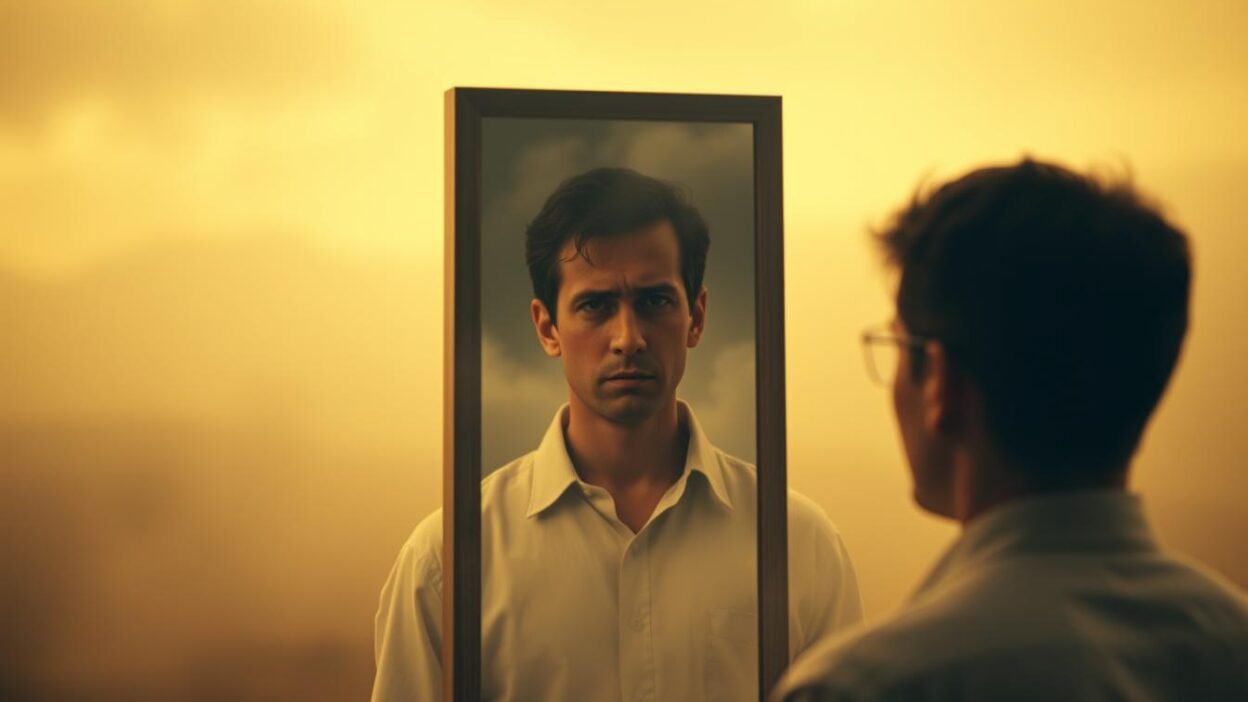
Nearly 75% of drivers rate themselves as above average behind the wheel. This is mathematically impossible. It reveals something profound about human nature.
We tend to see ourselves through a lens that doesn’t always match reality.
Have you ever felt completely confident in your abilities? Then you discovered later that you were missing crucial knowledge. This common experience points to a fascinating cognitive bias that affects us all.
In 1999, psychologists David Dunning and Justin Kruger identified a pattern. People with limited ability in a specific area often overestimate their competence. The reason is elegant in its simplicity: we don’t know what we don’t know.
This cognitive bias works both ways. Those who excel in a field frequently underestimate their abilities. They assume tasks that come easily to them are simple for everyone.
Understanding this pattern isn’t about judgment. It’s about cultivating the humble awareness necessary for genuine growth.
Recognizing our tendency to misjudge our capabilities is the first step. This awareness leads to authentic self-knowledge.
Key Takeaways
- Most people systematically misjudge their own abilities in areas where they lack expertise
- Limited knowledge in a field prevents us from recognizing our own limitations
- Experts often underestimate their skills because tasks seem easy to them
- Recognizing this bias is a sign of growing self-awareness, not weakness
- Understanding our blind spots is essential for personal transformation and growth
Understanding the Dunning–Kruger Effect
We’ve all met someone who speaks with certainty about topics they barely understand. But what if that person is sometimes us? This uncomfortable question lies at the heart of a psychological phenomenon affecting everyone, regardless of education or intelligence.
The challenge isn’t just about what we don’t know. It’s about our inability to recognize the boundaries of our ignorance.
Here’s a simple truth: the less we know about something, the harder it becomes to assess our own competence accurately. Think of standing in a dark room. You cannot see the walls, furniture, or exits until someone turns on the light.
Knowledge illuminates not just what we understand. It reveals the vast landscape of what we have yet to learn.
This phenomenon touches every aspect of our lives. It shapes how we approach new challenges and respond to feedback. By exploring its origins and mechanisms, we gain a powerful tool for personal growth.
The Origins of a Breakthrough Discovery
In 1999, psychologists David Dunning and Justin Kruger conducted groundbreaking Dunning-Kruger research. Their work fundamentally changed how we understand competence perception. Their work began with a curious observation about test performance.
People who performed poorly on tests had wildly inaccurate views of their performance. This wasn’t simple optimism or positive thinking. It revealed a systematic pattern in human self-assessment.
The original study examined undergraduate students across three distinct areas. These included logical reasoning, English grammar, and humor appreciation. The results were striking and consistent.
Participants who scored in the bottom quartile dramatically overestimated their abilities. Their actual test scores placed them in the 12th percentile. Yet they confidently ranked themselves in the 62nd percentile.
This wasn’t a small margin of error. These individuals believed they performed better than half their peers. In reality, they actually outperformed only 12 percent.
The gap between perception and reality revealed something profound about human cognition. The researchers discovered a troubling pattern. The same knowledge deficit preventing good performance also prevented accurate self-assessment.
The Dunning-Kruger research identified what scientists now call the “dual burden” of incompetence. Individuals lack the skills in a particular domain. They also lack the metacognitive awareness necessary to recognize that deficiency.
It’s a cognitive blind spot that perpetuates itself. You need knowledge to know what you don’t know.
Core Mechanisms That Drive the Effect
The principles underlying this phenomenon extend beyond simple overconfidence. They reveal fundamental truths about how our minds process competence perception. Understanding these mechanisms helps us recognize when we might fall into similar traps.
The primary principle centers on metacognitive ability. This is our capacity to think about our own thinking. Lacking expertise in an area means we simultaneously lack the framework to evaluate performance accurately.
A novice chess player cannot assess strategy like a grandmaster can. They haven’t developed the pattern recognition and analytical skills that come with mastery.
Interestingly, the effect works in reverse for highly skilled individuals. Experts often underestimate their abilities relative to others. They assume that tasks which feel easy to them are equally simple for everyone.
This reverse effect creates what researchers call the “curse of knowledge.” Once you know something deeply, you forget what it’s like not to know it.
The key principles can be summarized as follows:
- Skill and awareness grow together: As competence increases, so does the ability to recognize what true mastery looks like
- The dual burden effect: Low skill levels prevent both good performance and accurate self-assessment
- Reverse underestimation: Highly competent individuals may undervalue their abilities because they project their ease onto others
- Knowledge reveals ignorance: Learning expands awareness of how much more there is to learn
These principles manifest differently across skill levels. They create a predictable pattern that researchers have documented across countless domains. The following table illustrates how self-assessment accuracy changes as actual competence develops:
| Competence Level | Self-Assessment Pattern | Awareness of Gaps | Confidence Level |
|---|---|---|---|
| Novice (Bottom 25%) | Significant overestimation of abilities | Very low awareness of knowledge gaps | Inappropriately high confidence |
| Advanced Beginner | Moderate overestimation with emerging doubts | Beginning recognition of complexity | Peak confidence starting to decline |
| Competent (Middle 50%) | More accurate self-assessment developing | Growing awareness of field breadth | Moderate confidence with realistic doubts |
| Proficient (Top 25%) | Accurate to slight underestimation | Clear understanding of expertise boundaries | Calibrated confidence based on context |
| Expert (Top 10%) | Tendency toward underestimation | Deep awareness of field complexity | Humble confidence with acknowledged limits |
This progression reveals a paradox central to human development. Here’s the truth: the more we learn, the more we realize how much we don’t know. True expertise comes with humility, not because experts lack confidence.
It’s because they’ve developed the metacognitive sophistication to recognize the vastness of their field. They’ve turned on the lights and can now see just how large the room really is.
The journey from ignorance to mastery follows a recognizable arc. Initial enthusiasm and unfounded confidence give way to the “valley of despair.” This is where learners suddenly recognize how much they don’t know.
With continued practice and feedback, competence and self-awareness align. This alignment represents genuine growth. It’s not just in skill, but in wisdom.
The Psychological Mechanism Behind the Effect
Our brains process information through sophisticated yet imperfect systems that can lead to self-deception. These mental shortcuts help us navigate a complex world. They sometimes create gaps between what we know and what we think we know.
Understanding these mechanisms offers us a pathway to greater self-awareness. Recognizing our limitations begins with examining how our minds naturally filter experience. We don’t simply record reality like a camera.
Instead, we construct our understanding through layers of interpretation. Each layer is shaped by our existing knowledge and beliefs.
Cognitive Bias Explained
A cognitive bias represents a systematic pattern in how we process information. These aren’t flaws in our character or signs of intellectual weakness. They’re natural features of human cognition that help us make quick decisions.
Think of cognitive biases as mental habits your brain has developed over millions of years. They help you survive by allowing rapid responses to threats and opportunities. However, in our modern world, these same shortcuts can mislead us.
The Dunning-Kruger effect represents a specific type of psychological blind spots. These are areas where our perception systematically fails us. These blind spots don’t appear randomly.
They emerge predictably when we lack the very knowledge needed to recognize our deficiency. Consider these key characteristics of this cognitive bias:
- Invisibility to the self – The person experiencing it cannot see their own limitation
- Predictable patterns – It occurs consistently across different skills and domains
- Universal occurrence – Everyone experiences this at various points in their learning journey
- Reduction through expertise – As genuine skill develops, the bias naturally diminishes
Have you discovered that what you thought was mastery was actually just the beginning? This question invites us to reflect on moments of revelation. Reality sometimes reveals gaps we couldn’t previously see.
Role of Self-Assessment
Metacognitive ability is our capacity to think about our own thinking. This meta-awareness allows us to step back from our performance and assess it objectively. Without this ability, we remain trapped in our limited perspective.
The research reveals what scientists call the “dual-burden” account. Low performers face two distinct challenges simultaneously. First, they lack the skill itself.
Second, and more importantly, they lack awareness of this deficiency. This creates a self-reinforcing cycle. Because they haven’t developed competence, they also haven’t acquired the discriminatory ability.
They simply cannot see the qualitative difference between their work and skilled practitioners. Part of acquiring any skill consists in learning to recognize excellence. A beginning guitarist cannot hear the subtle differences in tone that a professional notices.
A novice writer cannot identify the structural weaknesses that an experienced editor spots instantly.
| Learning Stage | Self-Assessment Ability | Metacognitive Awareness |
|---|---|---|
| Beginner | Highly inaccurate, often overconfident | Limited capacity to evaluate own performance |
| Intermediate | Growing accuracy with occasional misjudgments | Developing awareness of knowledge gaps |
| Advanced | Generally accurate with realistic confidence | Strong ability to recognize limitations |
| Expert | Highly calibrated self-evaluation | Deep understanding of skill complexity |
This explanation helps us understand why beginners often feel more confident than intermediate learners. The beginner hasn’t yet developed the metacognitive ability to recognize how much they don’t know. The intermediate learner, having glimpsed the mountain’s true height, experiences appropriate humility.
Accurate self-assessment requires not just knowledge of a subject. It also requires knowledge about the extent and limits of that knowledge. We must develop the capacity to evaluate our evaluations.
This recursive awareness marks the beginning of wisdom. Recognizing our psychological blind spots is itself an act of metacognitive growth. Acknowledging that our judgment has systematic limitations opens the door to genuine learning.
This awareness transforms ignorance from an invisible enemy into a recognized companion. It becomes a guide on our journey toward mastery.
Real-Life Examples of the Dunning–Kruger Effect
Human behavior shows patterns of illusory superiority throughout everyday experiences. The overconfidence phenomenon isn’t confined to laboratories or academic papers. It shows up in our kitchens, offices, and social media feeds.
These real-world examples help us recognize the effect as a natural part of learning. By examining concrete situations, we develop awareness to catch ourselves in moments of unwarranted certainty.
Everyday Scenarios
Picture two friends who decide to learn Spanish together. Within a few days, one friend can construct 10 to 15 sentences. The other friend has learned just a handful of words but feels amazed by his progress.
Here’s where the overconfidence phenomenon reveals itself. The friend with minimal knowledge doesn’t yet understand that he’s pronouncing words incorrectly. He forms grammatically incorrect sentences without realizing his mistakes.
His limited knowledge prevents him from recognizing the gaps in his understanding. This causes him to overestimate his relative ability.
Meanwhile, the more knowledgeable friend has learned enough to see what she doesn’t yet know. This creates a paradox where the less competent person feels more confident.

- The home cook who perfects one impressive recipe and begins planning a restaurant venture
- The newly licensed driver who feels supremely confident, unaware of countless subtle skills
- The person who reads a single article about economics and debates complex fiscal policy
- The weekend golfer who believes they could compete professionally after a few good rounds
These examples invite us to smile at universal human tendencies. We’ve all been that overconfident beginner at some point.
Professional Contexts
The Dunning-Kruger effect extends beyond casual hobbies into professional domains. Research has demonstrated this cognitive bias across multiple fields. These include business, politics, medicine, driving, and aviation.
In business settings, managers sometimes overestimate their leadership capabilities. They also underestimate the complexity of organizational challenges. Studies show that individuals with less experience rate their competence higher than those with deeper expertise.
Medical professionals aren’t immune either. Early-career practitioners may display more certainty in diagnoses than seasoned physicians. This pattern of illusory superiority can have serious consequences.
The fool doth think he is wise, but the wise man knows himself to be a fool.
Aviation safety research provides particularly compelling examples. Pilots with fewer flight hours sometimes assess their ability to handle emergencies more optimistically. Veterans understand the unpredictable nature of crisis situations better.
The table below illustrates how the overconfidence phenomenon manifests differently across professional contexts:
| Professional Field | Common Manifestation | Potential Consequences | Expertise Level Affected |
|---|---|---|---|
| Business Management | Overestimating strategic decision-making abilities | Poor resource allocation, failed initiatives | Early to mid-career |
| Medical Practice | Excessive diagnostic certainty without consultation | Misdiagnosis, delayed treatment | Recent graduates, specialists in unfamiliar areas |
| Aviation | Underestimating emergency complexity | Safety risks, inadequate preparation | Low to moderate flight hours |
| Legal Services | Overconfidence in case outcomes | Poor client counsel, courtroom surprises | Junior attorneys |
These professional examples cultivate healthy respect for knowledge gaps. True competence includes recognizing what we don’t know.
Social Media Influence
Digital platforms have created an unprecedented amplification system for illusory superiority. Social media allows anyone to broadcast opinions on complex topics after minimal research. This creates echo chambers where overconfidence goes unchallenged.
The immediacy of these platforms combines with the Dunning-Kruger effect to create a perfect storm. Someone reads a few articles about climate science, vaccines, or economic policy. They then feel qualified to debate experts who have dedicated decades to these fields.
Social media creates a validation feedback loop. Someone posts an oversimplified take on a complex issue. They often receive likes and supportive comments from others with similar knowledge gaps.
This social reinforcement strengthens their misplaced confidence.
We’ve all witnessed this pattern:
- Someone encounters information about a complex topic
- They form a strong opinion based on limited understanding
- They share this opinion publicly with great certainty
- Like-minded individuals validate their perspective
- The original poster becomes even more convinced of their expertise
This cycle contributes significantly to the spread of misinformation. People don’t realize they’re sharing inaccurate information. They genuinely believe they understand the topic well.
The contemplative approach asks us to pause before posting. Have we truly studied this topic deeply? Are we confusing a few hours of internet research with years of professional training? Could our confidence exceed our actual knowledge?
Studies examining online behavior reveal an interesting pattern. The most confident commenters often have the least accurate information. Meanwhile, genuine experts tend to express more nuance and uncertainty in their public statements.
By recognizing how social media amplifies the overconfidence phenomenon, we can approach these platforms with greater humility. We can choose to listen more and proclaim less. This is especially important on topics outside our true areas of competence.
Assessing Your Own Abilities
Knowing what you truly know demands cultivation and awareness. The path toward accurate competence perception requires looking inward with honesty while seeking external perspective. This balanced approach helps us escape blind spots that the Dunning-Kruger effect creates.
Research shows the most common method involves comparing self-assessment with objective performance. This comparison reveals gaps between how we see ourselves and how we actually perform. These differences guide us toward more accurate self-knowledge.
Measurement can happen before or after completing a task. Some people assess abilities in absolute terms, while others compare themselves to peers. Studies show predicting raw scores tends to be easier than estimating rankings.
Practical Tools for Self-Reflection
Building accurate self-assessment begins with specific, repeatable practices. A learning journal serves as one of the most powerful tools. Before attempting any task, write down your prediction about your performance.
After completing the task, return to your journal and honestly evaluate results. This creates a feedback loop that trains your mind toward realistic expectations. Over time, you’ll notice patterns in where you overestimate or underestimate yourself.
The following questions slow down automatic judgments and invite deeper reflection:
- What concrete evidence supports my belief in my abilities?
- What would someone more experienced notice that I’m missing?
- Am I confusing familiarity with true mastery?
- Where have I received correction or struggled recently?
Seeking baseline measurements provides another path to clarity. Take standardized tests, request formal evaluations, or compare your work against objective standards. These external benchmarks reveal truths that internal confidence cannot show.
This process isn’t about harsh self-criticism. Instead, we cultivate what wisdom traditions call clear seeing—perceiving reality without distortions of ego or fear. Accuracy often depends on task type and improves as we become better performers.
| Self-Assessment Method | Measurement Type | Key Benefits | Best Application |
|---|---|---|---|
| Learning Journal | Absolute Performance | Tracks improvement patterns over time | Skill development and personal growth |
| Peer Comparison | Relative Performance | Provides social context for abilities | Competitive or collaborative environments |
| Standardized Testing | Objective Measurement | Offers external validation | Professional certifications and academic settings |
| Performance Reviews | Expert Evaluation | Identifies blind spots through experienced eyes | Workplace advancement and skill refinement |
Why External Perspective Matters
The Dunning-Kruger effect creates a blind spot we cannot see past alone. We need perspective from others who can observe what remains hidden. This makes feedback essential for accurate self-knowledge.
Actively seek input from mentors who have walked the path before you. Their experience allows them to recognize patterns you haven’t yet learned to see. Peers also offer valuable perspective as they struggle with similar challenges.
Even those we teach reveal gaps in our understanding. Explaining concepts to others helps us discover where our knowledge remains unclear. This humbling recognition serves as a gift.
Creating psychological safety makes honest feedback possible. Our ego naturally resists information that contradicts our self-image. We must consciously build environments where truth can be spoken without fear.
Consider these strategies for receiving feedback effectively:
- Establish regular check-ins with more experienced practitioners
- Create accountability partnerships with committed peers
- Ask specific questions rather than general “How am I doing?” inquiries
- Practice receiving correction with gratitude rather than defensiveness
Buddhist practice speaks of beginner’s mind—approaching familiar domains with openness to discovering what we don’t know. This attitude transforms feedback from threat to treasure.
The pursuit of accurate self-knowledge requires both courage and humility. It asks us to set aside comfortable stories and face reality as it truly is. This noble practice frees us to grow beyond our current limitations.
The Impact of Overconfidence
The hidden cost of overconfidence shows in how our inflated self-perception affects those around us. Psychological blind spots prevent us from seeing our limitations clearly. The consequences ripple into every corner of our lives.
Inaccurate self-assessment leads to bad decisions. People choose careers they’re unfit for. They engage in dangerous behavior and fail to address their shortcomings.
The overconfidence phenomenon creates real friction in our relationships and work environments. Honest self-evaluation shapes the quality of our connections. It determines our effectiveness in the world.
How Overconfidence Affects Our Closest Connections
Our intimate relationships reflect truths about ourselves we often resist seeing. We overestimate our emotional intelligence or communication abilities. We create patterns that damage the connections we cherish most.
The person who believes they’re an excellent listener might dominate every conversation. Their partner feels unheard and invisible. This happens more often than we realize.
Someone confident in their conflict-resolution skills might unknowingly escalate tensions. They refuse to acknowledge their role in disagreements. They see themselves as the peacemaker while their partner experiences them as dismissive.
Those who most need to improve their relational skills are often least aware of this need. A person might believe they understand their partner’s needs perfectly. Meanwhile, they consistently miss emotional cues and important signals.
The first principle is that you must not fool yourself—and you are the easiest person to fool.
We all carry blind spots in how we show up in relationships. The friend who thinks they’re giving helpful advice might actually offer unsolicited criticism. The family member who sees themselves as supportive might be subtly controlling.
The overconfidence phenomenon in personal relationships manifests in subtle ways:
- Overestimating our ability to read others’ emotions and intentions
- Believing we communicate more clearly than we actually do
- Assuming we know what’s best for loved ones without truly listening
- Failing to recognize how our behavior impacts others’ feelings
- Resisting feedback because it conflicts with our self-image
Recognizing this opens a door to transformation. We accept that our self-assessment might be flawed. We become curious rather than defensive.
Professional Consequences and Career Trajectories
The workplace amplifies the consequences of inaccurate self-assessment. Workplace dynamics become strained when team members have distorted views of their own competence. Someone might pursue a leadership role they’re genuinely unprepared for.
The career choices we make reflect how accurately we gauge our abilities. A professional with limited experience might confidently accept a role beyond their skill level. They set themselves up for failure and frustration.
Managers who overestimate their leadership capabilities create toxic environments. They might believe they’re inspiring when they’re actually micromanaging. Their team views them as unapproachable or dismissive.
The organizational costs extend beyond individual performance:
- Projects derail when overconfident team members resist expert guidance
- Innovation stalls when people don’t recognize the limits of their expertise
- Conflicts escalate when individuals can’t acknowledge their mistakes
- Resources waste on initiatives led by those lacking necessary skills
- Morale drops when unqualified individuals occupy key positions
Consider the software developer who believes their coding skills far exceed their actual abilities. They might reject code reviews and dismiss testing protocols. They create security vulnerabilities that cost the company dearly.
| Life Domain | Manifestation of Overconfidence | Resulting Consequence | Path to Awareness |
|---|---|---|---|
| Personal Relationships | Overestimating communication and emotional intelligence skills | Repeated conflicts, partner dissatisfaction, emotional distance | Soliciting honest feedback from trusted loved ones |
| Career Decisions | Pursuing roles without adequate preparation or skills | Job failure, stress, damaged professional reputation | Seeking mentorship and objective skill assessments |
| Team Collaboration | Dismissing others’ expertise while overvaluing own contributions | Project delays, team conflict, reduced innovation | 360-degree feedback and peer reviews |
| Leadership Roles | Believing leadership style is effective despite evidence otherwise | High turnover, low morale, organizational dysfunction | Leadership coaching and employee satisfaction surveys |
The challenge intensifies because workplace culture often rewards confidence over competence. People who speak with certainty get promoted. Their certainty isn’t always grounded in genuine expertise.
Organizations that build feedback-rich cultures help people see themselves more accurately. Performance reviews focus on specific behaviors rather than general traits. Leaders model vulnerability by acknowledging their own limitations.
Have you ever been surprised to learn that others experienced your behavior differently than you intended? What might that reveal about your self-perception? These moments of discomfort offer precious opportunities for growth.
The impact of overconfidence extends across every domain of human experience. Our ability to assess ourselves accurately shapes our effectiveness and our relationships. Awareness is the first step toward aligning how we see ourselves with reality.
Recognizing Signs of Overestimation
Illusory superiority is invisible, which creates a unique challenge. We easily see it in others but stay blind to it in ourselves. Questioning your own confidence shows developing self-awareness—a crucial first step toward real competence.
Understanding specific signs helps you identify areas where you might experience unconscious incompetence. These indicators appear in both observable behaviors and internal psychological patterns.
Observable Patterns and Actions
Certain behaviors suggest someone might be overestimating their abilities in a particular area. These patterns become especially clear when we examine them with curiosity rather than judgment.
Watch for these common behavioral indicators in your own approach to new skills or knowledge:
- Speaking with certainty on recently encountered topics: You’ve read a few articles or watched some videos, yet feel confident giving advice as if you’ve mastered the subject.
- Dismissing expert guidance: Established methods or professional advice seem unnecessarily complex or outdated compared to your simpler understanding.
- Impatience with established processes: You feel frustrated with standard procedures without fully grasping why they exist or what problems they solve.
- Rarely asking questions: You seldom seek clarification because everything seems straightforward and obvious to you.
- Becoming defensive: When someone questions your knowledge or approach, you react with irritation rather than curiosity.
Consider the person who attends one workshop on leadership. They immediately begin positioning themselves as a management consultant. Someone watches investment tutorials and starts offering financial advice to friends and family.
These scenarios aren’t meant to shame anyone. They simply illustrate how quickly we can mistake familiarity with mastery.

Not knowing the scope of your own ignorance is part of the human condition. The problem with it is we see it in other people, and we don’t see it in ourselves. The first rule of the Dunning–Kruger club is you don’t know you’re a member of the Dunning–Kruger club.
This observation captures the essential irony of the phenomenon. The awareness required to recognize overconfidence is precisely what we lack when experiencing it.
Internal Mindset Characteristics
Beyond observable actions, certain psychological traits signal potential overestimation. These internal experiences often feel like confidence but lack the foundation that genuine competence provides.
Pay attention to these mindset patterns:
- Sense of quick mastery: You feel you’ve rapidly learned something that others struggle with, without considering that you might be missing deeper complexities.
- Surprise at critical feedback: Constructive criticism catches you off guard because you believed your performance was significantly better than it actually was.
- Feeling experts overcomplicate things: A persistent sense that knowledgeable people make simple matters unnecessarily complex.
- Difficulty articulating nuances: When pressed for details, you struggle to explain the subtleties or complexities within your supposed area of expertise.
- Confidence-performance mismatch: Your self-assessment consistently exceeds objective performance measures or external evaluations.
It’s essential to clarify a common misconception here. The Dunning-Kruger effect doesn’t mean that people with low intelligence are maximally confident. Rather, it applies to domain-specific skills, not overall intelligence.
Low performers do overestimate themselves, but their confidence level remains below that of high performers. The gap lies between their actual ability and their perception of that ability.
This distinction matters because anyone can experience illusory superiority in areas where they lack sufficient knowledge. A brilliant scientist might overestimate their cooking skills. A talented musician might overestimate their understanding of financial planning.
Metacognitive awareness helps you accurately assess your own thinking and knowledge. This ability represents the antidote to unconscious incompetence. Ask yourself: In what areas of my life do I feel most confident?
Have I truly tested that confidence against objective standards or expert feedback? Recognizing these signs requires humility and a willingness to embrace discomfort. Yet this recognition opens the door to genuine growth and authentic competence.
Strategies to Combat the Dunning–Kruger Effect
Fighting the Dunning-Kruger effect means building real skills alongside honest self-awareness. This cognitive bias responds well to intentional practice. The right strategies help us see ourselves more clearly.
Research shows that logical reasoning training improves self-evaluation accuracy. This isn’t about becoming overly critical or losing enthusiasm. It’s about knowing what we truly understand and what we still need to learn.
The metacognitive gap in the Dunning-Kruger effect can hide our flaws and block improvement. Specific strategies help us work around this blind spot. These methods build both real competence and accurate self-judgment.
Seeking Expert Opinions
Learning from true masters is a powerful way to fight illusory superiority. External expertise gives us the honest mirror we can’t hold ourselves. At the bottom of the Dunning-Kruger curve, we lack skills to spot our own limits.
Finding the right experts takes careful thought. Look for mentors who give honest feedback, not just polite praise. Real teachers show intellectual humility and keep learning themselves.
Join communities where your work gets regularly evaluated against clear standards. Writing groups, professional groups, or skill workshops provide consistent reality checks. This feedback helps you match self-assessment with actual competence.
Consider hiring coaches or teachers instead of only self-study. Books and online courses have value but can’t show you what you’re missing. A skilled instructor spots gaps you don’t see and guides you forward.
This approach requires vulnerability and courage. Seeking expert opinions might reveal we’re not as advanced as we thought. Yet this openness creates real strength and space for genuine growth.
Ask for critical feedback with real openness to hard truths. Try specific questions like “What’s my weakest area?” or “What should I improve next?” Studies show motivation matters, but only when paired with honest expert feedback.
Embracing Lifelong Learning
A growth mindset naturally counters the Dunning-Kruger effect. As knowledge deepens, we develop better metacognitive ability to judge our understanding. This creates a positive cycle where learning reveals more to learn.
Start by studying the history and depth of fields that interest you. Understanding how much knowledge exists provides crucial perspective. One book might create false confidence, while fifty books reveal how much remains unknown.
Track your learning journey over time with a journal. Note what you thought you knew at different stages and how perceptions changed. This builds awareness that confidence and competence don’t always match.
Regularly tackle material that challenges you and reveals knowledge gaps. If everything feels easy and confirms existing beliefs, you’re staying too comfortable. Discomfort signals growth and improved performance.
Practice “beginner’s mind” from Zen Buddhism—approach familiar subjects with fresh openness. This prevents premature closure when we think we’ve mastered something. Even experts benefit from revisiting fundamentals with new eyes.
| Learning Stage | Self-Assessment Pattern | Recommended Strategy | Growth Indicator |
|---|---|---|---|
| Early Beginner | High confidence with minimal knowledge | Seek structured expert guidance and fundamental training | Recognition of complexity increases |
| Advanced Beginner | Confidence drops as challenges emerge | Join practice communities and embrace discomfort | Specific questions replace general assumptions |
| Competent Practitioner | More accurate but still developing calibration | Regular feedback loops and performance metrics | Predictions about outcomes improve accuracy |
| Proficient Expert | Realistic assessment with intellectual humility | Continuous learning and teaching others | Comfortable acknowledging knowledge boundaries |
Critical thinking and logical reasoning training improves self-assessment across all areas. Consider courses focused on metacognition, argumentation, or scientific thinking. These skills enhance your ability to evaluate your own thinking beyond any single subject.
Building accurate self-awareness requires ongoing effort, not just good intentions. Set regular check-ins—monthly or quarterly—to honestly assess progress with trusted truth-tellers.
These practices support your highest potential rather than fix a flaw. They position you as both student and observer of your development. Wisdom lives between humble recognition of unknowns and confident application of knowns.
The Role of Education and Experience
Genuine learning and embracing life’s lessons help us see ourselves more clearly. Education and experience don’t just add facts to our minds. They change how we view our own skills and those of others.
This transformation happens slowly, often without us noticing. Yet its impact on how we judge ourselves becomes powerful over time.
Moving from beginner to expert requires more than collecting facts or practicing for hours. It demands metacognitive awareness—the ability to think about our thinking. This skill helps us judge our performance accurately.
Building True Mastery
Expertise means much more than surface knowledge or technical skill. True mastery encompasses the discriminatory capacity to recognize quality, nuance, and complexity within a given domain. This ability fights overconfidence.
Think about how a chess grandmaster views the board. A beginner sees individual pieces and basic moves. The expert spots patterns, threats, and chances that untrained eyes miss.
This isn’t magic—it’s the fruit of thousands of hours studying positions and games. The same idea works across nearly every field.
An experienced doctor notices subtle symptom patterns a medical student might overlook. A seasoned pilot predicts weather shifts and mechanical problems before they turn critical.
Dunning-Kruger research has studied this across many different areas. Studies have covered aviation, business, debating, chess, driving, and medicine. The findings reveal a clear pattern.
People with real expertise judge their abilities more accurately than beginners do. They see both their strengths and limits with sharper vision.
Many studies focused on students—especially how they rate their exam performance. Original research looked at logical reasoning, English grammar, and humor appreciation. The results showed that incompetence often prevents people from recognizing their own incompetence.
But here’s the good news: research shows this inaccuracy depends on the task. It can be improved by becoming a better performer. Learning any skill includes distinguishing between good and bad performances.
Skill development moves through clear stages:
- Unconscious incompetence: We don’t know what we don’t know
- Conscious incompetence: We recognize our limitations and knowledge gaps
- Conscious competence: We perform well through deliberate effort
- Unconscious competence: Skills become second nature, flowing naturally
Our competence perception shifts dramatically as we move through these stages. Overconfidence peaks during that first stage and drops as awareness grows.
The Paradox of Deepening Knowledge
The more we truly learn, the more we discover remains unknown. This paradox—learned humility—separates real experts from confident beginners.
Real experts often express uncertainty and admit the limits of their knowledge. Those early in learning tend toward overconfidence. They haven’t encountered enough complexity to see what they’re missing.
This isn’t pessimism or false modesty. It’s the natural result of deep engagement with a subject. The landscape of knowledge expands before us as we explore it.
Growth requires structuring our development with intention. We can’t improve through passive exposure or random practice alone. Real progress demands specific approaches:
- Set concrete, measurable learning objectives rather than vague aspirations
- Seek progressively more challenging applications of your skills
- Regularly test your knowledge against objective standards, not just your own impressions
- View development as a lifelong journey rather than a destination to reach
These principles match both modern research on skill building and ancient wisdom traditions. Many spiritual practices view learning as sacred work—an ongoing refinement throughout life.
Consider these questions for your own path:
Am I measuring my progress against my past self or against true mastery? Comparing yourself to last year shows growth. But it doesn’t show where you stand relative to real expertise.
Do I seek out challenges that reveal what I still need to learn? Comfortable practice strengthens existing skills but doesn’t expose gaps. Growth happens at the edges of current abilities.
How do I respond when my limitations become visible? Do I feel threatened and defensive, or curious and motivated? Our emotional response often predicts our learning path.
Continuous development isn’t just about gaining specific skills. It’s about cultivating wisdom to see ourselves clearly. This self-awareness protects us from overconfidence while empowering authentic growth.
The path forward combines patient dedication with honest self-reflection. We honor both how far we’ve come and how far we might travel. In this balance, we find humility and hope—essential ingredients for lifelong growth.
Conclusion: Embracing Humility and Growth
Recent years have brought questions about the statistical methods behind the Dunning-Kruger research. Some data scientists and mathematicians have challenged aspects of the original findings. Yet the core insight remains valuable: people struggle with accurate self-assessment, especially in areas where they lack deep knowledge.
This cognitive bias reveals something profound about human nature.
Are you overestimating yourself? This question no longer needs to feel threatening. Instead, it becomes an invitation to explore the landscape of your own competence with curiosity rather than judgment.
Intellectual humility opens doors that overconfidence keeps locked. Acknowledging the limits of our understanding creates space for genuine learning. Ancient wisdom traditions taught this truth long before modern psychology gave it a name.
Knowing what you don’t know marks the beginning of real wisdom.
Consider one area where you might be overestimating your abilities. What would seeking expert feedback reveal? What could structured learning teach you?
This simple exercise in honest self-reflection can transform how you approach personal development.
The wisest people among us remain perpetual students. They hold their self-assessments lightly, staying open to discovering there’s more to learn. This mindset leads to better decisions, stronger relationships, and paths that align with actual capabilities.
Self-knowledge forms the foundation of authentic transformation. Seeing ourselves clearly, with both compassion and honesty, unlocks our true potential for growth.
FAQ
What exactly is the Dunning-Kruger effect?
The Dunning-Kruger effect is a cognitive bias. People with limited knowledge often overestimate their competence. Those with real expertise often underestimate their abilities.
FAQ
What exactly is the Dunning-Kruger effect?
The Dunning-Kruger effect is a cognitive bias. People with limited knowledge often overestimate their competence. Those with real expertise often underestimate their abilities.
FAQ
What exactly is the Dunning-Kruger effect?
The Dunning-Kruger effect is a cognitive bias. People with limited knowledge often overestimate their competence. Those with real expertise often underestimate their abilities.
Why do people experience illusory superiority when they lack expertise?
FAQ
What exactly is the Dunning-Kruger effect?
The Dunning-Kruger effect is a cognitive bias. People with limited knowledge often overestimate their competence. Those with real expertise often underestimate their abilities.
FAQ
What exactly is the Dunning-Kruger effect?
The Dunning-Kruger effect is a cognitive bias. People with limited knowledge often overestimate their competence. Those with real expertise often underestimate their abilities.
FAQ
What exactly is the Dunning-Kruger effect?
The Dunning-Kruger effect is a cognitive bias. People with limited knowledge often overestimate their competence. Those with real expertise often underestimate their abilities.
How can I tell if I’m overestimating myself in a particular area?
FAQ
What exactly is the Dunning-Kruger effect?
The Dunning-Kruger effect is a cognitive bias. People with limited knowledge often overestimate their competence. Those with real expertise often underestimate their abilities.
FAQ
What exactly is the Dunning-Kruger effect?
The Dunning-Kruger effect is a cognitive bias. People with limited knowledge often overestimate their competence. Those with real expertise often underestimate their abilities.
FAQ
What exactly is the Dunning-Kruger effect?
The Dunning-Kruger effect is a cognitive bias. People with limited knowledge often overestimate their competence. Those with real expertise often underestimate their abilities.
FAQ
What exactly is the Dunning-Kruger effect?
The Dunning-Kruger effect is a cognitive bias. People with limited knowledge often overestimate their competence. Those with real expertise often underestimate their abilities.
Does the Dunning-Kruger effect mean that confident people are actually incompetent?
FAQ
What exactly is the Dunning-Kruger effect?
The Dunning-Kruger effect is a cognitive bias. People with limited knowledge often overestimate their competence. Those with real expertise often underestimate their abilities.
FAQ
What exactly is the Dunning-Kruger effect?
The Dunning-Kruger effect is a cognitive bias. People with limited knowledge often overestimate their competence. Those with real expertise often underestimate their abilities.
FAQ
What exactly is the Dunning-Kruger effect?
The Dunning-Kruger effect is a cognitive bias. People with limited knowledge often overestimate their competence. Those with real expertise often underestimate their abilities.
How does metacognitive ability relate to accurate self-assessment?
FAQ
What exactly is the Dunning-Kruger effect?
The Dunning-Kruger effect is a cognitive bias. People with limited knowledge often overestimate their competence. Those with real expertise often underestimate their abilities.
FAQ
What exactly is the Dunning-Kruger effect?
The Dunning-Kruger effect is a cognitive bias. People with limited knowledge often overestimate their competence. Those with real expertise often underestimate their abilities.
FAQ
What exactly is the Dunning-Kruger effect?
The Dunning-Kruger effect is a cognitive bias. People with limited knowledge often overestimate their competence. Those with real expertise often underestimate their abilities.
Can the Dunning-Kruger effect be overcome, or is it permanent?
FAQ
What exactly is the Dunning-Kruger effect?
The Dunning-Kruger effect is a cognitive bias. People with limited knowledge often overestimate their competence. Those with real expertise often underestimate their abilities.
FAQ
What exactly is the Dunning-Kruger effect?
The Dunning-Kruger effect is a cognitive bias. People with limited knowledge often overestimate their competence. Those with real expertise often underestimate their abilities.
FAQ
What exactly is the Dunning-Kruger effect?
The Dunning-Kruger effect is a cognitive bias. People with limited knowledge often overestimate their competence. Those with real expertise often underestimate their abilities.
FAQ
What exactly is the Dunning-Kruger effect?
The Dunning-Kruger effect is a cognitive bias. People with limited knowledge often overestimate their competence. Those with real expertise often underestimate their abilities.
Why is external feedback so important for accurate self-perception?
FAQ
What exactly is the Dunning-Kruger effect?
The Dunning-Kruger effect is a cognitive bias. People with limited knowledge often overestimate their competence. Those with real expertise often underestimate their abilities.
FAQ
What exactly is the Dunning-Kruger effect?
The Dunning-Kruger effect is a cognitive bias. People with limited knowledge often overestimate their competence. Those with real expertise often underestimate their abilities.
FAQ
What exactly is the Dunning-Kruger effect?
The Dunning-Kruger effect is a cognitive bias. People with limited knowledge often overestimate their competence. Those with real expertise often underestimate their abilities.
FAQ
What exactly is the Dunning-Kruger effect?
The Dunning-Kruger effect is a cognitive bias. People with limited knowledge often overestimate their competence. Those with real expertise often underestimate their abilities.
How does the overconfidence phenomenon manifest differently in personal relationships versus professional settings?
FAQ
What exactly is the Dunning-Kruger effect?
The Dunning-Kruger effect is a cognitive bias. People with limited knowledge often overestimate their competence. Those with real expertise often underestimate their abilities.
FAQ
What exactly is the Dunning-Kruger effect?
The Dunning-Kruger effect is a cognitive bias. People with limited knowledge often overestimate their competence. Those with real expertise often underestimate their abilities.
FAQ
What exactly is the Dunning-Kruger effect?
The Dunning-Kruger effect is a cognitive bias. People with limited knowledge often overestimate their competence. Those with real expertise often underestimate their abilities.
What role does social media play in amplifying illusory superiority?
FAQ
What exactly is the Dunning-Kruger effect?
The Dunning-Kruger effect is a cognitive bias. People with limited knowledge often overestimate their competence. Those with real expertise often underestimate their abilities.
FAQ
What exactly is the Dunning-Kruger effect?
The Dunning-Kruger effect is a cognitive bias. People with limited knowledge often overestimate their competence. Those with real expertise often underestimate their abilities.
FAQ
What exactly is the Dunning-Kruger effect?
The Dunning-Kruger effect is a cognitive bias. People with limited knowledge often overestimate their competence. Those with real expertise often underestimate their abilities.
What are practical self-reflection techniques for developing accurate competence perception?
FAQ
What exactly is the Dunning-Kruger effect?
The Dunning-Kruger effect is a cognitive bias. People with limited knowledge often overestimate their competence. Those with real expertise often underestimate their abilities.
FAQ
What exactly is the Dunning-Kruger effect?
The Dunning-Kruger effect is a cognitive bias. People with limited knowledge often overestimate their competence. Those with real expertise often underestimate their abilities.
FAQ
What exactly is the Dunning-Kruger effect?
The Dunning-Kruger effect is a cognitive bias. People with limited knowledge often overestimate their competence. Those with real expertise often underestimate their abilities.
FAQ
What exactly is the Dunning-Kruger effect?
The Dunning-Kruger effect is a cognitive bias. People with limited knowledge often overestimate their competence. Those with real expertise often underestimate their abilities.
How does genuine expertise change your perception of your own abilities?
FAQ
What exactly is the Dunning-Kruger effect?
The Dunning-Kruger effect is a cognitive bias. People with limited knowledge often overestimate their competence. Those with real expertise often underestimate their abilities.
FAQ
What exactly is the Dunning-Kruger effect?
The Dunning-Kruger effect is a cognitive bias. People with limited knowledge often overestimate their competence. Those with real expertise often underestimate their abilities.
FAQ
What exactly is the Dunning-Kruger effect?
The Dunning-Kruger effect is a cognitive bias. People with limited knowledge often overestimate their competence. Those with real expertise often underestimate their abilities.
Is the Dunning-Kruger effect scientifically controversial?
FAQ
What exactly is the Dunning-Kruger effect?
The Dunning-Kruger effect is a cognitive bias. People with limited knowledge often overestimate their competence. Those with real expertise often underestimate their abilities.
FAQ
What exactly is the Dunning-Kruger effect?
The Dunning-Kruger effect is a cognitive bias. People with limited knowledge often overestimate their competence. Those with real expertise often underestimate their abilities.
FAQ
What exactly is the Dunning-Kruger effect?
The Dunning-Kruger effect is a cognitive bias. People with limited knowledge often overestimate their competence. Those with real expertise often underestimate their abilities.
How can I develop intellectual humility while still maintaining confidence?
FAQ
What exactly is the Dunning-Kruger effect?
The Dunning-Kruger effect is a cognitive bias. People with limited knowledge often overestimate their competence. Those with real expertise often underestimate their abilities.
FAQ
What exactly is the Dunning-Kruger effect?
The Dunning-Kruger effect is a cognitive bias. People with limited knowledge often overestimate their competence. Those with real expertise often underestimate their abilities.
FAQ
What exactly is the Dunning-Kruger effect?
The Dunning-Kruger effect is a cognitive bias. People with limited knowledge often overestimate their competence. Those with real expertise often underestimate their abilities.
What is the difference between unconscious incompetence and the Dunning-Kruger effect?
FAQ
What exactly is the Dunning-Kruger effect?
The Dunning-Kruger effect is a cognitive bias. People with limited knowledge often overestimate their competence. Those with real expertise often underestimate their abilities.
FAQ
What exactly is the Dunning-Kruger effect?
The Dunning-Kruger effect is a cognitive bias. People with limited knowledge often overestimate their competence. Those with real expertise often underestimate their abilities.
FAQ
What exactly is the Dunning-Kruger effect?
The Dunning-Kruger effect is a cognitive bias. People with limited knowledge often overestimate their competence. Those with real expertise often underestimate their abilities.
How can I create an environment where I receive honest feedback about my blind spots?
FAQ
What exactly is the Dunning-Kruger effect?
The Dunning-Kruger effect is a cognitive bias. People with limited knowledge often overestimate their competence. Those with real expertise often underestimate their abilities.
FAQ
What exactly is the Dunning-Kruger effect?
The Dunning-Kruger effect is a cognitive bias. People with limited knowledge often overestimate their competence. Those with real expertise often underestimate their abilities.
FAQ
What exactly is the Dunning-Kruger effect?
The Dunning-Kruger effect is a cognitive bias. People with limited knowledge often overestimate their competence. Those with real expertise often underestimate their abilities.
FAQ
What exactly is the Dunning-Kruger effect?
The Dunning-Kruger effect is a cognitive bias. People with limited knowledge often overestimate their competence. Those with real expertise often underestimate their abilities.