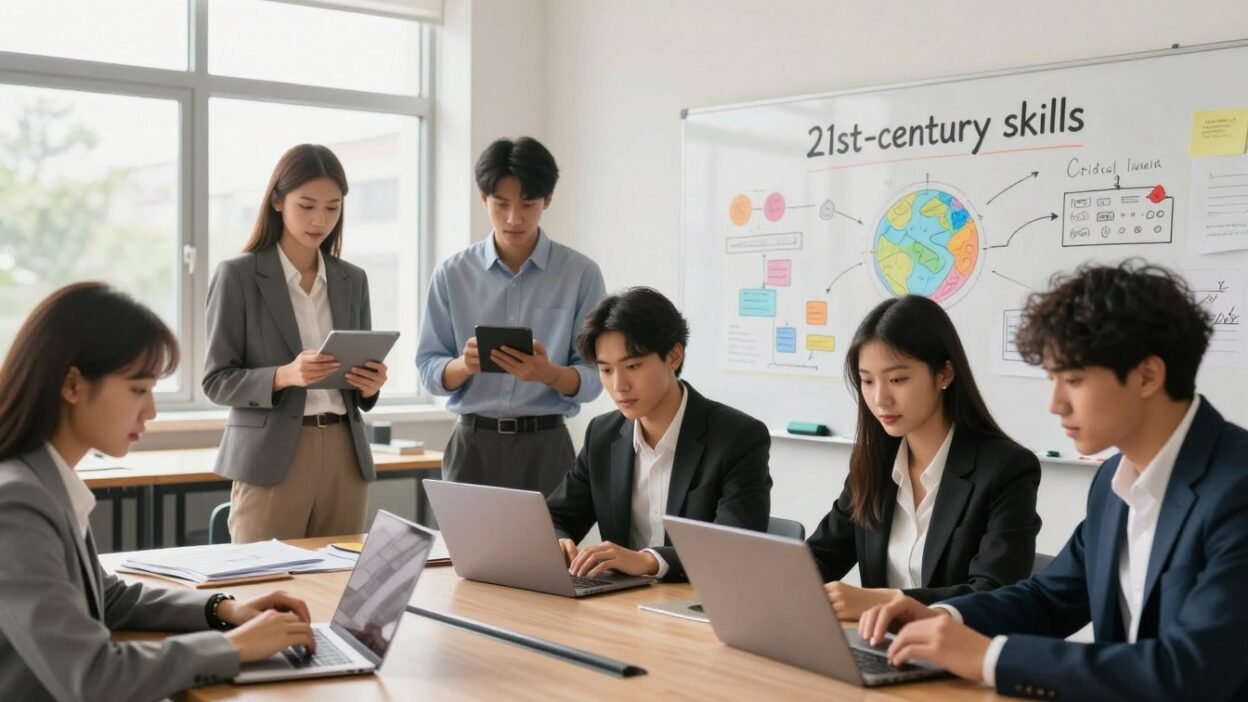
The World Economic Forum’s Future of Jobs Report 2025 shows a big change in the job market. There’s a big need for human-centered competencies like critical thinking, communication, flexibility, and empathy. As the world gets more connected, people need to learn 21st-century skills to do well.
It’s important to grow life skills and global competencies for personal and career growth. These skills help people adapt, communicate well, and solve tough problems. By working on employability skills and personal development, people can do well in a world that’s always changing.
Key Takeaways
- Developing human-centered competencies is essential for success in the global job market.
- 21st-century skills are critical for personal and professional growth.
- Cultivating life skills and global competencies enhances employability.
- Personal development is key to adapting to the changing job landscape.
- Effective communication and problem-solving are vital skills for the future.
The Importance of Life Skills and Global Competencies
In today’s world, life skills and global competencies are key to success. The modern job market and society need people with a wide range of skills. These skills are more than just knowing how to do a job.
Life skills and global competencies include critical thinking, communication skills, problem-solving skills, emotional intelligence, and cultural competence. These are important for personal growth, career success, and helping others.
Defining Essential Skills for the 21st Century
The Cambridge Framework lists eight main skills, like creativity and digital literacy. These skills help people succeed in many areas of life.
Personal Development Skills
Personal development skills are key for growing and adapting. Skills like self-awareness and resilience help us grow and stay well.
Professional Advancement Skills
Skills like communication skills and teamwork are vital for career growth. They help us work well with others and lead projects.
The Impact of Globalization on Skill Requirements
Globalization has changed what skills are needed in work. Now, it’s more important to work with people from different cultures and understand global markets.
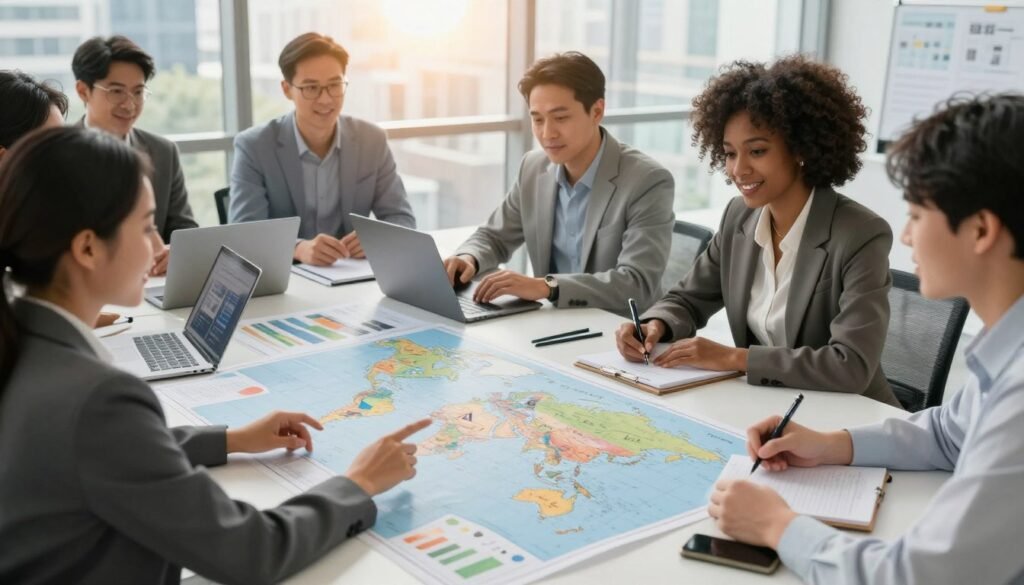
Benefits of Developing These Competencies
Getting better at life skills and global competencies brings many benefits. It opens up more job opportunities, improves our well-being, and helps us be more responsible in society. People with these skills can handle the challenges of today’s world better.
| Skill Category | Essential Skills | Benefits |
|---|---|---|
| Personal Development | Self-awareness, Resilience | Improved well-being, Adaptability |
| Professional Advancement | Communication, Leadership | Career progression, Effective teamwork |
| Global Competencies | Cultural competence, Digital literacy | Global career opportunities, Cross-cultural understanding |
Developing Critical Thinking and Problem-Solving Abilities
As we face more complex challenges, it’s key to improve critical thinking and problem-solving. These skills help us tackle tough issues, make smart choices, and find good solutions. We’ll look at ways to boost these abilities.
Analytical Thinking Frameworks
Analytical thinking is the base of critical thinking and problem-solving. It means breaking down big problems into smaller parts. Then, we analyze each part and put it all together to understand the issue fully.
The IDEAL Problem-Solving Method
The IDEAL method is a clear way to solve problems. It includes:
- Identifying the problem
- Defining the objectives
- Exploring possible solutions
- Assessing the outcomes
- Learning from the experience
This method helps us tackle big issues by looking at all sides.
Systems Thinking Approach
Systems thinking helps us see how different parts of a system work together. It lets us understand complex problems better and find better solutions.

Decision-Making Strategies
Good decision-making is key to solving problems. We can weigh the good and bad of each option, think about different scenarios, and look at how our choices might affect things. These strategies help us make better choices.
| Decision-Making Strategy | Description | Benefits |
|---|---|---|
| Pros and Cons Analysis | Evaluating the advantages and disadvantages of different options | Helps in making balanced decisions |
| Scenario Planning | Considering multiple possible future scenarios | Enhances preparedness for different outcomes |
| Impact Assessment | Evaluating the possible effects of different decisions | Helps make informed choices |
Overcoming Cognitive Biases
Cognitive biases can really get in the way of critical thinking and problem-solving. Knowing about these biases and working to overcome them can make our decisions and thinking better.
By improving critical thinking and problem-solving, we can handle complex challenges better. This leads to success in both our personal and professional lives.
Mastering Communication Across Cultures
The world is getting more connected, making cross-cultural communication skills very important. Being able to communicate well across cultures is key for success in our global society.
Effective Verbal Communication Techniques
Learning to communicate well is essential for dealing with cultural differences. This means:
- Understanding the nuances of language
- Being aware of cultural references and idioms
- Adapting your communication style to your audience
Active Listening Practices
Listening actively is a big part of good verbal communication. It’s about fully concentrating on what the other person is saying, getting their point, and responding well.
Clear Expression Methods
Clear expression means sharing your thoughts clearly and simply. You can do this by avoiding jargon and technical terms that others might not understand.
Understanding Non-Verbal Communication Cues
Non-verbal cues like body language and facial expressions are key in cross-cultural communication. Knowing these cues helps you avoid misunderstandings and communicate better.
Digital Communication in Global Contexts
In today’s digital world, knowing how to communicate online is vital. It’s important to be aware of cultural differences in digital communication and adjust your approach.
By mastering these skills, people can improve their ability to connect with others across cultures. This helps them navigate global situations with confidence.
Building Emotional Intelligence for Success
Developing emotional intelligence is key in today’s world. It includes self-awareness, empathy, and social awareness. These skills are essential for success in life and work.
Self-Awareness Development Exercises
Self-awareness is the base of emotional intelligence. It means knowing our feelings, strengths, and weaknesses. There are many ways to improve self-awareness.
Emotional Recognition Techniques
One good way is to recognize our emotions. This can be done through mindfulness, like meditation and journaling. Knowing our emotions helps us handle tough situations better.
“The goal is to be aware of our emotions, not to control them.” This awareness helps us make better choices and connect with others better.
Personal Strength/Weakness Assessment
Knowing our strengths and weaknesses is also key. We can do this by reflecting on ourselves, asking for feedback, and using tests. Knowing our strengths helps us succeed. Knowing our weaknesses lets us improve.
Empathy and Social Awareness Practices
Empathy and social awareness are important parts of emotional intelligence. Empathy is about feeling and sharing others’ feelings. Social awareness is about understanding the emotions in a group or organization.
Practicing empathy is simple. Just listen well and ask questions to get others’ views. Social awareness comes from noticing body language and team dynamics.
Emotional Regulation Strategies
Emotional regulation means controlling our emotional responses. Good strategies include deep breathing, thinking differently about things, and staying active. These help us manage stress, improve relationships, and make smarter choices.
A key strategy is to develop a growth mindset. Seeing challenges as chances to grow, not threats, builds resilience and better emotional control.
In summary, building emotional intelligence is complex. It involves self-awareness, empathy, and managing emotions. By working on these, we can grow emotionally. This leads to success in life and work.
Cultivating Cultural Competence in a Diverse World
Cultural competence is key in today’s diverse world. It helps us communicate and work well with people from different cultures. As the world gets more connected, knowing and valuing cultural differences is more important than ever.
Understanding Cultural Dimensions
Cultural dimensions help us grasp the unique aspects of different cultures. They let us navigate interactions across cultures better.
Hofstede’s Cultural Dimensions Theory
Hofstede’s Cultural Dimensions Theory is a detailed way to study cultural differences. It talks about power distance, individualism vs. collectivism, and more. Knowing these helps us deal with cultural differences well.
High-Context vs. Low-Context Cultures
It’s also important to know the difference between high-context and low-context cultures. High-context cultures use a lot of implicit communication. Low-context cultures prefer clear, direct talk. Knowing this can make cross-cultural talks better.
Developing Cultural Sensitivity
Being culturally sensitive means more than just knowing about cultural dimensions. It’s about empathy, listening well, and adapting to different cultures. These skills help us have better and more respectful talks across cultures.
To become more culturally sensitive, you can:
- Look for diverse cultural experiences
- Take part in cross-cultural training
- Think about your own biases and assumptions
Practical Approaches to Cross-Cultural Interactions
Understanding cultural dimensions and being culturally sensitive are just the start. It’s also important to have practical skills for cross-cultural talks. This includes noticing nonverbal signs, speaking clearly, and being patient and open-minded.
By knowing cultural dimensions, being culturally sensitive, and having practical skills, we can become culturally competent. This is essential for succeeding in today’s diverse world.
Strengthening Adaptability and Resilience
As the world keeps changing, we must learn to adapt and be resilient. With fast tech and shifting norms, being able to adapt and recover is key.
Embracing Change as Opportunity
Seeing change as a chance to grow is vital. It helps us approach new challenges positively. This way, we stay ahead and make the most of new trends.
Building Mental Flexibility
Mental flexibility is key to adapting. It lets us change plans when things shift. To get better at this, try new ways of thinking and seeing things from different angles.
Comfort Zone Expansion Exercises
Getting out of our comfort zones helps us adapt. Try new hobbies, travel, or take on new work roles. This builds confidence and a flexible mind.
Adaptability Challenges
Doing adaptability challenges helps us see how well we adapt. Try learning a new language, adjusting to a new job, or exploring new cultures.
| Adaptability Challenge | Description | Benefit |
|---|---|---|
| Language Learning | Learn a new language to improve communication | Gain cultural insight and job chances |
| Cultural Immersion | Dive into a different culture | Grow empathy and global knowledge |
| New Work Environment | Adjust to a new job or setting | Boost career flexibility and resilience |
Resilience Training Techniques
Resilience training helps us deal with tough times. Mindfulness, stress control, and managing emotions are great ways to build resilience.
Using these methods daily can make us more adaptable and resilient. This way, we can succeed in a world that’s always changing.
Enhancing Teamwork and Collaboration Skills
Working well in teams is key in today’s world. It’s needed for success in many areas. We must make an effort to get better at it.
Effective Team Contribution Strategies
To be a good team player, you need to know your role. Active listening and clear communication are key. Being flexible, dependable, and open to feedback also helps.
- Be proactive in helping your colleagues.
- Speak clearly to avoid confusion.
- Make your team a positive and welcoming place.
Navigating Group Dynamics
Understanding how teams work is vital. It means knowing everyone’s strengths and weaknesses. This helps the team reach its goals together.
Conflict Resolution Methods
Conflicts happen in teams. To solve them, listen actively, stay calm, and look for solutions that work for everyone.
Constructive Feedback Techniques
Feedback is important for team growth. It should be specific, timely, and respectful. This helps everyone improve.
Virtual and Cross-Cultural Team Collaboration
Remote work means more virtual teams. It’s important to respect cultural differences and use technology well. Clear communication is also key.
By working on teamwork, navigating team dynamics, and solving conflicts, we can improve. This leads to success in reaching our goals together.
Practical Methods to Assess and Improve Life Skills and Global Competencies
To improve life skills and global competencies, we need a mix of self-assessment, daily habits, and learning resources. These tools help us find where we need to get better and how to grow.
Self-Assessment Tools and Frameworks
Self-assessment is key to improving life skills and global competencies. Tools and frameworks help us see our strengths and weaknesses. They let us set goals and track our progress. The Global Competency Framework is one example, helping us evaluate skills like critical thinking and communication.
Daily Habits and Exercises for Skill Development
Building daily habits and doing exercises can boost our skills. By making these habits part of our daily life, we keep growing and improving.
Morning Reflection Practices
Starting the day with reflection helps us set goals and priorities. This can be through journaling, meditation, or just reviewing our plans. It helps us become more self-aware and handle complex situations better.
Skill-Building Micro-Challenges
Doing skill-building micro-challenges is a great way to improve specific skills. These might include public speaking, joining cultural events, or solving tough problems. By facing and overcoming these challenges, we build confidence and sharpen our skills.
Learning Resources and Educational Opportunities
It’s important to use a variety of learning resources and educational opportunities. This includes online courses, workshops, and formal programs. These help us learn new things, develop skills, and stay current in our fields.
Measuring Progress and Growth
It’s important to regularly check how we’re doing in improving our skills. We can set goals, ask for feedback, and reflect on our experiences. This way, we can see where we need to get better and adjust our plans.
Applying Global Competencies in Professional Environments
The world is getting more connected, making global skills very important in work. People with these skills can handle today’s work challenges better.
Leveraging Skills in Job Interviews and Resumes
To get ahead in job hunts, it’s key to show off global skills in interviews and resumes. Skills like knowing different cultures, being flexible, and working with people from other countries are important.
Here are some ways to highlight global skills in job searches:
- Make sure your resume shows your global skills
- Be ready to talk about times you worked with people from other cultures
- Show you know about global markets
Demonstrating Competencies in the Workplace
After getting a job, keep showing your global skills. This means doing well in projects, leading teams, and working together with others.
Project Management Applications
Managing projects well needs global skills. You have to work with different teams and understand different cultures. Good project managers use these skills to get projects done right.
Leadership Opportunities
Leaders with global skills can get teams to work together better. This helps companies succeed in today’s global economy.
| Global Competency | Application in the Workplace | Benefit |
|---|---|---|
| Cultural Awareness | Effective communication across cultures | Enhanced teamwork and collaboration |
| Adaptability | Flexibility in changing work environments | Increased resilience and productivity |
| International Collaboration | Successful project management across borders | Improved global market presence |
Career Advancement Through Global Competencies
Using global skills at work can really help your career. These skills not only make you better at your job but also open up new chances for moving up.
As you keep working on and using your global skills, you’ll be ready for the challenges of our complex and connected world.
Conclusion: Creating Your Personalized Development Plan
Creating a personalized development plan is key to growing life skills and global competencies. By reflecting on this article, you can make a plan that fits your needs and goals. This will boost your career and personal growth.
A good plan helps you see where you need to improve and how to grow. This can lead to better career chances and a more rewarding job.
To make a great plan, think about your strengths, weaknesses, and career dreams. This way, you can set clear goals and map out how to reach them. Using your life skills and global competencies will help you succeed.
By being proactive and structured in your development, you can reach your career dreams. You’ll make a real difference in your field.
Singh, H., & Gera, M. (2015a). Developing generic skills in higher education. Indian Journal of Applied Research, 5(6), 824–826. https://doi.org/10.15373/2249555X/June2015/50
Singh, H., & Gera, M. (2015b). Difficulties faced by teachers in successful implementation of Sarva-Shiksha-Abhiyan [Manuscript]. ResearchGate. https://www.researchgate.net/publication/289176309_Difficulties_Faced_by_Teachers_in_Successful_Implementation_of_Sarva-Shiksha-Abhiyan
Singh, H., & Gera, M. (2015c). Generic skills for sustainable development. Paripex – Indian Journal of Research, 4(6), 290–292. https://www.researchgate.net/publication/286901029_Generic_Skills_for_Sustainable_Development
Singh, H., & Gera, M. (2015d). Pedagogical rejuvenation and quality deliverance for effective teaching. Global Journal for Research Analysis, 4(6), 115–117. https://www.worldwidejournals.com/global-journal-for-research-analysis-GJRA/recent_issues_pdf/2015/June/June_2015_1434180344__45.pdf
Singh, H., & Gera, M. (2015e). Strategies for development of life skills and global competencies. International Journal of Scientific Research, 4(6), 760–763. https://www.worldwidejournals.com/international-journal-of-scientific-research-%28IJSR%29/recent_issues_pdf/2015/June/June_2015_1433339948__242.pdf