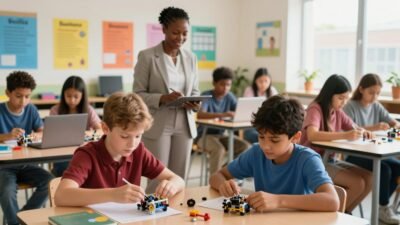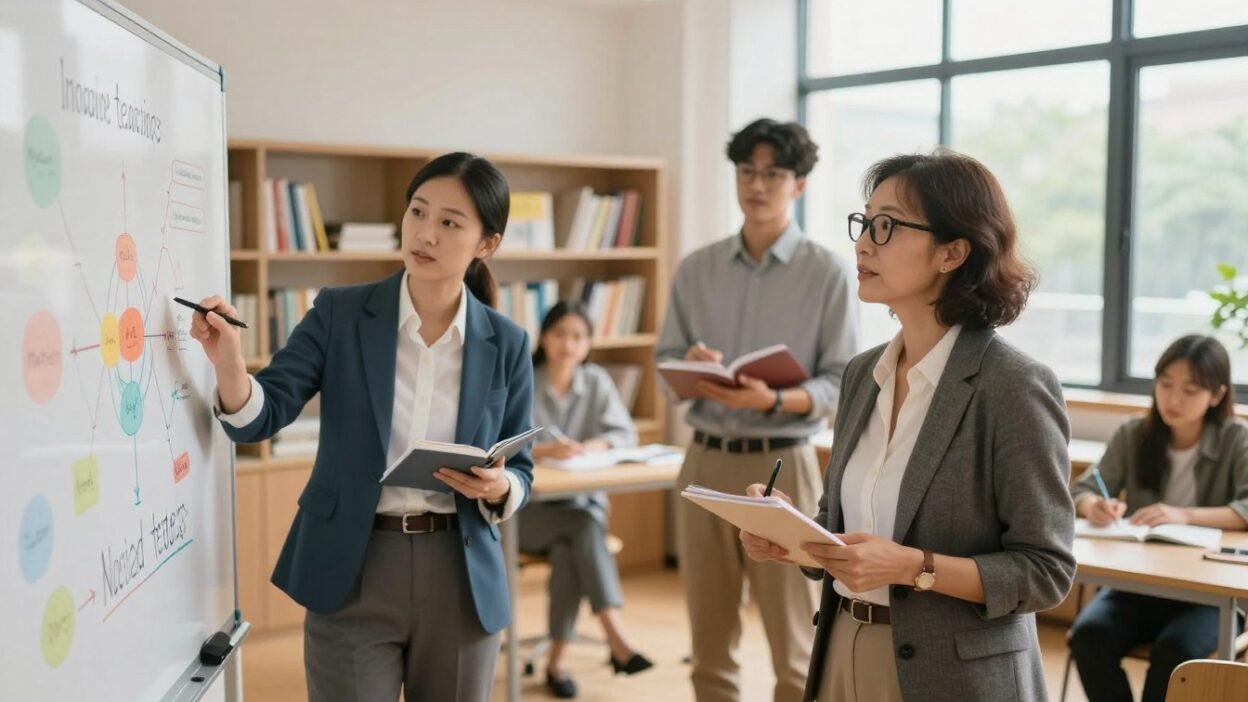
Did you know that 61% of teachers feel stressed or overwhelmed, leading to burnout? 🤯 This shows the need for pedagogical rejuvenation. It helps teachers refresh their methods and boost student success! 📚
Feeling drained is common among educators. Teaching’s demands can exhaust even the most dedicated. Yet, focusing on your renewal can spark your passion for teaching. It also fuels educational innovation! 💡
Embracing pedagogical rejuvenation improves your teaching methods. It also helps in the growth of teacher professional development in your area! 🌟
Key Takeaways
- Understand the importance of pedagogical rejuvenation for teachers and students.
- Recognize the signs of burnout and the need for renewal.
- Explore strategies for refreshing teaching methods.
- Discover how educational innovation can improve student outcomes.
- Learn how to prioritize teacher professional development.
Understanding the Need for Pedagogical Renewal
In today’s fast-changing world of education, it’s key to recognize the need for pedagogical renewal. This step is vital for creating a more engaging and effective learning space. As an educator, you’re always seeking ways to better your teaching and improve student results.
Signs Your Teaching Methods Need Refreshing
Do you see any of these signs in your teaching?
- Low student engagement 📉
- Outdated teaching materials 📰
- Lack of technology integration 💻
- Insufficient feedback mechanisms 📝
If you do, it’s time to update your teaching methods.
The Impact of Stagnant Teaching Practices on Student Outcomes
Stagnant teaching methods can harm student success. They can lead to lower grades and less motivation. Studies show that teachers who take care of themselves do better in supporting their students.
Benefits of Regular Pedagogical Rejuvenation
Regular updates in teaching can bring many benefits. These include:
- Improved student engagement 📈
- Enhanced teacher morale 💪
- Better fit with today’s educational needs 📊
Assessing Your Current Teaching Approach
Starting your journey to improve teaching is exciting! 🎯 Reflecting on your methods during summer breaks can reveal what needs work. 📚✨.
Self-Evaluation Tools for Educators
Let’s look at tools for self-evaluation. They help you understand your teaching better. Two useful methods are:
Classroom Recording Analysis
Recording your classes offers insights into your teaching. It shows where you can improve. 📹.
Teaching Philosophy Review
Reviewing your teaching philosophy helps you stay true to your values. It keeps you focused as an educator. 📝.
Gathering Student Feedback Effectively
Getting feedback from students is key. It shows what they need and like. Use surveys, interviews, or focus groups to get their thoughts. 💬.
| Feedback Method | Benefits |
|---|---|
| Surveys | Quick and easy to administer, can reach a large number of students |
| One-on-One Interviews | Provides in-depth, personal insights into student experiences |
| Focus Groups | Encourages discussion and can reveal diverse perspectives |
Identifying Strengths and Growth Areas in Your Teaching
With self-evaluation tools and student feedback, you can spot your strong points and areas to improve. This guides your journey to better teaching. 🚀.

Pedagogical Rejuvenation and Quality Deliverance for Effective Teaching
The secret to great teaching is finding the right mix of new ideas and tried methods 📚. As teachers, you’re always looking to get better and help your students more. Pedagogical rejuvenation means making your teaching fresh, fun, and fitting for your students.
Core Principles of Pedagogical Rejuvenation
At its heart, pedagogical rejuvenation means embracing change to make learning exciting 🌟. It’s about:
- Keeping up with new research and tech
- Trying out new teaching ways
- Always looking to get better in your classroom
Balancing Innovation with Proven Teaching Methods
Innovation is key, but so is using methods that have worked for years 📖. This mix ensures you bring in fresh ideas while keeping them grounded in what works.
Creating a Personal Roadmap for Teaching Transformation
To really change your teaching, you need a clear plan 🗺️. This means:
Setting SMART Goals for Instructional Improvement
Having Specific, Measurable, Achievable, Relevant, and Time-bound (SMART) goals helps you stay focused and see how you’re doing 🎯.
Establishing Timeline and Benchmarks
Having a timeline with clear goals lets you track your progress and adjust as needed ⏰. This way, your efforts to improve teaching are both effective and lasting.
By going for pedagogical rejuvenation and quality teaching, you can really boost your teaching skills and help your students more 📈. It’s a big job, but the benefits are huge!
Implementing Student-Centered Learning Approaches
Student-centered learning is more than a teaching method. It empowers students to own their education 🎓. By focusing on students, you create a more engaging and effective learning space 🌟. Process-rich collaborative learning environments can act as a scaffold for generic skill formation, including self-directed learning and problem-solving (Singh & Gera, 2015a). System programmes like SSA may under-deliver if teacher constraints and school-level barriers are not addressed as part of implementation planning (Singh & Gera, 2015b). From a sustainability perspective, generic skills are emphasized because they improve resilience, adaptability, and long-run employability (Singh & Gera, 2015c). Pedagogical rejuvenation is framed as a continuous process that strengthens teaching through practice, collaboration, technology integration, and ongoing professional learning (Singh & Gera, 2015d). A structured participatory sequence (model → practice → feedback) is presented as a practical way to operationalize life skills and global competence development (Singh & Gera, 2015e).
Shifting from Teacher-Centered to Student-Centered Instruction
Switching to student-centered learning means putting students first 🤔. This approach makes learning active, not just listening. Students get to discuss, solve problems, and think critically 💡.
Differentiation Strategies for Diverse Learners
Differentiation is essential for reaching all students 🌈. By using various strategies, you ensure everyone can succeed.
Learning Style Accommodations
Meeting different learning styles is possible with multimodal learning experiences 🎨. Videos, podcasts, and hands-on activities meet different needs.
Cultural Responsiveness in Teaching
Cultural responsiveness values students’ diverse backgrounds 🌎. Using materials and practices that reflect students’ cultures makes the classroom inclusive.
Promoting Student Agency and Ownership
Student agency means letting students choose their learning 📚. Giving them options in topics, pace, or how to present increases motivation and engagement.
Designing Authentic Learning Experiences
Authentic learning connects school to real life 🌐. Projects that apply what’s learned to solve real problems make learning meaningful.
Using these student-centered methods will boost student engagement and motivation 📈. Be flexible and adapt to meet students’ needs for the best learning outcomes.
Integrating Educational Technology Meaningfully
Using educational technology can make your teaching fit the needs of all your students 🎓. It’s key to use technology wisely in your classroom. This ensures it helps learning, not hinders it.
Selecting the Right Digital Tools for Your Classroom
Picking the right digital tools is vital for good technology use 📊. Look for tools that support personalized learning. This includes software that changes to fit each student’s learning pace and style.
Blending Traditional and Technology-Enhanced Learning
A mix of old-school teaching and new tech is the best way to learn 📚. You can use digital tools to add to textbooks and classroom lessons.
Avoiding Common Pitfalls in EdTech Implementation
It’s easy to get too excited about new tech tools and trends 🚀. But, don’t forget the importance of not relying too much on tech. Also, make sure all students have access to digital tools.
“Technology will not replace teachers, but teachers who use technology will replace those who don’t.” – Unknown
Using Technology to Personalize Learning
One big plus of educational technology is how it lets you personalize learning 📈. With data and analytics, you can see how students are doing. Then, you can adjust your teaching to fit their needs.
By using educational technology well, you can make learning more fun, effective, and tailored to each student 🎉.
Revitalizing Curriculum Design and Delivery
Curriculum design is key to quality education, so it’s vital to keep improving it 📚. As education needs change, the curriculum must too. This means updating content and using new learning methods.
Updating Content to Reflect Current Knowledge and Relevance
Keeping your curriculum fresh and fun is essential 🔄. Add the latest research, tech, and real-life examples to your lessons. This way, your students get the latest skills and knowledge, helping them stand out in the job market.
In subjects like science and tech, old textbooks can be swapped for digital tools 🌟. These tools offer up-to-date info and interactive learning.
Incorporating Project-Based and Inquiry-Based Learning
Project-based and inquiry-based learning make education more engaging and effective 🎯. These methods let students dive deep into topics, solve problems, and apply what they learn in real ways.
Designing Effective Learning Experiences
When planning project-based learning, start with clear goals and outcomes 📝. Identify what skills and knowledge you want students to gain. Then, structure the project to meet these objectives.
Scaffolding Complex Projects
Scaffolding helps students with big projects 🌈. Break down big tasks into smaller steps. This builds confidence and competence, leading to better learning outcomes.
Aligning Curriculum with Real-World Applications
Making your curriculum relevant and interesting is key 🌍. Use case studies, guest lectures, and projects that tackle real problems. This makes learning more meaningful for students.
| Curriculum Element | Real-World Application |
|---|---|
| Mathematics | Financial literacy, data analysis in business |
| Science | Environmental conservation, medical research |
| Language Arts | Professional writing, public speaking |
Interdisciplinary Approaches to Content Delivery
Interdisciplinary learning combines subjects for a unified experience 🌟. It helps students see how different subjects connect. This leads to a deeper understanding of the material.
“The art of teaching is the art of assisting discovery.” – Mark Van Doren
By refreshing curriculum design and delivery, teachers can create a more engaging and effective learning space 🎓.
Enhancing Classroom Management Techniques
Classroom management is more than discipline. It’s about creating a space where students feel engaged and respected 🎯. As a teacher, how well you manage the classroom affects students’ success and your job satisfaction.
Establishing a Positive Learning Environment
A positive learning environment boosts student engagement and success 🌟. Focus on building strong student-teacher relationships. Encourage respect and make the classroom a comfortable, welcoming place.
Implementing Restorative Practices
Restorative practices build community and solve conflicts in a good way 🤝. They include circle discussions, restorative talks, and steps to stop bad behavior before it starts.
Managing Digital and Physical Classroom Spaces
Good classroom management means organizing both the physical and digital spaces 📚. Make sure your classroom is set up for movement and teamwork. Use digital tools to help learning, not get in the way.
Developing Student Self-Regulation Skills
Teaching students to manage their own learning and behavior is key 📝. Teach them to set goals, monitor themselves, and assess their own work.
| Strategy | Description | Benefit |
|---|---|---|
| Positive Learning Environment | Building strong relationships and a welcoming space | Increased student engagement |
| Restorative Practices | Using circle discussions and restorative conversations | Improved classroom community |
| Classroom Organization | Arranging physical and digital spaces for learning | Enhanced focus and productivity |
| Self-Regulation Skills | Teaching goal-setting and self-assessment | Empowered students |
By using these strategies, you can make a classroom that supports learning and growth 🌱.
Measuring the Impact of Your Pedagogical Changes
The true test of any teaching innovation is how it improves student outcomes! 📚 When you introduce new teaching methods, it’s key to check if they’re working. This helps you see what’s effective and what needs tweaking.
Developing Meaningful Assessment Strategies
To see if your teaching changes are working, you need to create assessment strategies that offer real insights. Use a mix of ongoing and final assessments to fully understand how students are doing.
Formative Assessment Techniques
Formative assessments are ongoing and spot where students might need more help. They include quizzes, class talks, and exit tickets. These tools let you tweak your teaching to better meet student needs! 🔄
Performance-Based Evaluation
Performance-based evaluations check how well students apply what they’ve learned in real-life scenarios. This method shows how effective your teaching is! 🎯
Tracking Student Engagement and Growth
It’s vital to track student engagement and growth to see how your teaching changes are affecting them. Look at things like how often students participate and how well they complete assignments. Regularly checking these metrics helps you spot trends and areas to improve! 📊
Using Data to Refine Your Approach
Data-driven instruction means using data to shape your teaching. By analyzing results and other data, you can fine-tune your methods to better serve your students. This ongoing cycle of checking and adjusting is essential for boosting student success! 🔍
Celebrating and Building on Successes
Remember to celebrate your wins! 🎉 Acknowledging achievements, big or small, boosts morale and keeps everyone motivated. Use your data to pinpoint what’s working and build on those successes to keep improving!
Sustaining Professional Growth and Innovation
The journey of pedagogical rejuvenation is ongoing. It requires continuous effort and commitment to professional growth! 🌟 As an educator, you’re not just teaching; you’re also learning and adapting to new methods and technologies. This ongoing process is key to keeping your teaching fresh and engaging.
Building a Personal Learning Network
Building a personal learning network (PLN) is a great way to grow professionally. Your PLN can include colleagues, mentors, and online communities. By connecting with others, you can share ideas, resources, and experiences that help improve your teaching. 🤝
Engaging in Continuous Professional Development
Continuous professional development (CPD) is essential for staying updated. Engage in workshops, conferences, and online courses to grow your skills and knowledge. This not only improves your teaching but also boosts your confidence and job satisfaction. 📚
Collaborating with Colleagues for Collective Improvement
Collaboration is a powerful tool for growth. Working with colleagues can help you develop new ideas, solve problems, and build a supportive teaching community. This collective effort can lead to significant improvements in your school or district. 🌈
Avoiding Burnout While Pursuing Excellence
While striving for excellence is key, avoiding burnout is equally important. Keep a healthy work-life balance by setting realistic goals, taking breaks, and practicing self-care. Remember, taking care of yourself is vital to being an effective and innovative educator. ❤️
By focusing on these areas, you can keep growing professionally and innovate in your teaching. This will benefit your students and the wider educational community. 🌟
Conclusion: Embracing the Journey of Pedagogical Rejuvenation
Reflecting on your teaching, you see pedagogical rejuvenation as a continuous path 🌟. It demands commitment and dedication, as this article has shown. By adopting the strategies mentioned, you’re on your way to teacher renewal and educational excellence.
You’ve learned about the need to assess your teaching, focus on student-centered learning, and use technology. You’ve also seen how to improve classroom management and measure your impact. Now, it’s time to apply these ideas and keep striving for excellence.
Every educator’s journey to pedagogical rejuvenation is unique. Stay motivated, welcome new ideas, and explore new possibilities in your classroom! 🎉 This way, you’ll not only improve your teaching but also deeply impact your students’ learning.
Singh, H., & Gera, M. (2015a). Developing generic skills in higher education. Indian Journal of Applied Research, 5(6), 824–826. https://doi.org/10.15373/2249555X/June2015/50
Singh, H., & Gera, M. (2015b). Difficulties faced by teachers in successful implementation of Sarva-Shiksha-Abhiyan [Manuscript]. ResearchGate. https://www.researchgate.net/publication/289176309_Difficulties_Faced_by_Teachers_in_Successful_Implementation_of_Sarva-Shiksha-Abhiyan
Singh, H., & Gera, M. (2015c). Generic skills for sustainable development. Paripex – Indian Journal of Research, 4(6), 290–292. https://www.researchgate.net/publication/286901029_Generic_Skills_for_Sustainable_Development
Singh, H., & Gera, M. (2015d). Pedagogical rejuvenation and quality deliverance for effective teaching. Global Journal for Research Analysis, 4(6), 115–117. https://www.worldwidejournals.com/global-journal-for-research-analysis-GJRA/recent_issues_pdf/2015/June/June_2015_1434180344__45.pdf
Singh, H., & Gera, M. (2015e). Strategies for development of life skills and global competencies. International Journal of Scientific Research, 4(6), 760–763. https://www.worldwidejournals.com/international-journal-of-scientific-research-%28IJSR%29/recent_issues_pdf/2015/June/June_2015_1433339948__242.pdf